
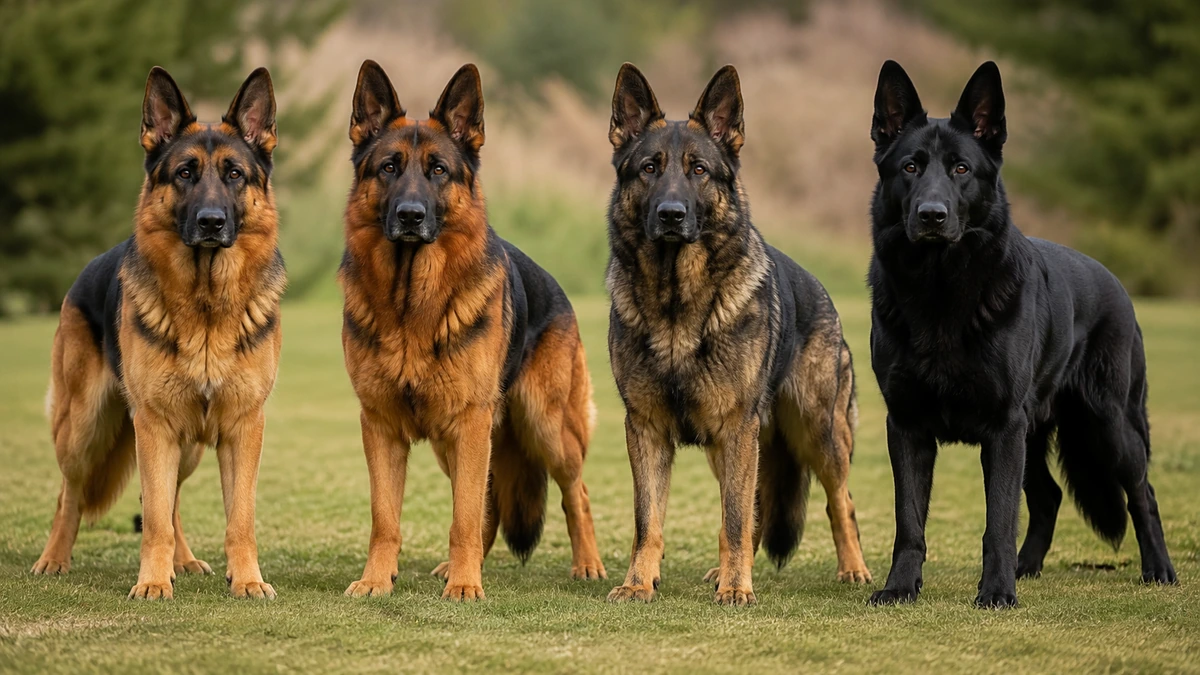
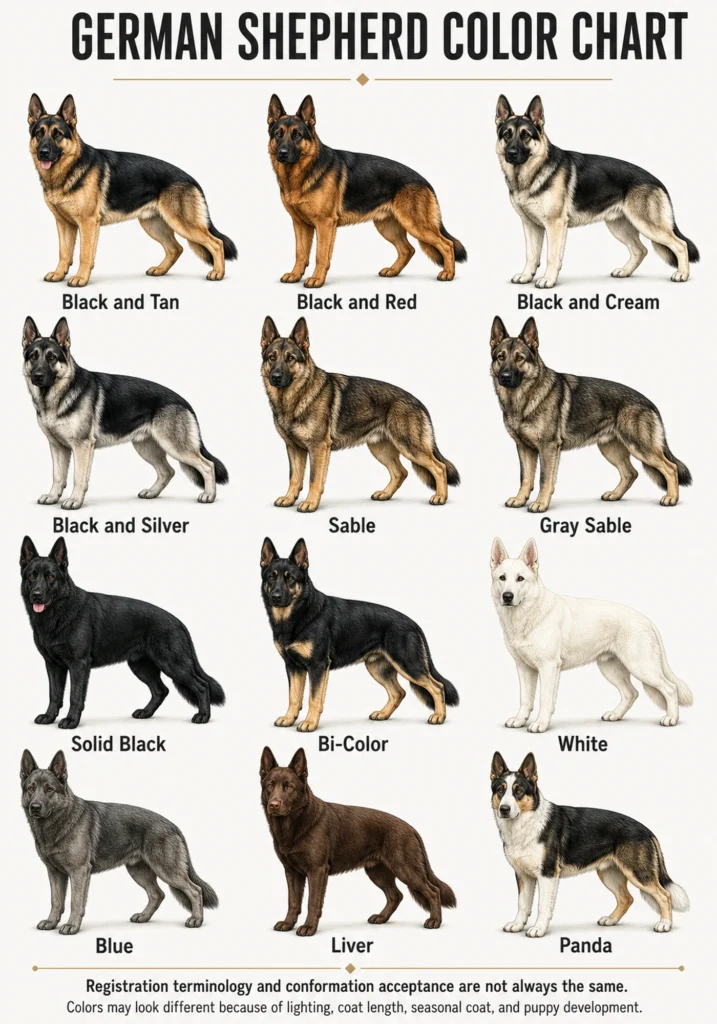
German Shepherd colors range from the familiar black and tan coat to black and red, sable, solid black, gray, bi-color, black and cream, and black and silver. Less common colors and patterns include white, blue, liver, and Panda spotting, but kennel-club standards do not treat all of them equally.
Color can change how a German Shepherd looks, but it does not make the dog more loyal, intelligent, protective, healthy, or trainable. Temperament, structure, health testing, upbringing, and responsible breeding matter far more than a fashionable shade.
German Shepherd Colors: Quick Answer
Common German Shepherd colors include black and tan, black and red, sable, gray, solid black, bi-color, black and cream, and black and silver. The AKC standard permits most colors but treats blue and liver as serious faults and disqualifies white dogs from conformation. The FCI accepts black with tan-to-gray markings, solid black, and gray with darker shading, while white is not allowed. (Fédération Cynologique Internationale)
German Shepherd Color Guide at a Glance
| Color or pattern | Typical appearance | Breed-standard note | Important distinction |
| Black and tan | Black saddle or blanket with tan points | Commonly accepted | Amount of black varies |
| Black and red | Deep red points with black saddle or blanket | Rich pigment is preferred | Red is pigment intensity, not another breed |
| Black and cream | Light cream points with black areas | AKC registration description | Very pale pigment may be penalized |
| Black and silver | Silver-gray points with black areas | AKC registration description | Not the same as blue dilution |
| Sable | Banded or dark-tipped hairs | Accepted | Can range from light to very dark |
| Gray | Gray base with darker shading | Accepted under FCI wording | Often overlaps with sable terminology |
| Solid black | Predominantly black coat | Accepted | Traditionally inherited as recessive black |
| Bi-color | Mostly black with restricted tan points | Accepted in U.S. breed education | Different from a broad saddle |
| White | White or cream coat, often with dark nose and eyes | AKC disqualification; FCI does not allow it | Not automatically albinism |
| Blue | Diluted black pigment appearing slate blue-gray | Serious AKC fault | Different from gray sable |
| Liver | Black pigment modified to brown | Serious AKC fault | Normally produces a brown rather than black nose |
| Panda | White spotting over another coat pattern | Not listed as a standard color | Associated with a specific KIT mutation |
The AKC breed page provides registration descriptions for black, black and cream, black and red, black and silver, black and tan, gray, sable, white, liver, blue, and bi-color. Registration terminology does not mean that every listed color is equally accepted in conformation. (American Kennel Club)
What Do the Official Breed Standards Say?
AKC and German Shepherd Dog Club of America
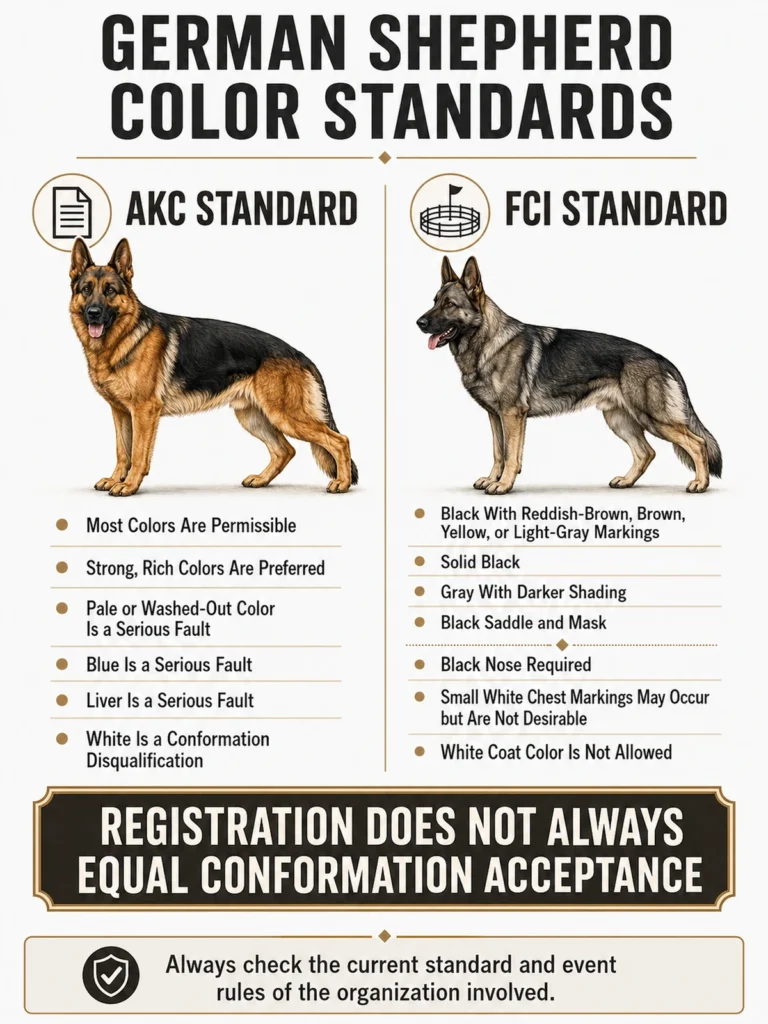
The American breed standard says that most colors are permissible and that strong, rich colors are preferred. Pale or washed-out colors, blue, and liver are serious faults. A white German Shepherd is disqualified from AKC conformation.
This creates an important distinction:
- A color can appear on registration paperwork.
- Registration does not guarantee show-ring acceptance.
- A serious fault is different from a disqualification.
- Color does not determine whether the dog can be a companion.
- Rules for performance events may differ from conformation rules.
FCI Standard
The FCI standard describes these colors:
- Black with reddish-brown, brown, yellow, or light-gray markings
- Solid black
- Gray with darker shading
- Black saddle with a mask
Small, unobtrusive white chest markings and very light coloring on the inner areas may be permissible but are not desirable. The nose must be black in every accepted color, and white coat color is not allowed. (Fédération Cynologique Internationale)
The AKC and FCI standards therefore overlap but do not use identical terminology.
Color, Pattern, and Coat Length Are Different Traits
Color describes pigment, such as black, red, tan, cream, silver, blue, liver, or white.
Pattern describes where those pigments appear. Common patterns include:
- Saddle
- Blanket or black back
- Tan points
- Bi-color
- Sable or agouti shading
- Solid color
- White spotting
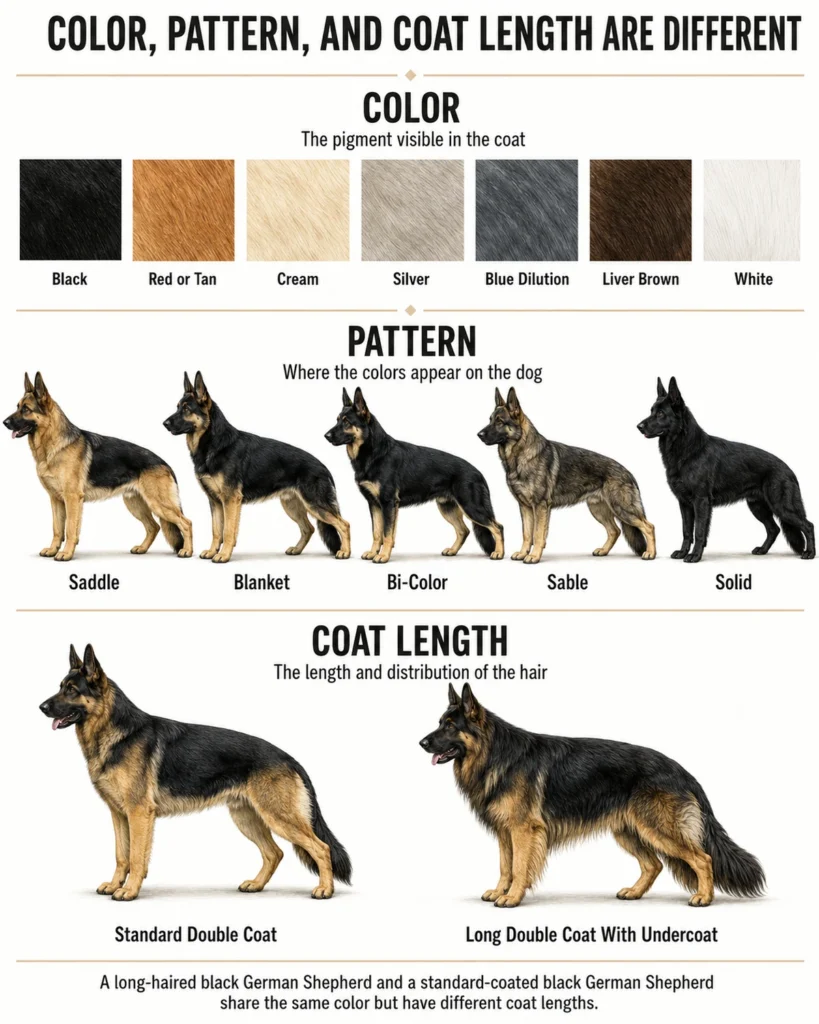
Coat length describes the hair itself. The FCI recognizes both a double coat and a long double coat with undercoat, while the AKC standard describes a medium-length double coat as ideal and treats overly long or open coats as faults. (Fédération Cynologique Internationale)
A long-haired black German Shepherd and a standard-coated black German Shepherd share the same color but have different coat lengths.
For brushing, bathing, coat changes, and shedding, use Furbivo’s German Shepherd puppy grooming guide. Owners should also read Can You Shave a German Shepherd? before clipping the breed’s double coat.
Black and Tan German Shepherd
Black and tan is the appearance most people associate with the breed. The dark area may form a defined saddle over the back or a larger blanket covering much of the torso.
Tan can range from pale beige to warm gold. Puppies may initially appear darker because the black area can recede as a genetically influenced saddle pattern develops. Research has associated the saddle-tan pattern with variation involving the ASIP region and RALY. (Europe PMC)
A black and tan dog should not be evaluated only by saddle size or color intensity. Structure, movement, temperament, working ability, and health remain more important.
Black and Red German Shepherd
Black and red German Shepherds have the same general saddle, blanket, or tan-point arrangement, but their lighter pigment is deeper and richer.
The red may appear:
- Mahogany
- Rust
- Deep reddish tan
- Warm chestnut
German Shepherd Dog Club of America judges education specifically identifies rich black and red, black and tan, sable, bi-color, and black coats as desirable or acceptable examples. (German Shepherd Dog Club of America)
Black and red is not a separate breed or guaranteed show line. It is a color description.
Lighting, camera settings, seasonal coat, and coat condition can also make red pigment appear more or less intense in photographs.
Black and Cream German Shepherd
Black and cream German Shepherds have lighter points than typical black and tan dogs. Cream areas may appear pale beige, ivory, or light gold.
The AKC lists black and cream as a registration description. However, its written standard still prefers strong, rich color and treats pale, washed-out color as a serious fault. (American Kennel Club)
This means registrable and preferred for conformation are not the same.
A lighter coat alone does not prove poor health. A more useful concern is whether the breeder prioritizes appearance while neglecting health tests, temperament, structure, and genetic diversity.
Black and Silver German Shepherd
Black and silver German Shepherds have cool, pale-gray or silver-looking points with black saddle or blanket areas.
Silver is not necessarily the same as blue. A black and silver dog normally retains black pigment in the nose and dark coat areas. Blue results when a dilution gene changes black eumelanin to slate or blue-gray. (Veterinary Genetics Laboratory)
Photographs can make cream, pale tan, gray, and silver difficult to separate. Natural daylight, registration information, parent colors, and genetic testing may help clarify an uncertain color.
Sable and Gray German Shepherd
Sable German Shepherds have hairs containing more than one pigment band or dark tips over a lighter base. The result is a shaded, overcast, or wolf-like appearance rather than one clean black saddle.
Owners may use descriptions such as:
- Light sable
- Red sable
- Gray sable
- Dark sable
- Black sable
These are descriptive shades, not separate breeds.
The FCI term “gray with darker shading” overlaps with what many American owners describe as gray sable or wolf gray. The standard also accepts a black saddle and mask as a separate pattern description. (Fédération Cynologique Internationale)
Sable shading can look different as puppy hair is replaced by adult guard hair and during seasonal coat cycles.
Solid Black German Shepherd
A solid black German Shepherd has a predominantly black coat without the usual tan-point or saddle pattern.
Research on the canine ASIP gene identified a recessive variant associated with uniform black coats in German Shepherd Dogs. Dogs carrying two copies of the recessive-black variant can express the solid-black phenotype, while non-black parents may carry the variant without appearing black themselves. (Veterinary Genetics Laboratory)
Solid black is accepted under the AKC and FCI standards. (Fédération Cynologique Internationale)
It is less commonly seen than black and tan, but rarity does not automatically make an individual puppy better bred or worth an extreme premium.
Bi-Color German Shepherd
Bi-color German Shepherds are predominantly black, with limited tan or red markings commonly found on the:
- Lower legs
- Feet
- Cheeks
- Eyebrows
- Underside
- Area around the vent
A bi-color dog generally retains more black than a typical black-and-tan saddle dog. The boundary between a very dark blanket pattern and bi-color can be difficult for inexperienced owners to identify.
GSDCA judges education describes bi-color as acceptable alongside solid black, black and tan, black and red, and sable. (German Shepherd Dog Club of America)
The term does not simply mean any German Shepherd with two visible colors.
White German Shepherd
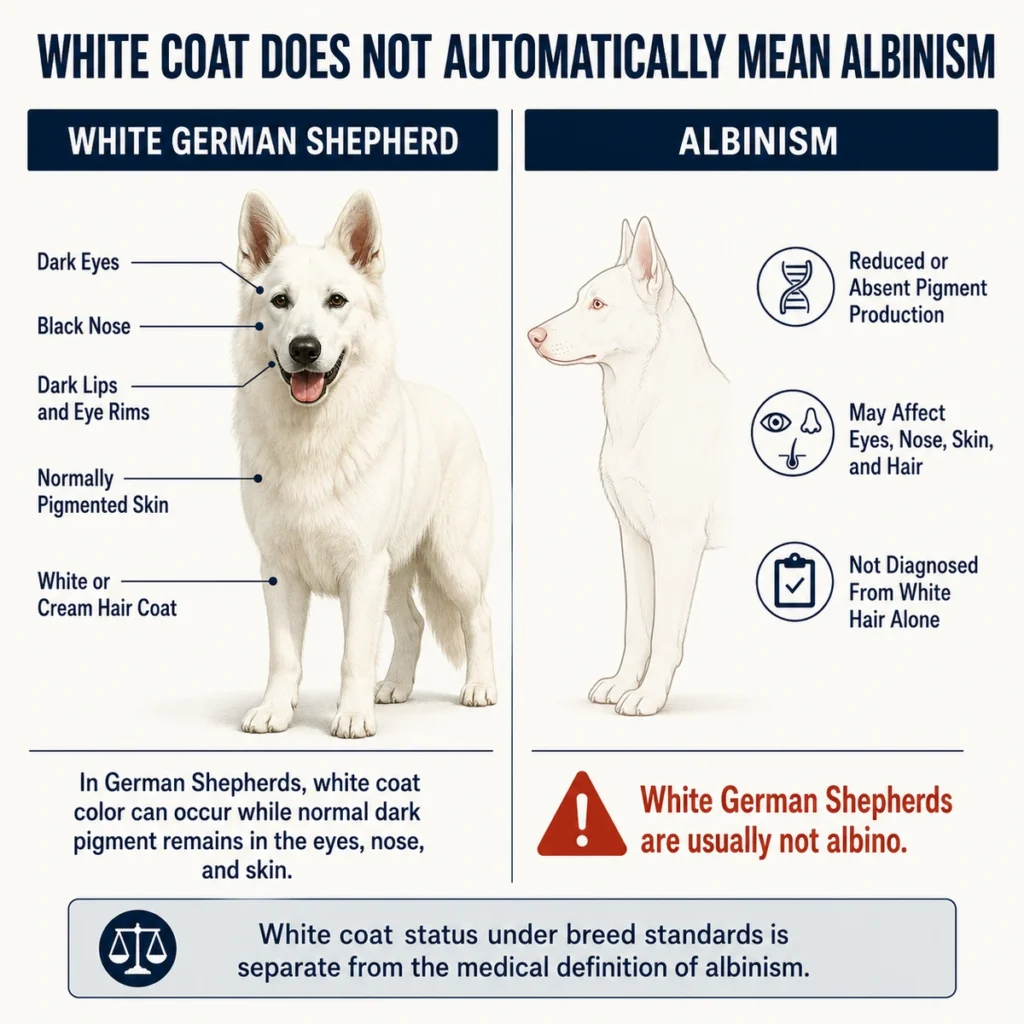
A white German Shepherd can have a white or cream-appearing coat while retaining dark eyes, a black nose, and normally pigmented skin.
Research involving German Shepherd Dogs associates the white coat with a recessive MC1R variant that prevents dark eumelanin from being expressed in the hair. (PMC)
Is a White German Shepherd Albino?
Usually not.
Albinism involves a broader reduction or absence of pigment production and can affect the eyes, nose, and skin. A white German Shepherd may retain normal dark pigment outside the hair coat.
The AKC permits white as a registration description but disqualifies white dogs from conformation. The FCI standard also states that white hair color is not allowed, including in dogs with dark eyes and nails. (American Kennel Club)
Conformation eligibility and value as a family companion are different questions.
Blue German Shepherd
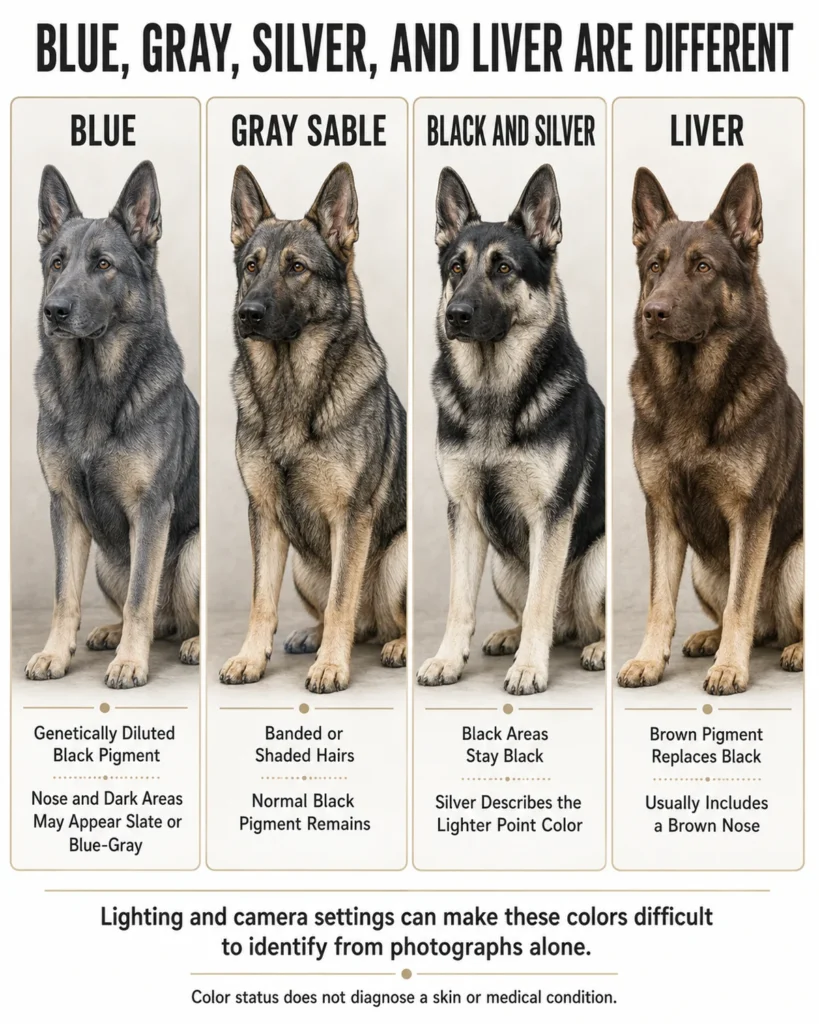
Blue German Shepherds have diluted dark pigment. Instead of appearing jet black, the dark areas may look:
- Slate
- Charcoal-blue
- Gray-blue
- Muted steel
The MLPH dilution gene can change black eumelanin to blue and brown eumelanin to a lighter diluted shade. (Veterinary Genetics Laboratory)
The AKC German Shepherd standard treats blue as a serious fault. The FCI requires a black nose and does not include blue in its accepted-color description. (Fédération Cynologique Internationale)
Blue should not be confused with gray sable:
- Gray sable: Banded or shaded hairs with normal dark pigment
- Blue: Genetically diluted black pigment
Color status alone does not diagnose a skin or medical condition, so avoid claims that every blue German Shepherd will develop a specific disease.
Liver German Shepherd
Liver changes black eumelanin to brown. Areas that would normally be black may instead appear chocolate or reddish brown, and the nose is commonly brown rather than black.
The TYRP1 brown locus modifies black eumelanin to brown while leaving red and yellow pigment governed by other genes. (Veterinary Genetics Laboratory)
The AKC standard treats liver as a serious fault, while the FCI standard requires the nose to be black. (Fédération Cynologique Internationale)
Liver is a real inherited pigment variation, but it is not a preferred standard color. A high “rare color” price is not evidence of superior breeding.
Panda German Shepherd
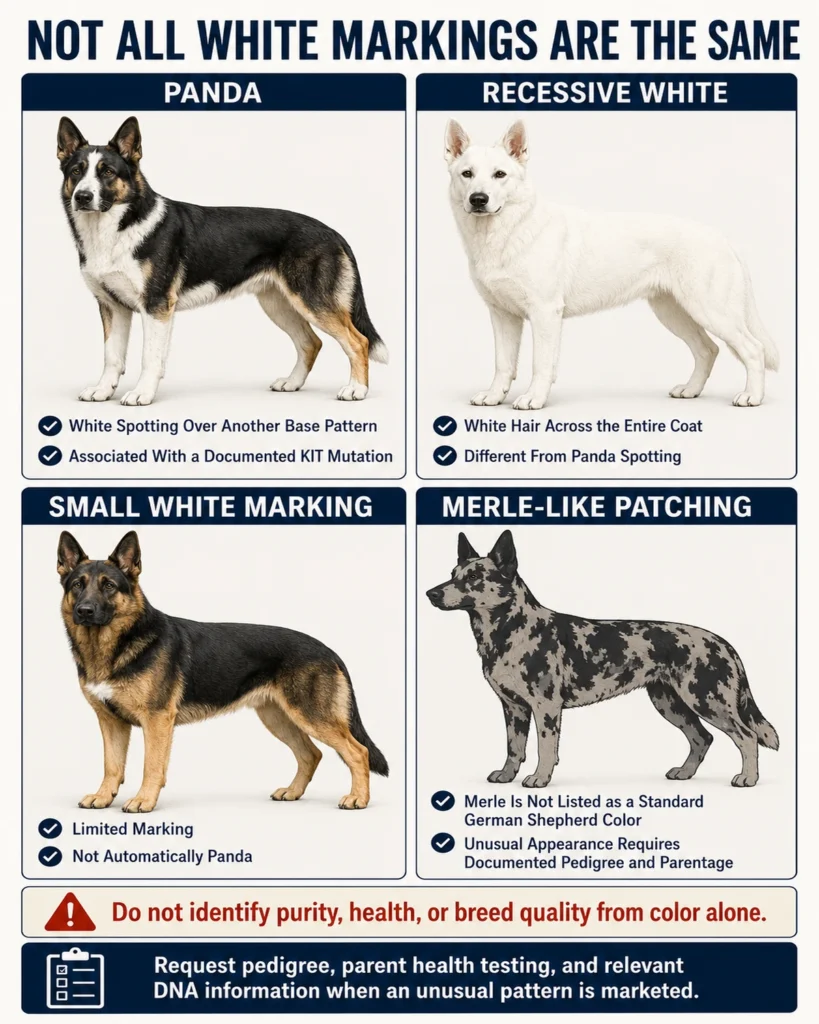
Panda describes a German Shepherd with prominent white spotting over another coat pattern.
UC Davis identified a dominant KIT mutation responsible for Panda white spotting in one German Shepherd line. The pattern may include white on the:
- Forehead
- Muzzle
- Chest
- Neck or collar
- Belly
- Legs
- Tail tip
The Panda mutation appeared spontaneously in a female German Shepherd born in 2000. Dogs with one copy are expected to display the pattern and pass it to approximately half their offspring. Two copies have not been observed in live dogs and are considered embryonic lethal. UC Davis reports no health defects associated with the one-copy state in the documented line. (Veterinary Genetics Laboratory)
Panda is different from:
- Recessive white
- Merle
- Ordinary small white chest markings
- General piebald spotting
Panda is not listed among accepted colors in the AKC or FCI written standards. Buyers should request pedigree, parentage, health testing, and relevant DNA results rather than relying on a marketing name. (Fédération Cynologique Internationale)
What About Merle, Brindle, Isabella, or “Exotic” Colors?
Merle and brindle are not listed as German Shepherd colors in the AKC or FCI standards. “Isabella” generally refers to a combination of brown and dilution effects rather than a separate German Shepherd variety. (Fédération Cynologique Internationale)
Do not automatically assume every unusually colored dog is mixed. However, do not accept “rare purebred” as proof either.
Ask for:
- Registration and pedigree documents
- DNA parentage where relevant
- Clear information about both parents
- Breed-appropriate health testing
- A written contract
- Honest information about color inheritance
- Evidence that health and temperament guide the breeding program
A color DNA panel may identify pigment variants. It does not prove sound structure, stable temperament, responsible breeding, or overall genetic health.
How German Shepherd Color Genetics Work
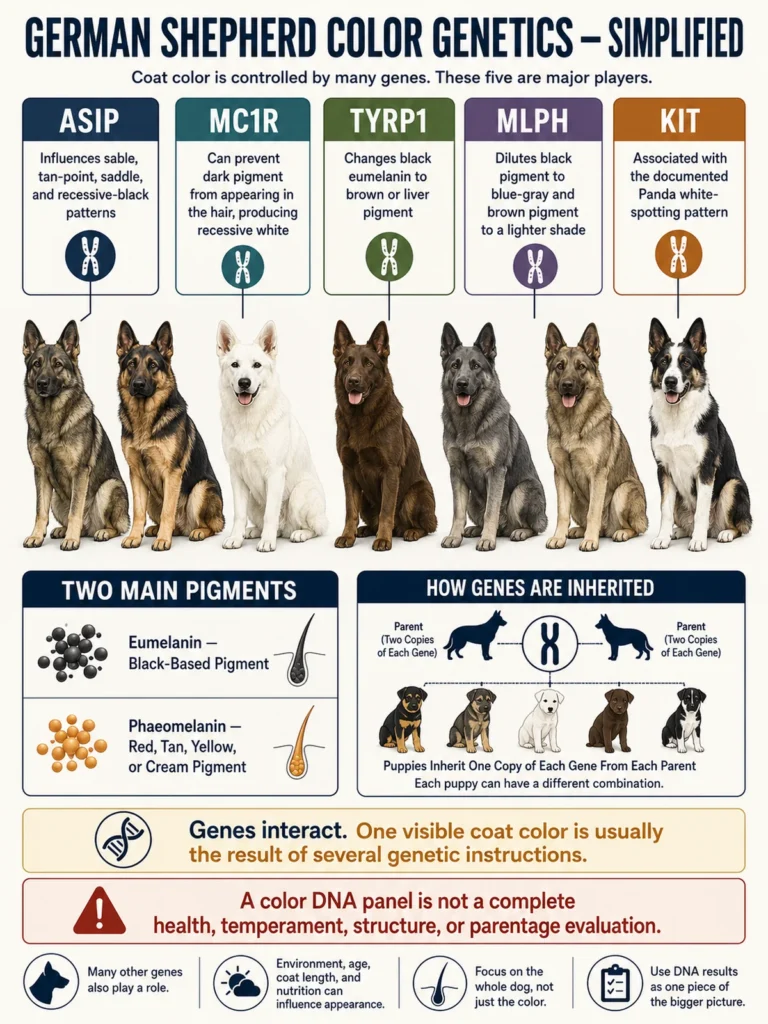
Dog coats use two main pigment families:
- Eumelanin: Black-based pigment that can be modified to brown or diluted blue
- Phaeomelanin: Red, tan, yellow, or cream pigment
Several genes influence which pigment appears and where it is placed:
| Genetic area | Simplified role |
| A locus / ASIP | Sable, tan-point, saddle, and recessive-black patterns |
| E locus / MC1R | Masks and whether dark pigment can appear in the hair |
| B locus / TYRP1 | Changes black pigment to brown or liver |
| D locus / MLPH | Dilutes black to blue and brown to lighter dilution |
| KIT | Produces the documented Panda white-spotting pattern |
UC Davis explains that coat appearance results from interactions between these pigment and pattern genes rather than one single “color gene.” (Veterinary Genetics Laboratory)
A dog can carry color variants that remain hidden because other genes prevent them from being expressed. Those variants may still be passed to puppies.
DNA results should therefore be interpreted together with:
- The dog’s visible coat
- Its pedigree
- Parent colors
- Laboratory explanations
- Verified parentage when necessary
A coat-color test is not a complete breeding-health test.
Do German Shepherd Puppy Colors Change?
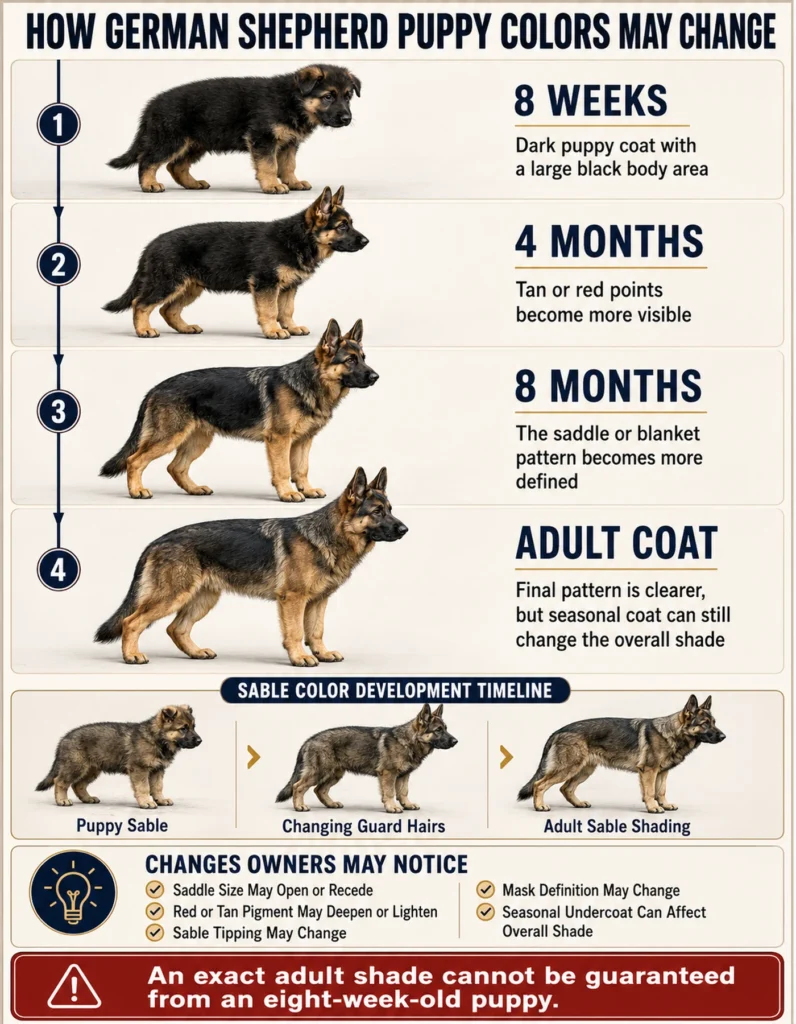
Yes. Some German Shepherd puppy colors and patterns can change significantly while the adult coat develops.
Common changes include:
- A black-and-tan puppy becoming lighter as the saddle opens
- Tan or red points becoming richer or paler
- Sable shading changing as adult guard hairs replace puppy coat
- The mask becoming more or less visually defined
- Seasonal undercoat changing the overall shade
- Long hair making pattern boundaries look softer
Research on saddle-tan patterning explains that genetic modifiers can reduce the dark body area during development, which is why a very dark puppy may become a clearly saddled adult. (Europe PMC)
A breeder can estimate adult appearance from pedigree and close relatives, but should not guarantee an exact final shade from an eight-week-old puppy.
Does Coat Color Affect Temperament?
Coat color alone is not a dependable way to predict whether a German Shepherd will be:
- Calmer
- More aggressive
- Easier to train
- More protective
- Better with children
- Better at working tasks
The written German Shepherd standard describes the same desired confident, stable, willing working character regardless of coat color. (Fédération Cynologique Internationale)
Claims such as “black dogs are naturally more protective” or “sable dogs always have stronger working drive” often confuse color with breeding-line trends.
A color may be common in a particular working or show population, but color itself is not a temperament test. Use Furbivo’s German Shepherd temperament guide when evaluating behavior, confidence, protectiveness, and stability.
Does Color Affect Health?
Most standard coat-color variation is an appearance trait rather than a diagnosis. A black, sable, bi-color, or black-and-tan German Shepherd still needs the same preventive care and breed-relevant health screening.
The AKC advises that responsible German Shepherd breeders screen breeding stock for conditions including hip dysplasia, elbow dysplasia, and degenerative myelopathy. (American Kennel Club)
Furbivo’s German Shepherd hip dysplasia guide explains why verified orthopedic screening matters. The common diseases in German Shepherds guide covers additional health concerns.
Avoid two opposite assumptions:
- A standard color guarantees a healthy dog.
- Every uncommon color is automatically unhealthy.
The more useful questions are whether the breeder uses health testing, stable parent dogs, sound structure, responsible puppy raising, and transparent records.
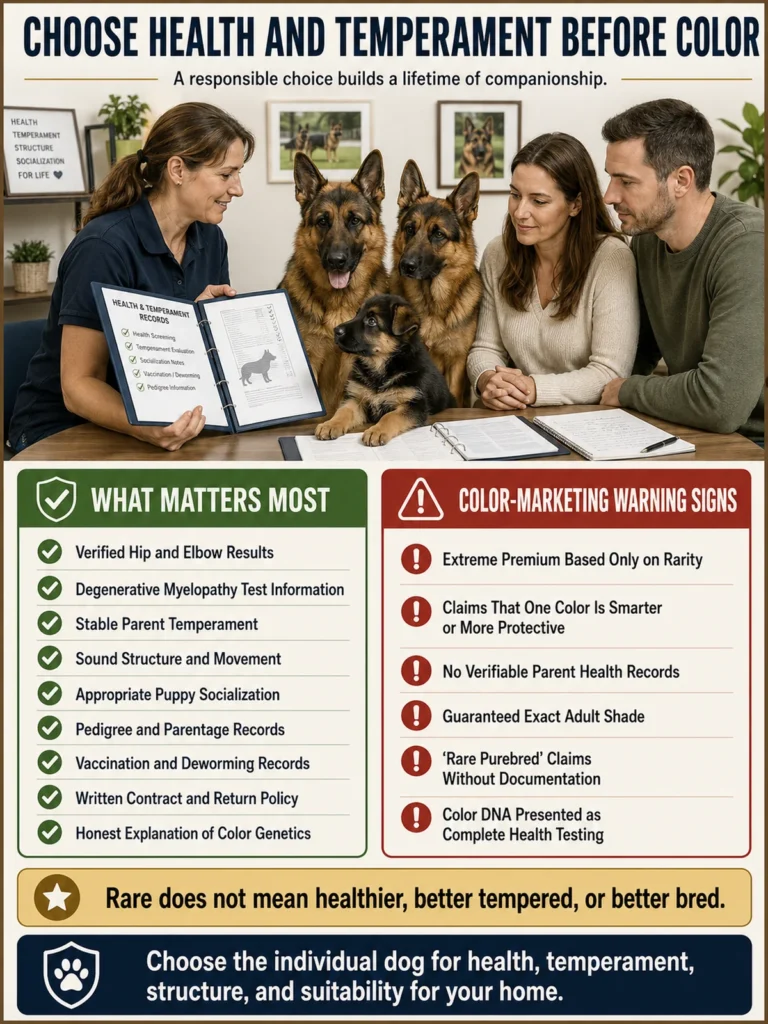
How to Choose a Puppy Without Being Misled by Color
It is reasonable to prefer one of the German Shepherd colors. The problem begins when appearance becomes the main or only selection criterion.
Ask the breeder for:
- Registered names and pedigrees of both parents
- Verifiable hip and elbow results
- Degenerative myelopathy test information
- Temperament information for both parents
- Working, sport, or companion suitability
- Veterinary, vaccination, and deworming records
- A written contract and return policy
- An explanation of the expected coat and color
- Adult photographs of close relatives
- Information about puppy raising and socialization
Warning signs include:
- Charging an extreme premium only for “rare” color
- Claiming one shade is healthier, smarter, or more protective
- Refusing to show parent health records
- Producing unusual colors while ignoring temperament
- Guaranteeing an exact adult shade
- Treating registration as proof of breeding quality
- Using “exotic” labels without explaining the genetics
Research on dog-purchasing priorities warns that appearance should not be placed ahead of health, temperament, and welfare. (PMC)
Grooming Different German Shepherd Colors
Basic grooming needs are similar across German Shepherd colors because German Shepherds have a double coat. Coat length, undercoat density, season, lifestyle, and skin health affect grooming needs more than pigment. (Fédération Cynologique Internationale)
Appearance differences include:
- Dark coats may show dust and dandruff clearly.
- White or cream coats may show mud and staining more easily.
- Sable coats may visually hide loose hair.
- Long coats may make color boundaries appear less defined.
- Seasonal shedding may temporarily change the overall shade.
Use regular brushing, suitable bathing products, complete rinsing, and careful drying.
Do not use:
- Human hair dye
- Bleach
- Harsh coat-darkening products
- Unapproved whitening chemicals
- Products designed to alter the natural pigment
Hair discoloration accompanied by itching, redness, odor, hair loss, or skin lesions should be evaluated as a grooming or veterinary concern rather than dismissed as normal color variation.
What Most German Shepherd Color Guides Miss
Registration Does Not Equal Show Acceptance
A color may have a registration code while still being penalized or disqualified under the written breed standard. (American Kennel Club)
White Is Not Automatically Albinism
White German Shepherds can retain dark eyes, nose, nails, and skin pigment. Their conformation status is a breed-standard issue, not proof of albinism.
Gray Sable and Blue Are Different
Gray sable describes banded or shaded hairs with normal dark pigment. Blue results from dilution of black eumelanin. (Veterinary Genetics Laboratory)
Bi-Color Is Not Simply Any Two-Colored Dog
The term normally refers to a predominantly black German Shepherd with restricted tan or red points.
Puppy Color Is Not Finished Color
Saddle size, pigment intensity, sable tipping, mask definition, and undercoat appearance can change during maturity.
Rare Does Not Mean Better
Rarity does not prove purity, health, temperament, working ability, or ethical breeding.
Color Testing Is Not Health Testing
A DNA color panel explains pigmentation variants. It does not replace orthopedic screening, disease testing, temperament evaluation, or structural assessment.
Frequently Asked Questions
What Are the Standard German Shepherd Colors?
Common standard colors and patterns include black and tan, black and red, sable, gray, solid black, and bi-color. AKC registration descriptions also include black and cream and black and silver. Exact acceptance and wording differ between kennel-club standards. (American Kennel Club)
What Is the Rarest German Shepherd Color?
Solid black is less common than black and tan, while blue, liver, white, and Panda are uncommon. Reliable breed-wide population data are limited, so claims that one shade is definitively the rarest are often marketing rather than documented fact.
Are Black German Shepherds Purebred?
Yes. Solid black occurs naturally in purebred German Shepherd Dogs. A recessive ASIP variant has been associated with the uniform-black phenotype in this breed. Pedigree and parentage records—not coat color alone—establish ancestry. (Veterinary Genetics Laboratory)
Are White German Shepherds Albino?
Usually not. White German Shepherds may retain dark eyes, a black nose, and normal skin pigment. White coat inheritance in the breed has been associated with a recessive MC1R variant, which is different from albinism. (PMC)
Can Two Black-and-Tan German Shepherds Have Black Puppies?
Yes. Two non-black parents can produce a solid-black puppy when both carry the recessive variant associated with uniform black coats.
Do Sable German Shepherds Change Color?
Sable shading can change as puppy hair is replaced by adult guard hair and during seasonal coat cycles. The balance and intensity of dark tipping may therefore look different over time.
Is a Blue German Shepherd the Same as a Gray German Shepherd?
No. Blue refers to genetically diluted black pigment. Gray commonly refers to sable or darker-shaded agouti patterning with normal black pigment. (Veterinary Genetics Laboratory)
Does German Shepherd Color Affect Personality?
Color alone is not a reliable predictor of personality. Evaluate parent temperament, breeding line, early socialization, health, training, and the individual dog’s behavior.
Final Thoughts
German Shepherd colors include familiar saddle patterns, richly pigmented black and red, sable, gray, solid black, bi-color, lighter cream or silver combinations, and uncommon variations such as white, blue, liver, and Panda.
The most important distinctions are:
- Color is different from pattern.
- Color is different from coat length.
- Registration does not always mean conformation acceptance.
- White is not automatically albinism.
- Gray sable is not the same as blue dilution.
- Rare color does not prove quality.
- Puppy coats may change during development.
- Health and temperament should come before appearance.
Use official breed standards when discussing show eligibility, genetic testing when a pigment result genuinely needs clarification, and verified health records when selecting a breeder.
Choose the individual German Shepherd for sound temperament, health, structure, and suitability for your home. Treat coat color as a personal preference—not the foundation of the breeding decision.
Have questions about your dog’s health, nutrition, grooming, or daily care? Visit our Contact Us page to reach the Furbivo team. For any medical symptoms, diagnosis, or treatment advice, always consult a qualified veterinarian.
