
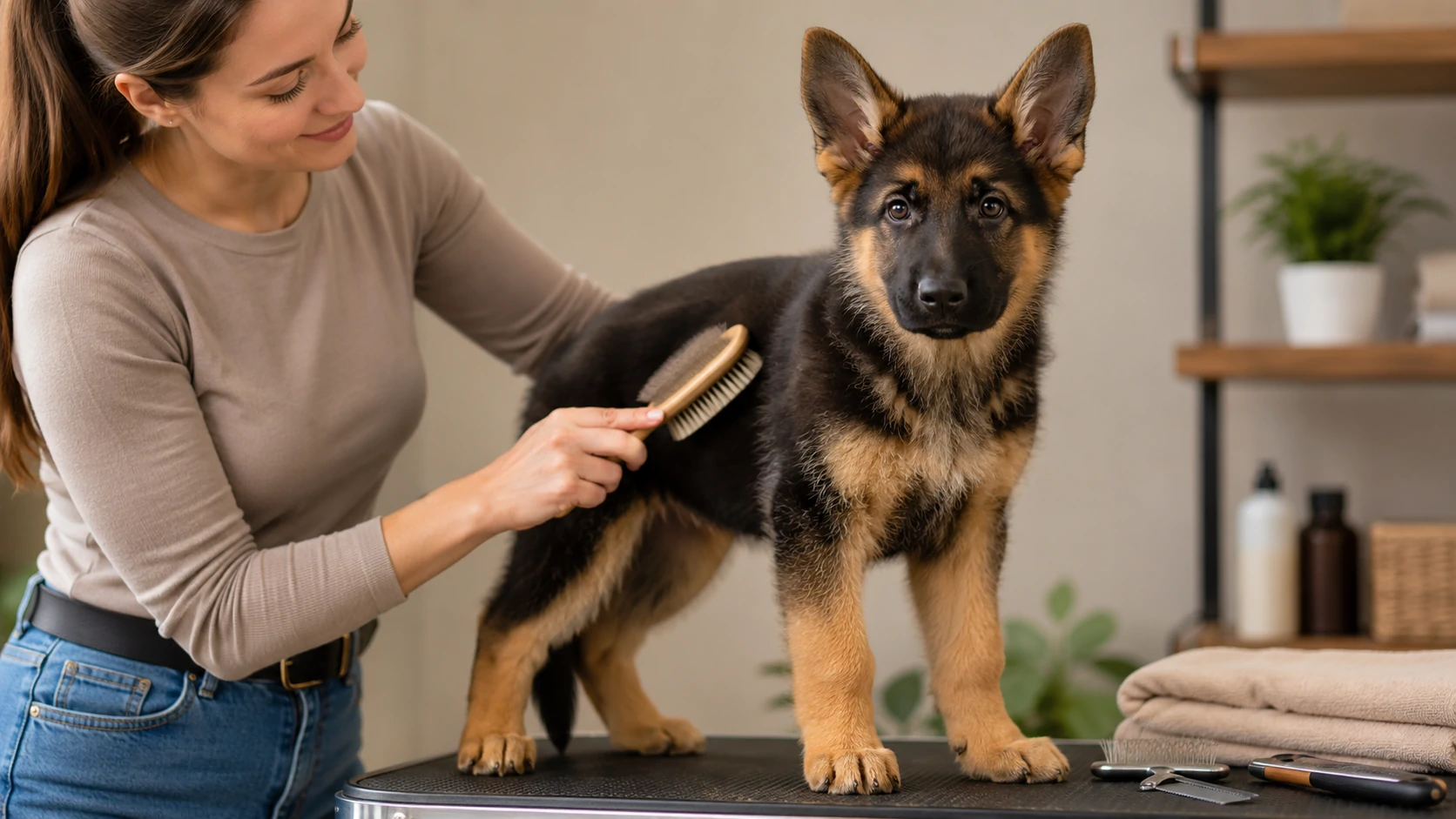
A German Shepherd puppy grooming guide should do more than tell you when to bathe your puppy. It should help your puppy feel safe with handling, protect the double coat, reduce shedding before it becomes overwhelming, and teach you which grooming problems need a groomer or veterinarian. German Shepherd puppies grow fast, explore constantly, and develop a dense coat that needs patient care from the beginning.
The best routine is simple: brush often, bathe only when needed, trim nails before they become long, check ears and skin weekly, start tooth brushing early, and make every session short and positive. The goal is not a perfect show-dog finish. The goal is a clean, confident puppy who accepts grooming as a normal part of life.
German Shepherds are a double-coated breed. The official breed standard describes the ideal German Shepherd as having a medium-length double coat, with a dense, straight, harsh outer coat lying close to the body.
Quick Answer: German Shepherd Puppy Grooming Guide
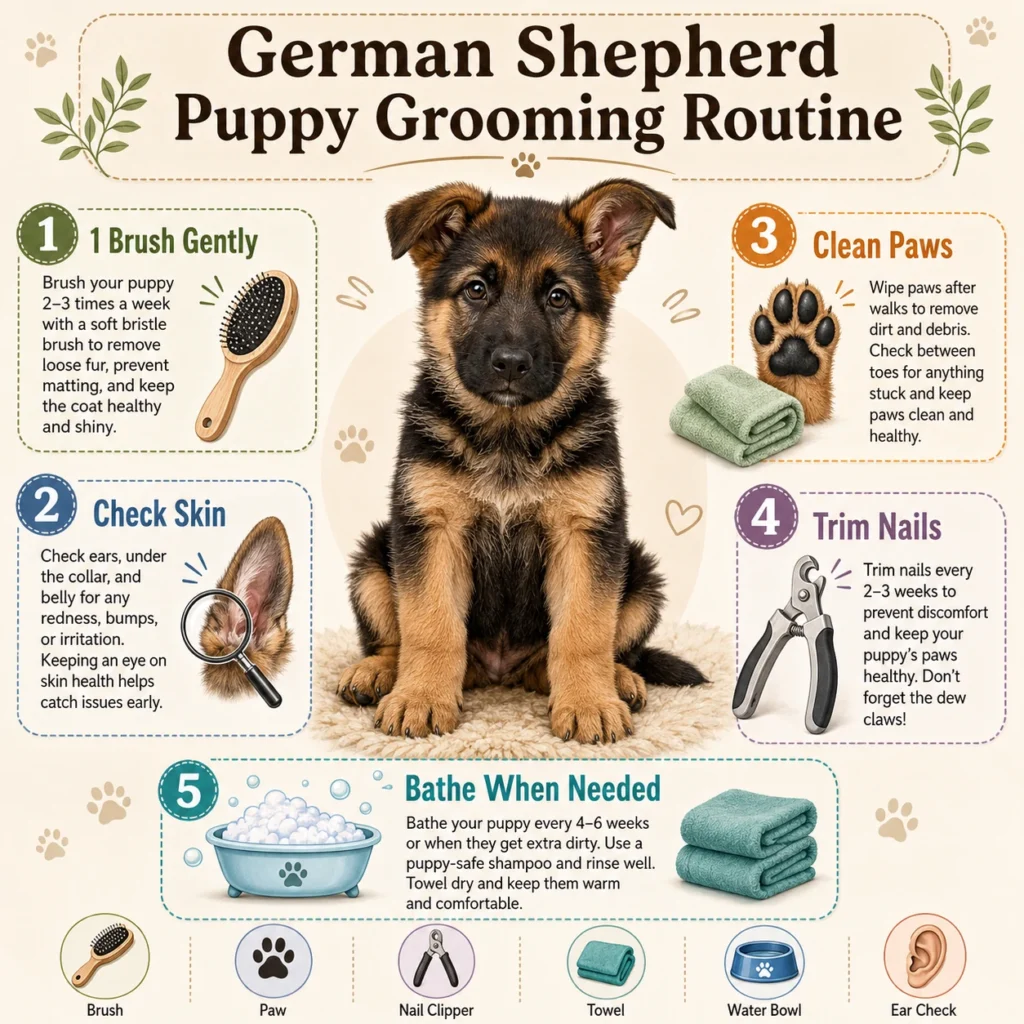
A good German Shepherd puppy grooming guide starts with gentle handling before tools. Brush your puppy several times per week, check the coat and skin daily when possible, trim nails every 1–3 weeks depending on growth, clean ears only when they need it, and bathe when the coat is dirty or smelly rather than on a strict weekly schedule.
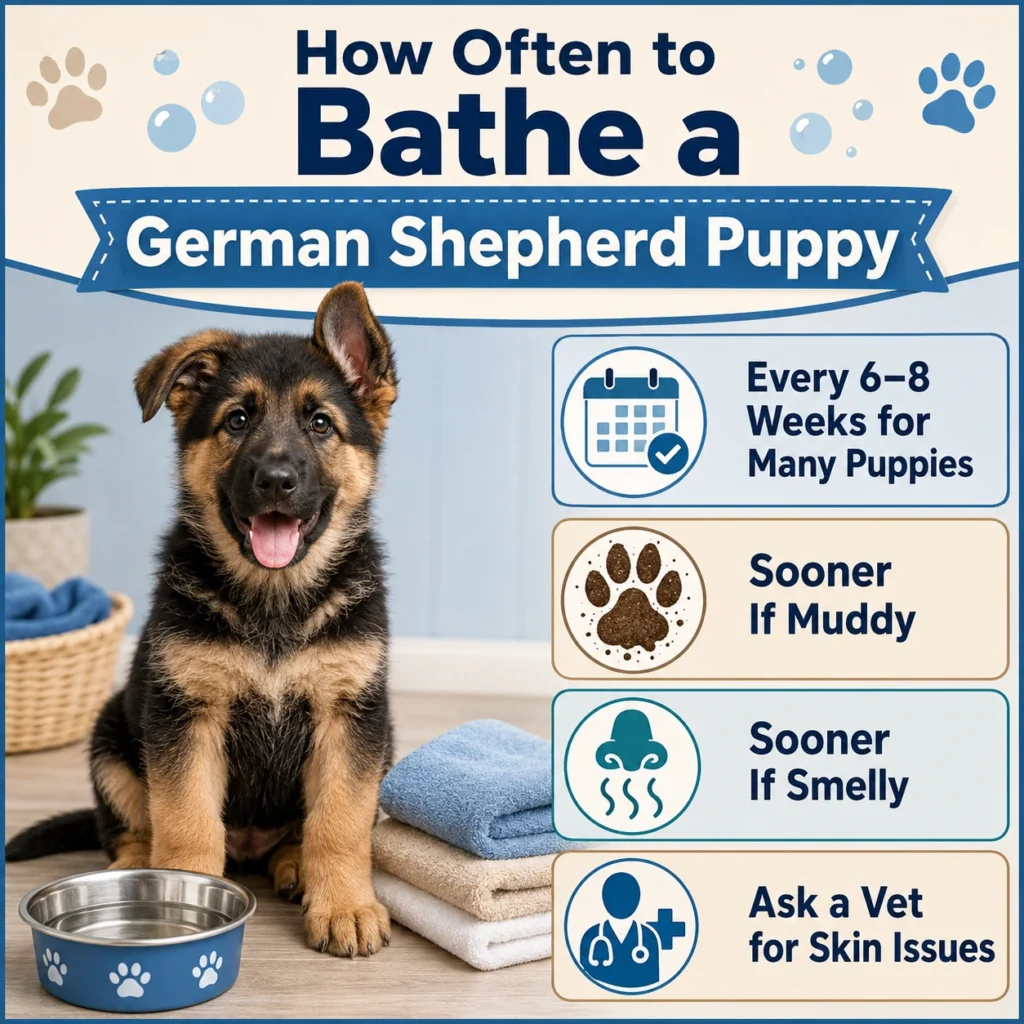
So, how often to bathe a German Shepherd puppy? Most healthy German Shepherd puppies do not need frequent bathing. Many do well with a bath about every 6–8 weeks, or sooner if they get muddy, soil themselves, smell bad, or your veterinarian recommends a skin-care routine. VCA notes that bathing frequency varies with age, lifestyle, coat type, and health status, and that puppies who soil themselves may need immediate bathing. (Vca)
Why German Shepherd Puppy Grooming Is Different
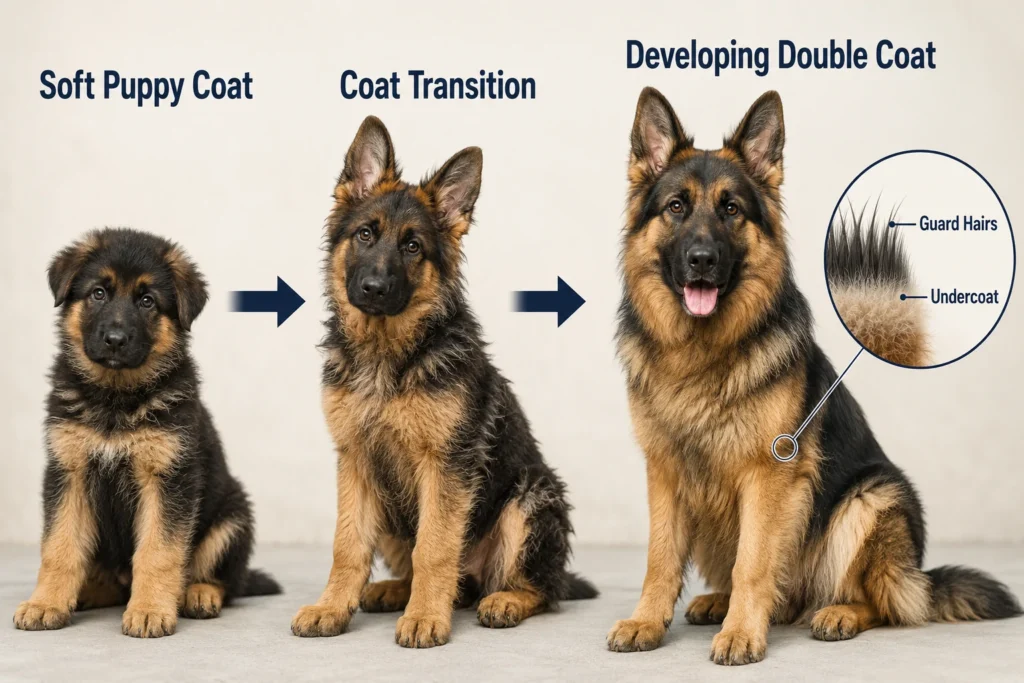
German Shepherds are not single-coated dogs. Their coat develops into two functional layers: protective guard hairs and a softer undercoat. Puppy fur starts softer and less dramatic than an adult coat, but the grooming habits you build now matter. By the time the adult coat starts coming in, your puppy should already be comfortable with brushing, paw handling, ear checks, and bath preparation.
This German Shepherd puppy grooming guide is also different from a general puppy article because German Shepherd puppies are large, energetic, and often mouthy during teething. If grooming becomes a wrestling match at 12 weeks, it will be much harder at 8 months. Calm routines now prevent bigger problems later.
The Main Goals of Puppy Grooming
Puppy grooming has five jobs.
First, it keeps the coat clean and free of loose hair, dirt, burrs, and small tangles. Regular grooming and skin care help keep a dog’s coat clean and free of tangles, while skin and coat condition can also reflect general health and nutrition. (Vca)
Second, grooming teaches body handling. Your puppy learns that people can touch paws, ears, tail, belly, and mouth without anything scary happening.
Third, grooming prevents small problems from becoming painful. A tiny tangle behind the ear, an overgrown nail, or a dirty rear area is easier to fix early.
Fourth, grooming helps you notice health changes. When you regularly part the coat and check the skin, you are more likely to notice fleas, ticks, redness, bumps, bald patches, dandruff, or tender areas.
Fifth, grooming builds trust. Your puppy should finish sessions feeling calm, not trapped.
German Shepherd Puppy Grooming Guide by Age
The schedule below gives a practical starting point. Adjust it for your puppy’s coat length, activity level, climate, and veterinarian’s advice.
| Puppy Age | Grooming Focus | Practical Routine |
| 8–10 weeks | Trust and touch | Short handling sessions, soft brush, paw touches, gentle ear looking |
| 10–12 weeks | Tool introduction | Brush 3–4 times weekly, touch nails, introduce bath area without bathing |
| 3–4 months | Basic routine | Brush several times weekly, trim nails as needed, start tooth-brushing practice |
| 4–6 months | Coat transition | Brush more often, check undercoat, watch for tangles behind ears and legs |
| 6–12 months | Teen coat management | Build adult grooming routine, manage shedding, continue nail, ear, and dental care |
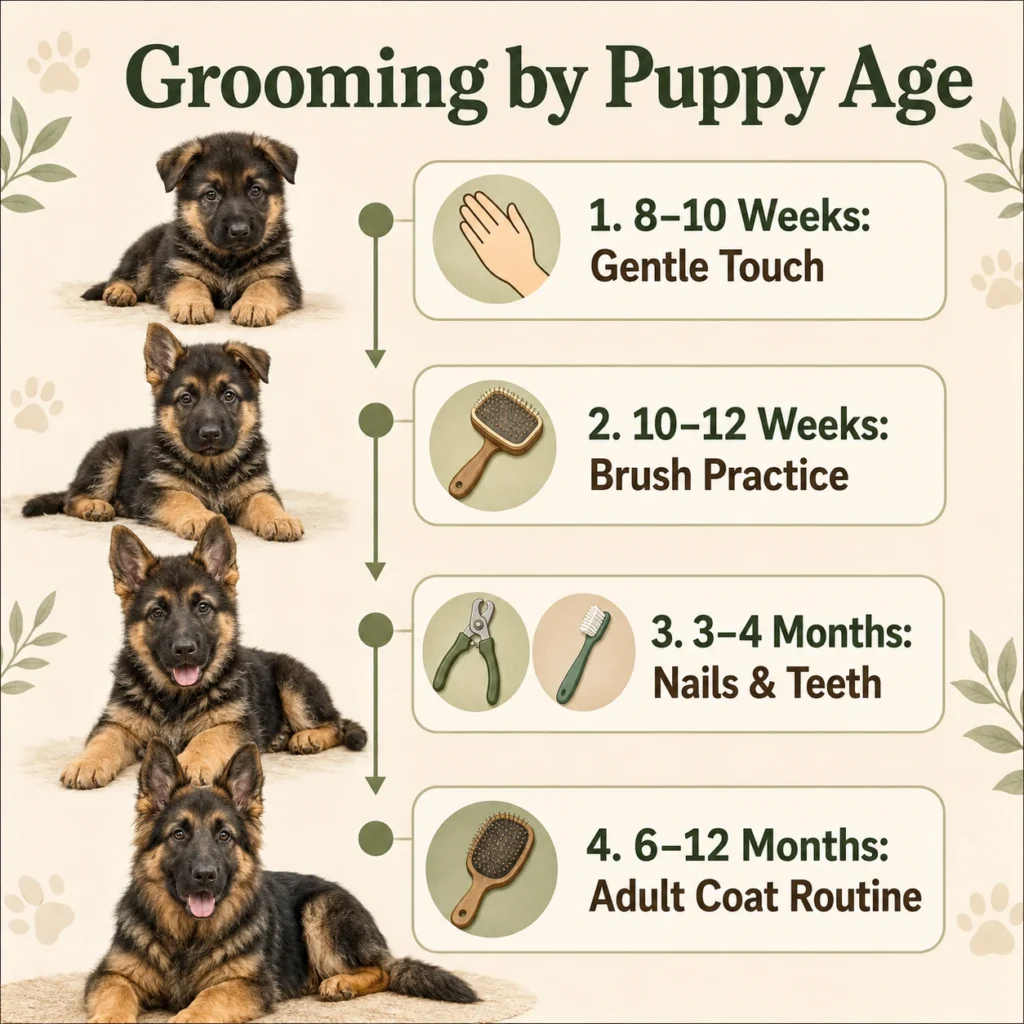
This is a guide, not a rulebook. A puppy who rolls in mud needs a bath sooner. A puppy with fast-growing nails may need trimming weekly. A nervous puppy may need ten tiny practice sessions before one full grooming session.
Start With Handling Before Grooming Tools
Many grooming struggles begin because the puppy meets the tool before learning the touch. Start with your hands.
Touch one paw, reward, and release. Lift one ear, reward, and release. Touch the tail, reward, and release. Look at the teeth for one second, reward, and release. Keep the session so short that the puppy succeeds.
Do this when your puppy is calm, not when they are full of energy. After a short walk, after training, or before a nap can work well. Avoid chasing the puppy with a brush or holding them down until they stop moving. That teaches resistance.
A simple pattern works:
- Touch the body part.
- Mark the calm moment with praise.
- Give a small treat.
- Stop before the puppy gets frustrated.
This foundation is one of the most overlooked parts of a German Shepherd puppy grooming guide. Tools matter, but cooperation matters more.
German Shepherd Puppy Grooming Guide: Essential Tools
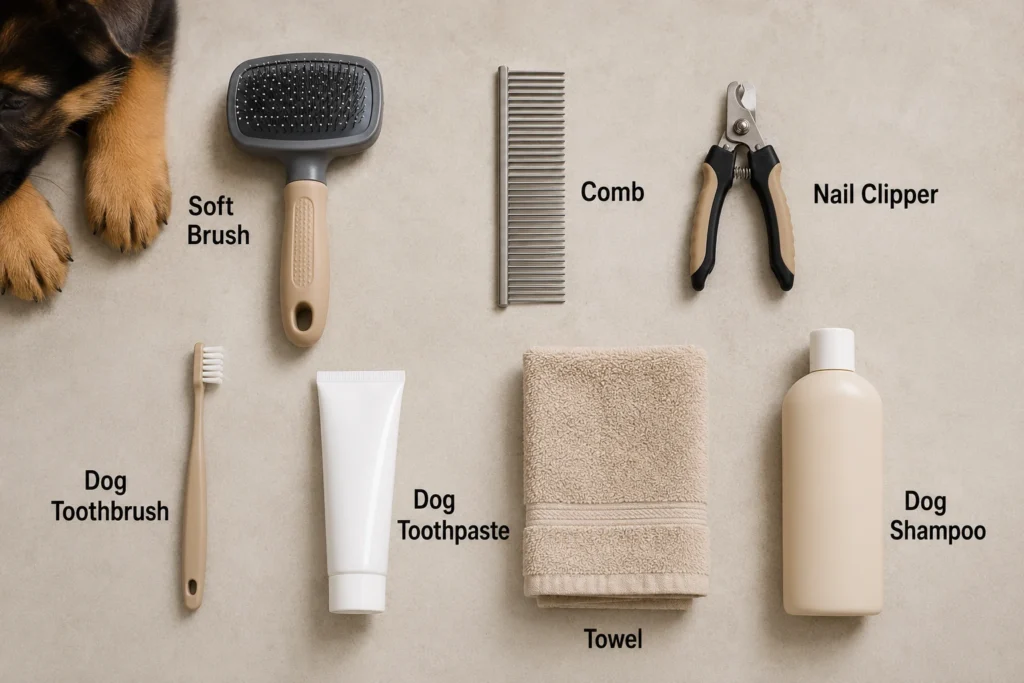
You do not need a professional salon kit. Start with safe, gentle tools.
A soft slicker brush can remove loose hair and help your puppy get used to brushing. A metal comb helps check behind the ears, armpits, groin, tail base, and leg feathering. A long-toothed comb or undercoat rake may become useful as the coat matures, but use it gently. Puppy skin is sensitive, and rough dragging can make grooming unpleasant.
A nail clipper or grinder should fit your puppy’s nail size. A large adult dog clipper may feel clumsy on a young puppy. Keep styptic powder available in case you accidentally nick the quick.
Use a dog-safe shampoo, not human shampoo or baby shampoo. Dogs have different skin needs, and veterinary grooming guidance warns that human shampoo can be too harsh for dog skin. (Vca)
For ears, use a veterinarian-recommended ear cleaner only if cleaning is needed. Do not use alcohol, hydrogen peroxide, cotton swabs deep in the canal, or home mixtures.
For teeth, use a dog toothbrush or finger brush and dog toothpaste. Human toothpaste is not appropriate for dogs.
Brushing a German Shepherd Puppy
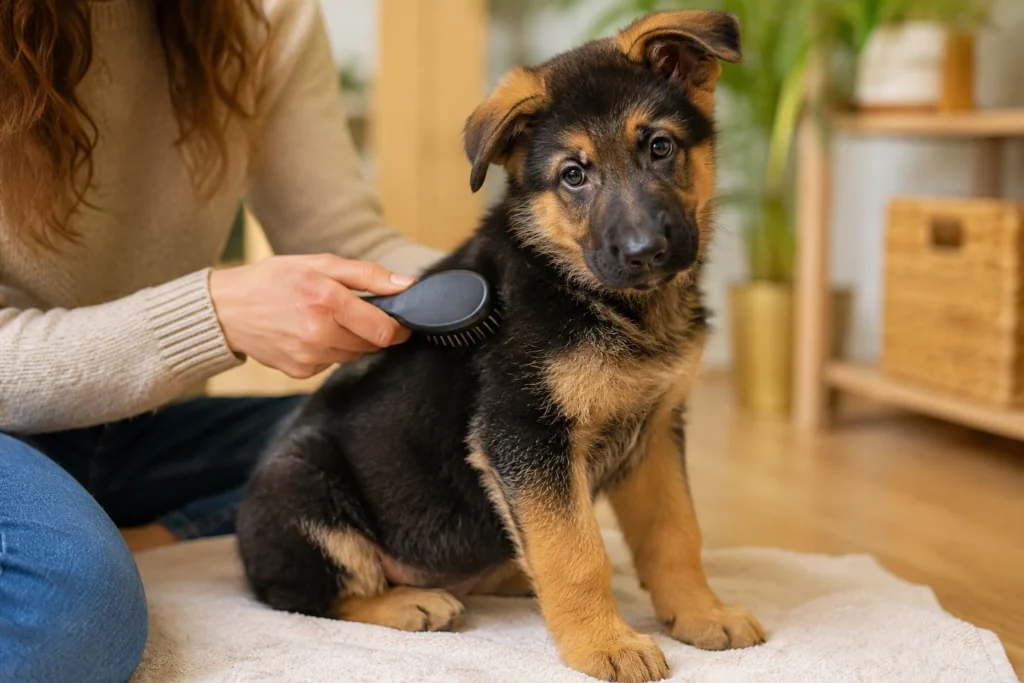
Brushing is the heart of this German Shepherd puppy grooming guide. A German Shepherd puppy should learn that brushing is ordinary, comfortable, and sometimes rewarding.
Start with a soft brush for one or two minutes. Brush in the direction the coat grows. Use light pressure. Praise calm behavior. As your puppy matures, work in sections: neck, shoulders, back, sides, chest, belly, rear feathering, tail, and legs.
Pay extra attention to:
- Behind the ears
- Under the collar
- Armpits
- Groin area
- Tail base
- Rear legs
- Belly feathering
- Areas where harness straps rub
German Shepherds can shed heavily as adults. VCA notes that breeds such as German Shepherds have long, thick haircoats with guard hairs and fine undercoat, and they often go through heavy seasonal shedding cycles. (Vca)
For a puppy, the goal is not to remove huge piles of undercoat every day. The goal is to build tolerance while keeping the coat clean. As the adult coat develops, brushing will become more productive.
How Often Should You Brush a German Shepherd Puppy?
Most German Shepherd puppies should be brushed at least 3–4 times per week. During coat changes, outdoor play, or early shedding phases, daily light brushing can be helpful.
Short sessions are better than long battles. Two minutes done calmly every day is more useful than one stressful 30-minute session on Sunday.
Brush before bathing. If the coat has tangles, burrs, or packed undercoat, water can tighten the mess and make it harder to remove. Veterinary grooming guidance recommends brushing out burrs and tangles before bathing because tangles can become difficult to remove after a bath. (Vca)
How Often to Bathe a German Shepherd Puppy
The secondary keyword here matters because many new owners search exactly this: how often to bathe a German Shepherd puppy. The practical answer is: bathe when your puppy is dirty, smelly, soiled, or needs a veterinarian-recommended skin routine; do not bathe just because another week has passed.
For many healthy German Shepherd puppies, a bath every 6–8 weeks is enough. Some need fewer baths. Some need more because they roll in mud, have house-training accidents, swim, or play outdoors in dusty areas.
VCA’s general dog bathing guidance says most dogs require bathing occasionally, usually when the coat becomes dirty or develops odor. It also notes that bathing frequency varies with age, lifestyle, coat type, and health status. (Vca)
A German Shepherd puppy with allergies, persistent odor, greasy skin, dandruff, redness, or itching needs veterinary advice rather than repeated shampooing. Frequent bathing without the right reason can make skin problems worse.
German Shepherd Puppy Grooming Guide for Bath Time
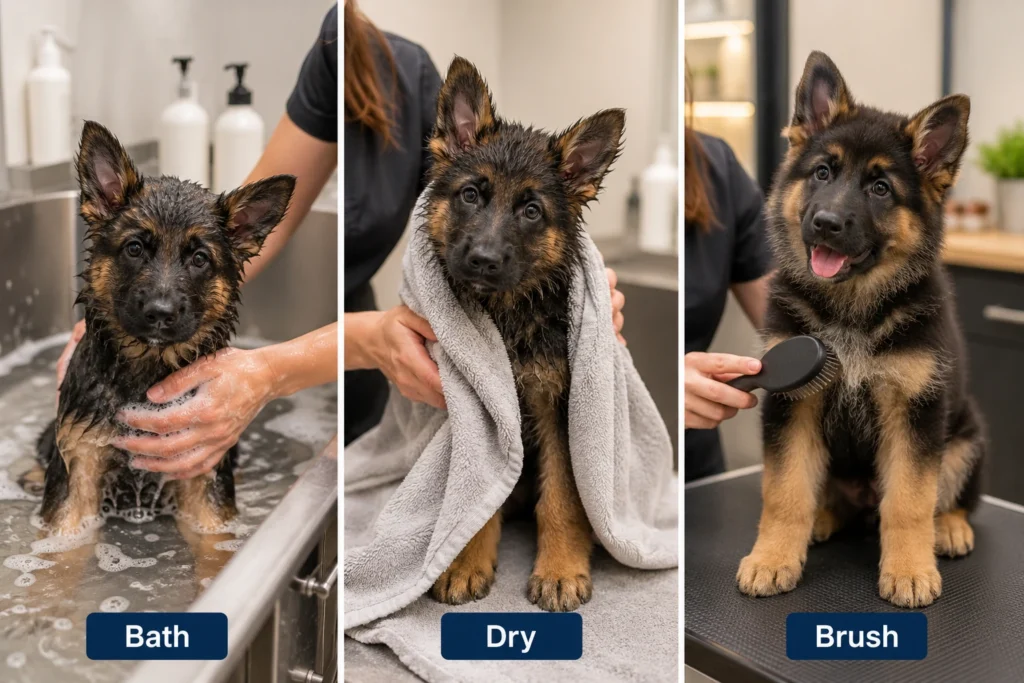
Prepare everything before bringing your puppy to the bath area: towels, dog shampoo, cup or sprayer, non-slip mat, treats, brush, and a warm drying area.
Use warm water, not cold hose water. VCA advises warm water for comfort and cleaning effectiveness, and notes that cold garden-hose bathing is often why dogs dislike baths. (Vca)
Wet the coat slowly from the neck down. Avoid spraying water directly into the face, eyes, nose, or ears. Use a damp cloth for the face if needed.
Apply dog-safe shampoo and work it gently through the coat. German Shepherd puppies can have dense fur, so diluted shampoo may spread more evenly. Rinse thoroughly. Leftover shampoo can irritate the skin.
Dry with towels first. If using a dryer, keep it on a low or cool setting and introduce the sound gradually. Do not trap your puppy with a loud dryer on the first day. A noise-sensitive puppy can become afraid of future grooming.
After the bath, brush again when the coat is mostly dry. This helps remove loosened hair and lets you check for any skin irritation.
Bathing Mistakes to Avoid
Do not bathe a puppy to “make the coat grow faster.” Grooming does not speed up healthy coat development.
Do not use strong perfumes. They may bother the dog and can irritate sensitive skin.
Do not pour water into the ear canal. Moisture trapped in the ear can contribute to irritation in some dogs.
Do not bathe over mats. Brush first or ask a groomer for help.
Do not bathe a sick, weak, chilled, or very young puppy without veterinary guidance.
Do not use medicated shampoo unless your veterinarian recommends it. Medicated shampoos often need contact time and specific use instructions.
Nail Trimming for German Shepherd Puppies
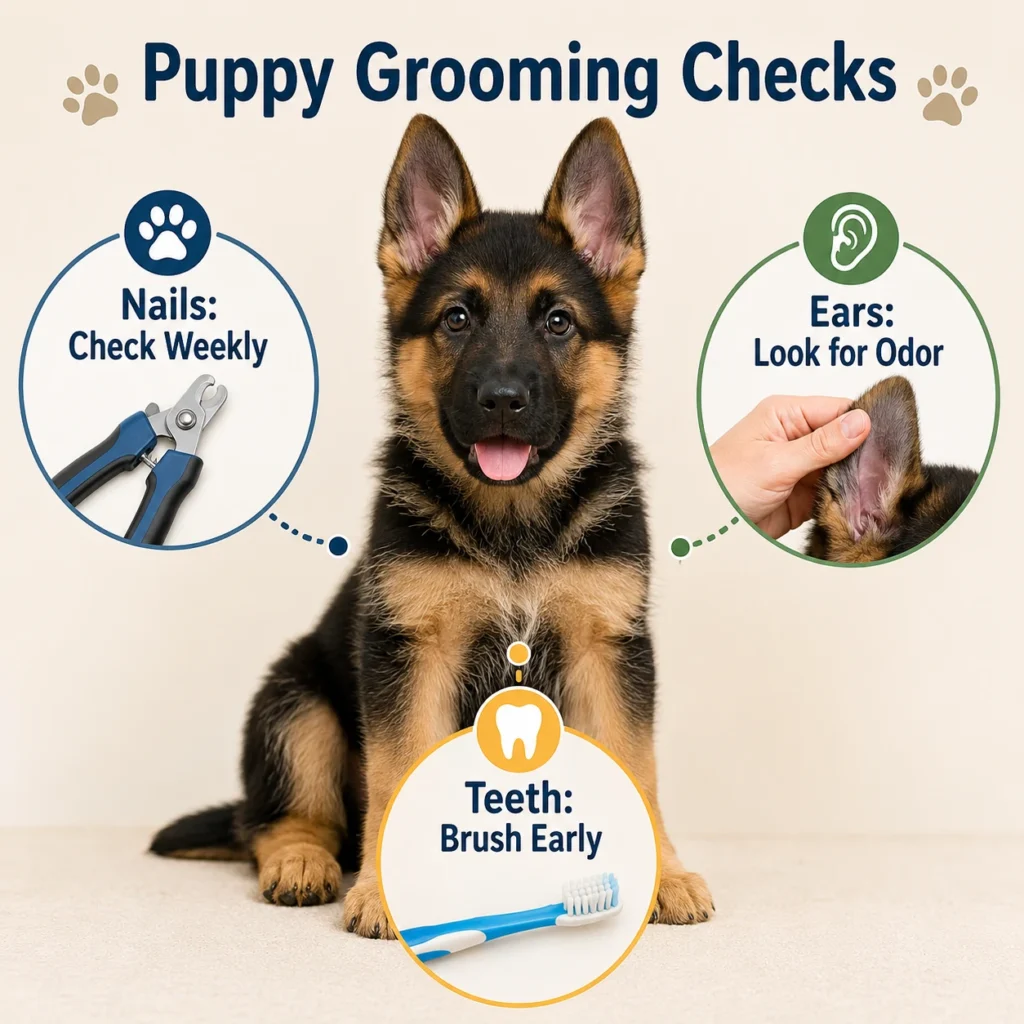
German Shepherd puppies grow quickly, and their nails can become sharp fast. Long nails can affect paw comfort and make handling harder. Nail trimming is not only cosmetic; it helps your puppy stand and walk comfortably.
Start by touching the paws daily. Hold a paw for one second, reward, and release. Then touch one nail with the clipper without cutting. Reward. Later, clip just one tiny tip. Stop. This teaches your puppy that nail trimming is not a long scary event.
Trim only the tip. Avoid the quick, which is the sensitive blood supply inside the nail. On light nails, the quick is often visible as a pink area. On dark nails, trim tiny amounts and look for a small chalky center. If you are unsure, ask your veterinarian or groomer to show you.
A good routine is to check nails weekly and trim whenever they start touching the floor, clicking loudly, or looking sharp. Some puppies need small trims every 1–2 weeks. Active puppies on rough surfaces may wear nails down more naturally.
Ear Care for German Shepherd Puppies
German Shepherd puppies are famous for ears that may go up, down, sideways, or one at a time during growth. That is normal. Grooming should focus on cleanliness and comfort, not forcing the ears to stand.
Check the ears weekly. Healthy ears usually look clean, pale pink, and free from strong odor. A small amount of wax can be normal. Redness, swelling, bad smell, dark discharge, constant scratching, head shaking, or pain needs veterinary attention.
Do not clean ears just because it is Sunday. Over-cleaning can irritate the ear canal. If the ears look clean and your puppy is comfortable, leave them alone. If there is mild wax or dirt, use a vet-approved ear cleaner and wipe only what you can see with cotton or gauze. Do not push cotton swabs into the canal.
Grooming time is also a good chance to check the skin behind the ears. This area can develop tangles, especially as the coat gets thicker.
Dental Care and Teething
Puppy grooming should include the mouth. German Shepherd puppies go through teething, chew a lot, and need to learn mouth handling early.
Start by lifting the lips for one second. Reward. Then touch the outside of a tooth with your finger. Reward. Later, add dog toothpaste and a finger brush or puppy toothbrush.
Aim for daily tooth brushing if your puppy tolerates it. If daily brushing is not realistic at first, build the habit slowly. The key is consistency and calm handling. Veterinary dental advice often emphasizes daily home tooth brushing as an important part of preventing dental disease. (The Washington Post)
Never use human toothpaste. Many human products contain ingredients that are not meant to be swallowed by dogs. Use dog toothpaste only.
Watch for retained baby teeth, bad breath beyond normal puppy breath, bleeding gums, difficulty eating, facial swelling, or painful chewing. These need veterinary attention.
Eye and Face Cleaning
German Shepherd puppies usually do not need complicated face grooming. A clean damp cloth is enough for small crusts near the eyes or dirt on the muzzle.
Use a separate clean area of the cloth for each eye. Wipe gently away from the eye, not into it. Do not use human eye drops, soap near the eyes, or scented wipes.
Call a veterinarian if you notice yellow or green discharge, squinting, redness, swelling, cloudiness, pawing at the eye, or one eye suddenly looking different from the other. Eye problems can worsen quickly and should not be treated with grooming alone.
Paw, Pad, and Sanitary Area Care
A German Shepherd puppy may collect mud, grass seeds, burrs, and small stones between the toes. Check paws after outdoor play. Spread the toes gently and look between pads.
Trim long fur between paw pads only if needed and only if you can do it safely. Many owners prefer a groomer for this. Keep the paw tidy, but do not remove protective coat unnecessarily.
The sanitary area can sometimes need gentle cleaning, especially during house-training or after loose stool. Use a damp cloth or bath only the dirty area if possible. If stool sticks repeatedly, diarrhea, worms, diet issues, or coat length may be involved. Repeated mess around the rear is not only a grooming problem.
Should You Shave a German Shepherd Puppy?
No, you should not shave a healthy German Shepherd puppy for convenience, shedding, or summer heat. The double coat has a protective job. A full-body shave can expose skin, change coat texture, and may not solve the problem you are trying to fix.
For a deeper explanation, link this pillar article to Furbivo’s related guide: Can You Shave a German Shepherd?
There are exceptions. A veterinarian or professional groomer may clip a small area for surgery, wound care, severe matting, or hygiene. That is different from shaving the whole body short.
VCA advises that if a dog’s hair is cut short, at least 1 inch of coat should be left to help avoid sunburn or sun damage, and it recommends discussing coat decisions with a groomer or veterinarian. It also notes delayed regrowth can occur after clipping in some plush-coated breeds. (Vca)
German Shepherd Puppy Grooming During Shedding Season
Puppies do not always shed like adults, but coat changes can still surprise owners. You may notice softer puppy fur giving way to coarser guard hairs. Later, undercoat shedding becomes more obvious.
During shedding periods:
- Brush more often.
- Use gentle tools.
- Avoid scraping the skin.
- Brush before bathing.
- Dry the coat fully after bathing.
- Check for dandruff, redness, or patchy hair loss.
Loose coat is normal. Bald patches, broken skin, strong odor, heavy itching, or greasy coat are not normal. Furbivo’s common diseases in German Shepherds can support readers who want to understand breed health issues beyond grooming.
Creating a Weekly Grooming Routine
Here is a practical weekly plan.
| Day | Simple Grooming Task |
| Monday | Two-minute brush and paw handling |
| Tuesday | Ear look, face wipe if needed, short tooth-brushing practice |
| Wednesday | Brush chest, belly, and rear legs |
| Thursday | Nail check and one or two nails if needed |
| Friday | Full-body brush and skin check |
| Saturday | Outdoor play cleanup, paw check, collar/harness rub check |
| Sunday | Rest day or short confidence session |
This routine keeps grooming small. When grooming is small, puppies accept it more easily. When owners wait until the coat is messy, the session becomes longer, harder, and less pleasant.
This German Shepherd puppy grooming guide works best when grooming becomes normal household rhythm, not a dramatic event.
German Shepherd Puppy Grooming Guide for Nervous Puppies
A puppy who bites the brush, runs from the bath, or fights nail trimming is not being “bad.” They may be overstimulated, scared, tired, or confused.
Make the task smaller. If your puppy hates brushing, touch the brush to the shoulder once, reward, and stop. If your puppy hates nails, touch the clipper to one nail without cutting, reward, and stop. If your puppy hates baths, feed treats in the dry bathtub for several days before adding water.
Use higher-value rewards for harder tasks. Keep sessions short. Avoid yelling, pinning, or forcing the whole routine. If your puppy becomes aggressive, panicked, or impossible to handle safely, ask a veterinarian, qualified trainer, or professional groomer for help.
A confident adult German Shepherd starts with a puppy who learns that grooming is predictable.
When to Use a Professional Groomer
A professional groomer can help with bathing, drying, undercoat removal, nail trimming, paw tidy work, and safe mat handling. This is especially useful before the coat becomes too thick or when the puppy is too wiggly for safe trimming at home.
Choose a groomer who understands double-coated breeds and puppy handling. Ask whether they use force-free or low-stress methods. Tell them your puppy’s age, vaccination status, fears, and any skin issues.
Do not wait until your German Shepherd is 80 pounds and terrified. A gentle puppy introduction visit can be enough: walk in, meet the groomer, stand on the table briefly, hear the dryer from a distance, get treats, and leave.
When Grooming Problems Need a Veterinarian
Some coat and skin issues need medical care, not more brushing.
Call a veterinarian if your puppy has:
- Red, inflamed, painful, or bleeding skin
- Bald patches
- Constant scratching or chewing
- Strong body odor soon after bathing
- Greasy coat or thick dandruff
- Pus, sores, or hot spots
- Ear odor, discharge, swelling, or head shaking
- Eye redness, squinting, or colored discharge
- Broken, bleeding, or painful nails
- Fleas, ticks, or signs of parasites
- Sudden behavior change during grooming
A dull coat can reflect diet, parasites, allergies, digestive problems, pain, or other health issues. Grooming can reveal the problem, but it cannot diagnose it.
Grooming and Nutrition: The Coat Connection
A healthy coat starts inside the body. German Shepherd puppies need age-appropriate food that supports growth without pushing them to grow too fast. Coat quality can suffer if a puppy has digestive issues, parasites, poor nutrition, or untreated skin disease.
For feeding support, link readers to Furbivo’s German Shepherd puppy feeding chart and German Shepherd dog food guide.
Grooming and feeding should work together. Brushing removes loose coat. Nutrition supports healthy skin and hair growth. Veterinary care addresses disease. No shampoo can replace those foundations.
Grooming and Training Should Work Together
German Shepherd puppies are intelligent, active, and responsive to routines. Use basic training to make grooming easier.
Teach “sit,” “stand,” “touch,” and “wait.” Reward calm stillness. Put the brush down before your puppy gets overwhelmed. Handle paws during quiet moments. Use a mat or towel as a grooming station so your puppy learns where the session happens.
Furbivo’s German Shepherd training guide can be a helpful internal link here because grooming cooperation is partly a training skill.
Common Puppy Grooming Mistakes
The first mistake is bathing too often. A puppy that smells bad every few days may have a skin, ear, diet, or house-training issue. Repeated shampooing may not solve the cause.
The second mistake is skipping nail handling. Nail trims become harder when a large puppy has never learned paw handling.
The third mistake is brushing only the back. Tangles often form behind ears, under armpits, under collars, and around the rear legs.
The fourth mistake is using adult pressure on puppy skin. Gentle tools and light pressure are enough.
The fifth mistake is shaving the coat. For a healthy German Shepherd puppy, coat maintenance is better than coat removal.
The sixth mistake is waiting for the first professional groom until the puppy is already frightened or matted.
What Most Articles Miss
Most puppy grooming articles list brushing, bathing, nails, ears, and teeth. That is useful, but it misses the behavior side.
For a German Shepherd puppy, grooming is not only hygiene. It is preparation for adult handling. This breed becomes strong quickly. If your puppy learns that grooming means panic, grabbing, chasing, and escape, every future session becomes harder.
The real success measure is not how clean the puppy looks after one bath. It is whether the puppy trusts you enough to accept the next session.
Another thing most articles miss is the difference between “dirty” and “medically abnormal.” Mud needs cleaning. Red skin, foul odor, repeated ear discharge, and sudden hair loss need a veterinarian.
FAQs
Is this German Shepherd puppy grooming guide suitable for first-time owners?
Yes, this German Shepherd puppy grooming guide is designed for first-time owners who need a complete routine. Start with brushing, paw handling, ear checks, and short positive sessions before moving into full baths or longer grooming.
How often to bathe a German Shepherd puppy?
How often to bathe a German Shepherd puppy depends on dirt, odor, lifestyle, and skin health. Many healthy puppies do well with a bath about every 6–8 weeks, but muddy, soiled, or smelly puppies may need a bath sooner. Puppies with skin problems need veterinary advice.
Can I bathe my German Shepherd puppy every week?
Weekly bathing is usually unnecessary for a healthy German Shepherd puppy unless your veterinarian recommends it. Frequent bathing can dry or irritate the skin, especially if the wrong shampoo is used.
What brush is best for a German Shepherd puppy?
Start with a soft slicker brush and a metal comb. As your puppy’s adult coat develops, a long-toothed comb or gentle undercoat rake may help remove loose undercoat. Avoid harsh pressure.
Should I shave my German Shepherd puppy in summer?
No, do not shave a healthy German Shepherd puppy for summer. Use brushing, shade, cool water, indoor rest during heat, and safe walk times instead. Only clip coat areas when a groomer or veterinarian has a clear reason.
When should a German Shepherd puppy first visit a groomer?
A puppy can visit a groomer for a gentle introduction once vaccination and local disease-risk advice from your veterinarian make it appropriate. The first visit does not need to be a full groom; it can be a calm handling session.
How do I clean my German Shepherd puppy’s ears?
Check weekly, but clean only when needed. Use a veterinarian-recommended ear cleaner and wipe visible debris with cotton or gauze. Do not push cotton swabs into the ear canal.
Why does my German Shepherd puppy still smell after a bath?
A bad smell soon after bathing may come from ears, skin infection, dental issues, anal gland problems, wet undercoat, or diet-related issues. If odor returns quickly or comes with itching, redness, or discharge, schedule a veterinary exam.
Final Thoughts
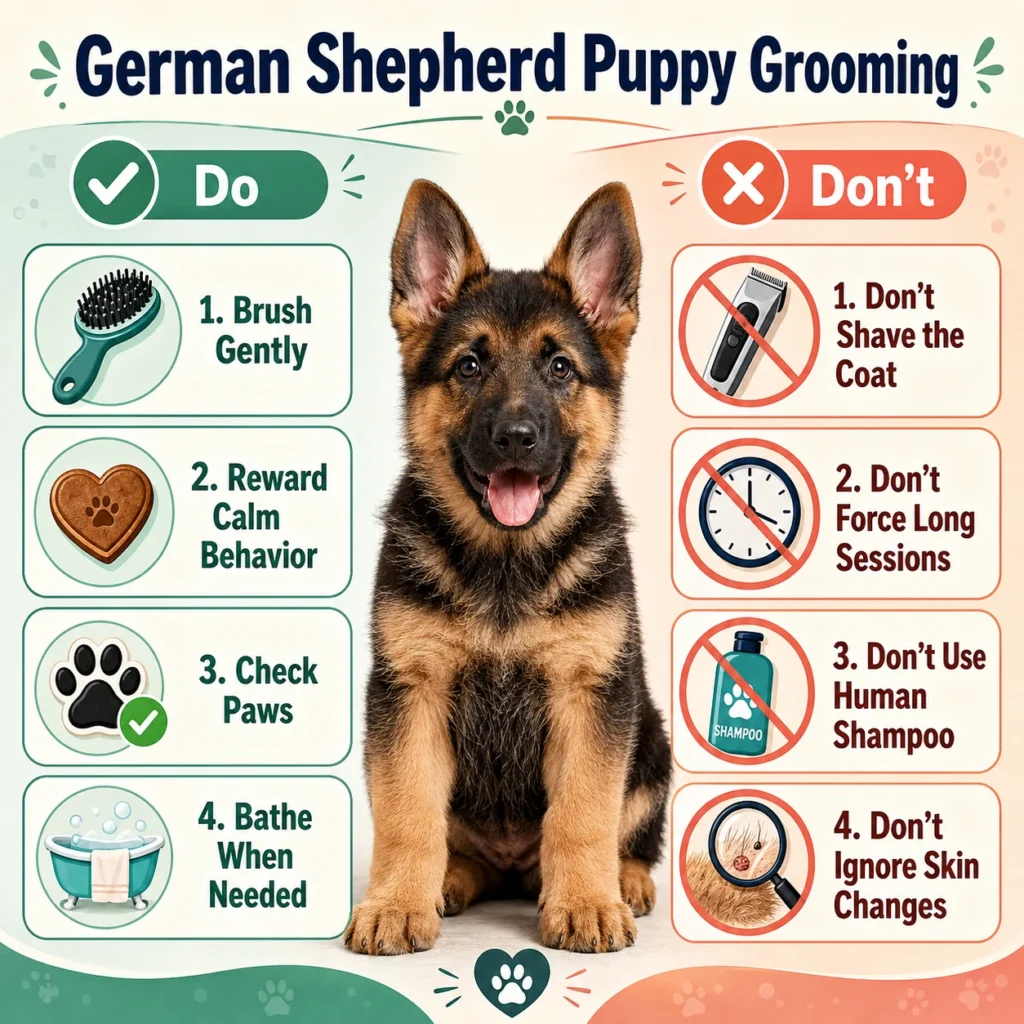
A German Shepherd puppy grooming guide should help you build a calm routine, not chase perfection. Brush often, bathe only when needed, keep nails short, check ears and skin, introduce tooth brushing early, and avoid shaving the double coat.
The best routine is the one your puppy can repeat without fear. Start small, reward cooperation, and treat grooming as part of training, health care, and bonding.
As your puppy grows, connect this page to related Furbivo guides on German Shepherd growth, puppy feeding, training, and safe coat care.
Have questions about your dog’s health, nutrition, grooming, or daily care? Visit our Contact Us page to reach the Furbivo team. For any medical symptoms, diagnosis, or treatment advice, always consult a qualified veterinarian.