
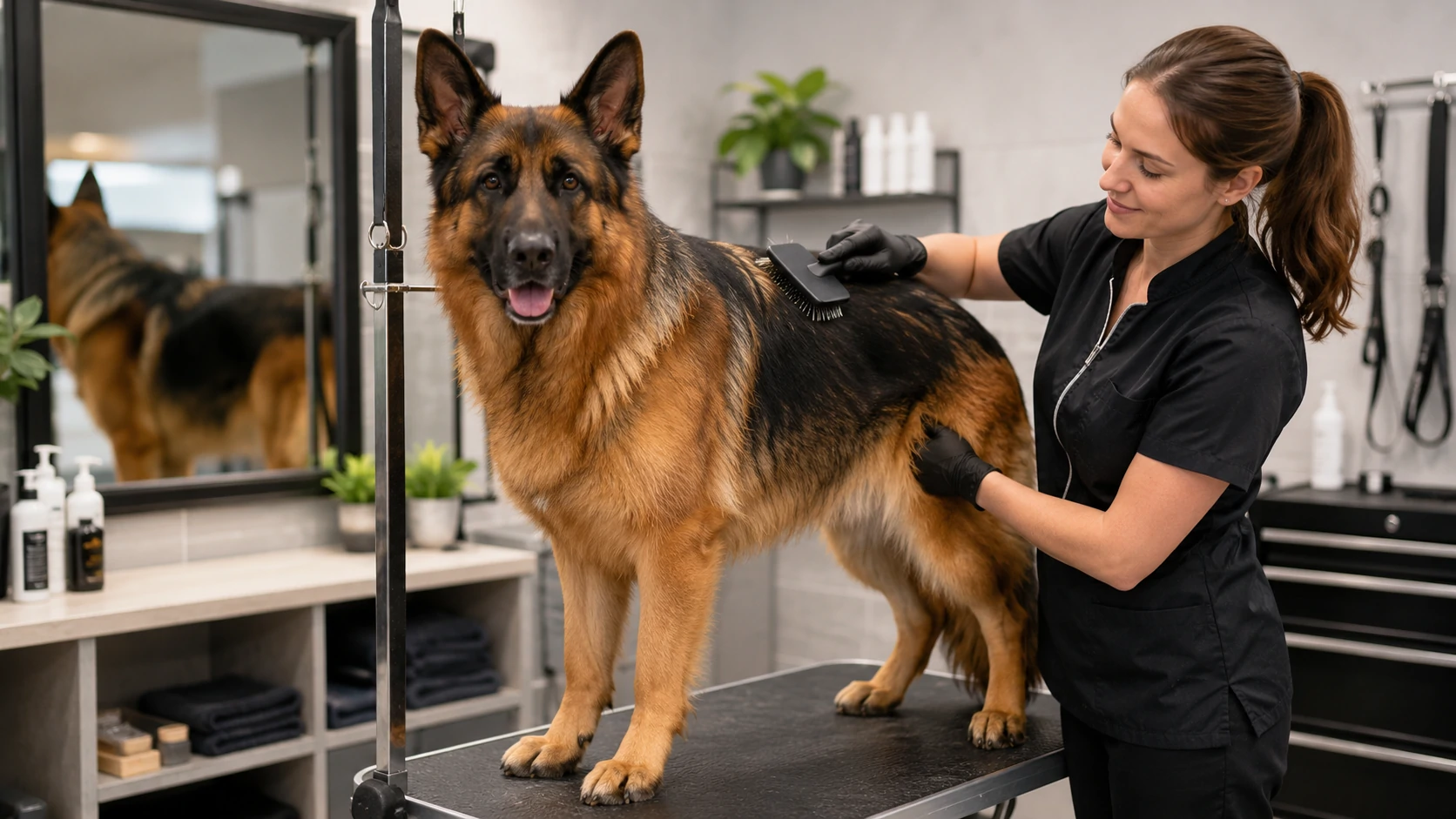
Can you shave a German Shepherd? In most normal situations, no. A German Shepherd has a double coat, and shaving it close to the skin can reduce natural protection, increase sunburn risk, disturb coat texture, and may not solve overheating. The safer approach is regular brushing, undercoat removal, bathing when needed, trimming problem areas, and using heat-safety habits.
German Shepherd owners often ask this question during heavy shedding season or hot weather. The dog looks uncomfortable, the house is full of hair, and shaving feels like a quick fix. The problem is that a German Shepherd’s coat is not like human hair or a single-coated dog’s coat. It has a protective outer layer and a soft undercoat that work together.
This guide explains when shaving is a bad idea, when clipping may be medically necessary, what to do instead, and how to keep your dog cooler without damaging the coat.
Quick Answer: Can You Shave a German Shepherd?
Can you shave a German Shepherd safely? You usually should not shave a healthy German Shepherd for summer, shedding, or convenience. This breed’s double coat protects the skin from sunlight, insects, and environmental irritation. It also helps the coat function properly through seasonal shedding.
A veterinarian or professional groomer may clip a German Shepherd in special cases, such as severe matting, wound care, surgery, skin disease, or hygiene problems. That is different from shaving the whole body short because the weather is hot.
Why German Shepherds Have a Double Coat
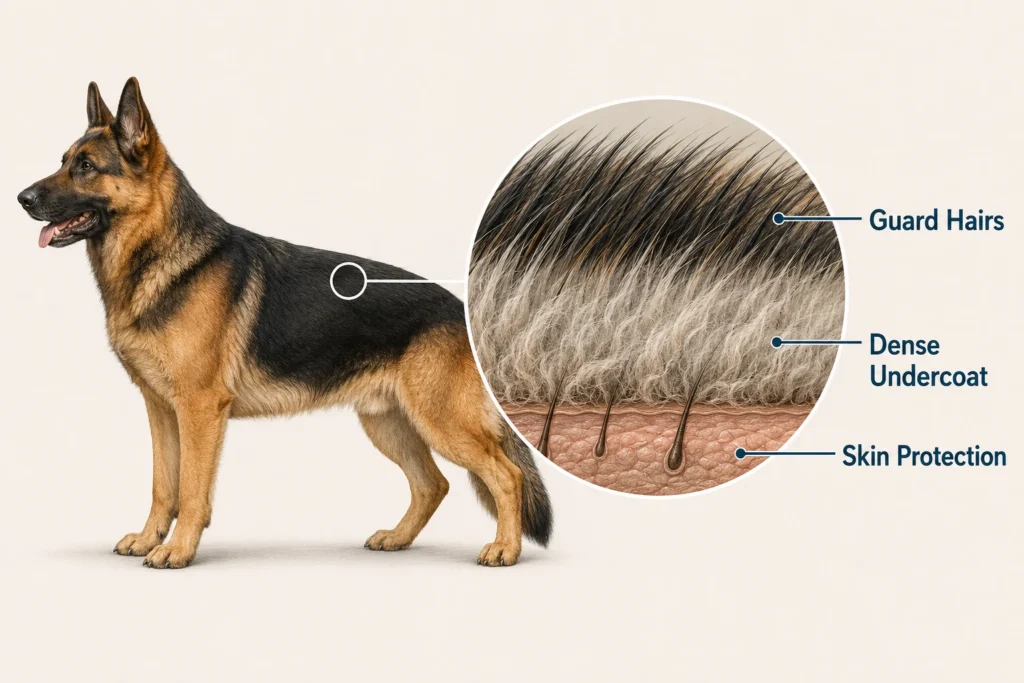
The official German Shepherd Dog breed standard describes the ideal dog as having a medium-length double coat with a dense, harsh outer coat lying close to the body. That outer coat is not just decoration. It helps shield the skin from sun exposure, dirt, debris, and minor outdoor irritation.
Under the guard hairs is the softer undercoat. This layer sheds heavily, especially during seasonal coat changes. When owners feel overwhelmed by hair, the real target is usually the loose undercoat—not the protective outer coat.
For more breed background, Furbivo’s German Shepherd growth chart can help puppy owners understand how coat, size, and body development change as a young dog matures.
What Happens If You Shave a German Shepherd?
Shaving a German Shepherd can create several problems:
- The skin may become more exposed to sunburn.
- The coat may grow back unevenly or feel different.
- The undercoat may return faster than the guard hairs.
- The dog may still shed, just with shorter prickly hairs.
- Skin irritation, clipper burn, or small cuts can occur.
- Shaving may hide the real issue, such as allergies, parasites, or poor coat condition.
The American Kennel Club’s guide on whether it is OK to shave a dog’s coat in summer explains that many double-coated dogs should not be shaved because the coat helps protect the dog and shaving can affect coat regrowth.
This is why the answer to can you shave a German Shepherd is usually “not unless there is a specific medical or severe grooming reason.”
Does Shaving Keep a German Shepherd Cooler?
Shaving does not reliably solve heat discomfort in German Shepherds. Dogs cool themselves mainly through panting and other body mechanisms, not by sweating through the skin like people do. Removing the coat does not change that basic cooling system.
A shaved dog may even become more vulnerable to direct sunlight. Instead of shaving, focus on shade, cool water, indoor rest during peak heat, avoiding hot pavement, and brushing out dead undercoat so air can move through the coat more easily.
If your dog pants heavily, seems weak, has sticky gums, becomes confused, collapses, vomits, or acts abnormal in hot weather, treat it as urgent. Heat stroke is a medical emergency. VCA’s heat stroke in dogs guide explains warning signs and emergency steps, but a dog with serious heat symptoms needs veterinary help right away.
Shaving vs Trimming: What Is the Difference?
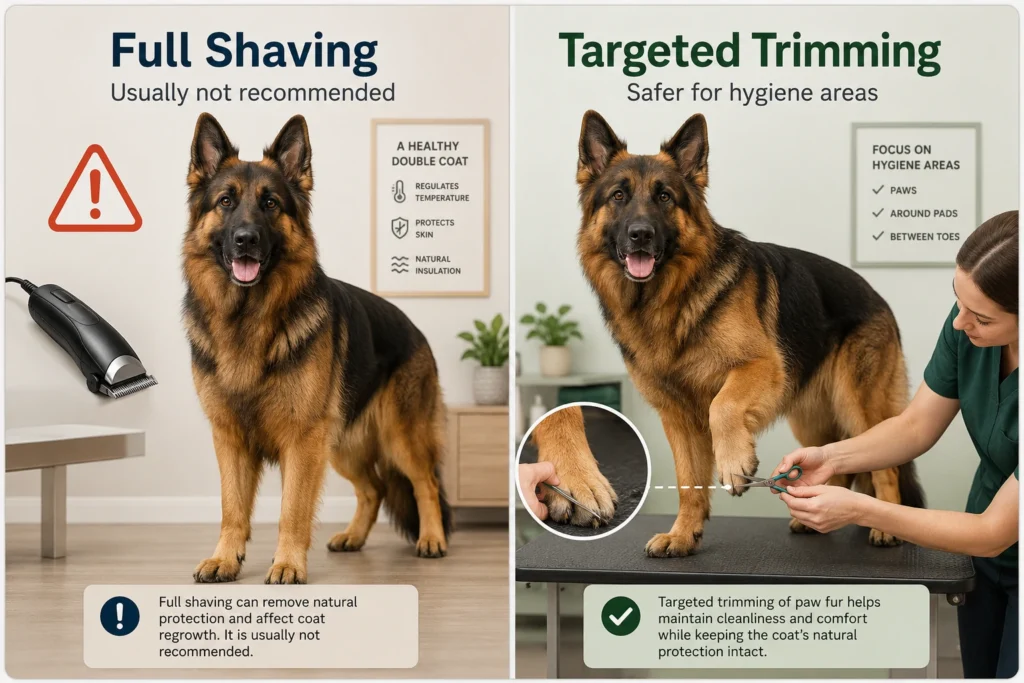
Shaving usually means cutting the coat very short across a large area of the body, sometimes close to the skin. For German Shepherds, this is the risky option.
Trimming is more targeted. It may include tidying the paws, sanitary area, belly feathering, or a small matted patch. A professional groomer may also thin or de-shed the coat without removing the protective outer layer.
| Grooming choice | Usually safe for German Shepherds? | Best use |
|---|---|---|
| Regular brushing | Yes | Removing loose undercoat and reducing shedding |
| Undercoat rake/deshedding tool | Yes, if used gently | Seasonal shedding control |
| Bath and blow-dry | Yes, when done correctly | Loosening dead coat and cleaning skin |
| Paw and sanitary trim | Usually yes | Hygiene and comfort |
| Cutting out a small mat with clippers | Sometimes | Only when brushing cannot remove it |
| Full-body shave | Usually no | Only for medical or severe coat problems |
| Skin-close shave | No, unless veterinary reason | Surgery, wounds, severe matting, medical care |
When Might a German Shepherd Need to Be Clipped?
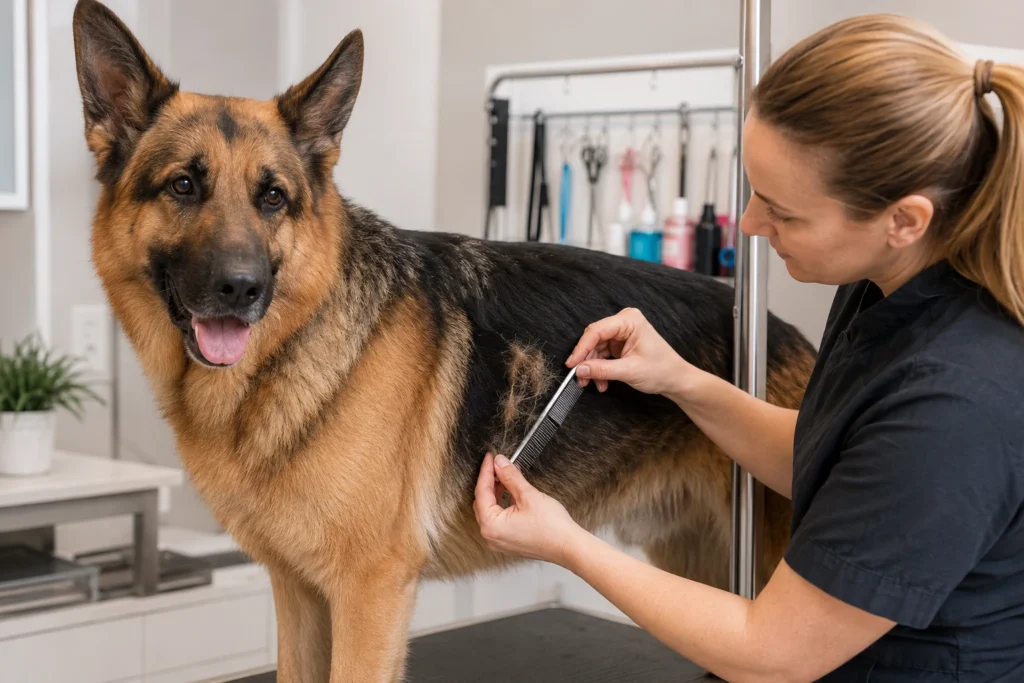
There are exceptions. A German Shepherd may need clipping if the coat is severely matted, if burrs or grass awns are stuck deeply, if a wound needs cleaning, if surgery is planned, or if a veterinarian needs to examine or treat the skin.
In these cases, clipping is a controlled solution, not a style choice. VCA’s grooming and coat care guide advises using clippers rather than scissors for mats because scissors can accidentally cut the skin. Severe mats, painful tangles, or skin irritation should be handled by a professional groomer or veterinarian.
If your dog has itching, repeated ear infections, hair loss, odor, sores, redness, or greasy skin, do not assume shaving will fix it. These signs can point to allergies, parasites, infection, hormonal disease, or other skin problems. Furbivo’s guide to common diseases in German Shepherds explains several health issues owners should not ignore.
The Better Alternative: A German Shepherd Grooming Routine
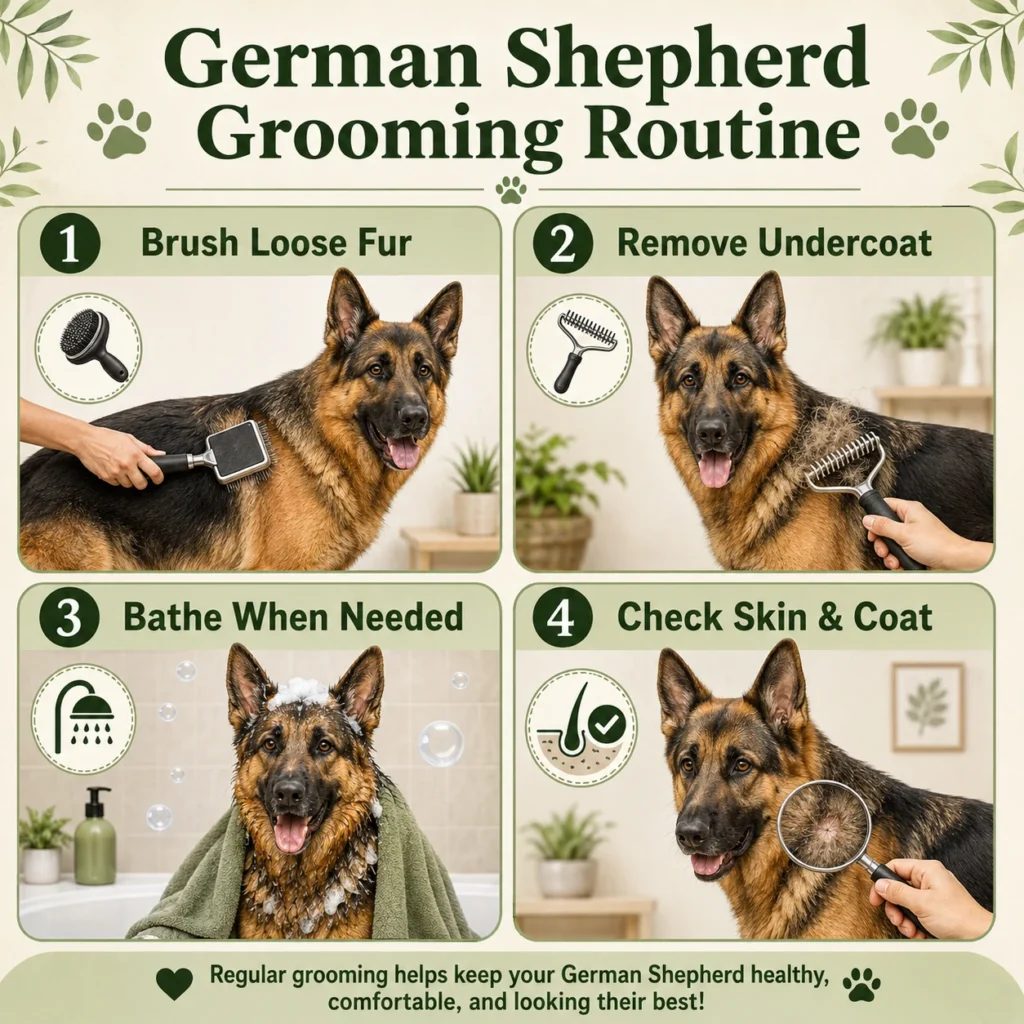
A good grooming routine usually solves the problem owners were hoping shaving would fix.
1. Brush More During Shedding Season
Brush several times per week, and daily during heavy shedding. Work in sections from the neck to the tail, then the chest, belly, legs, and rear feathering. Do not scrape the skin.
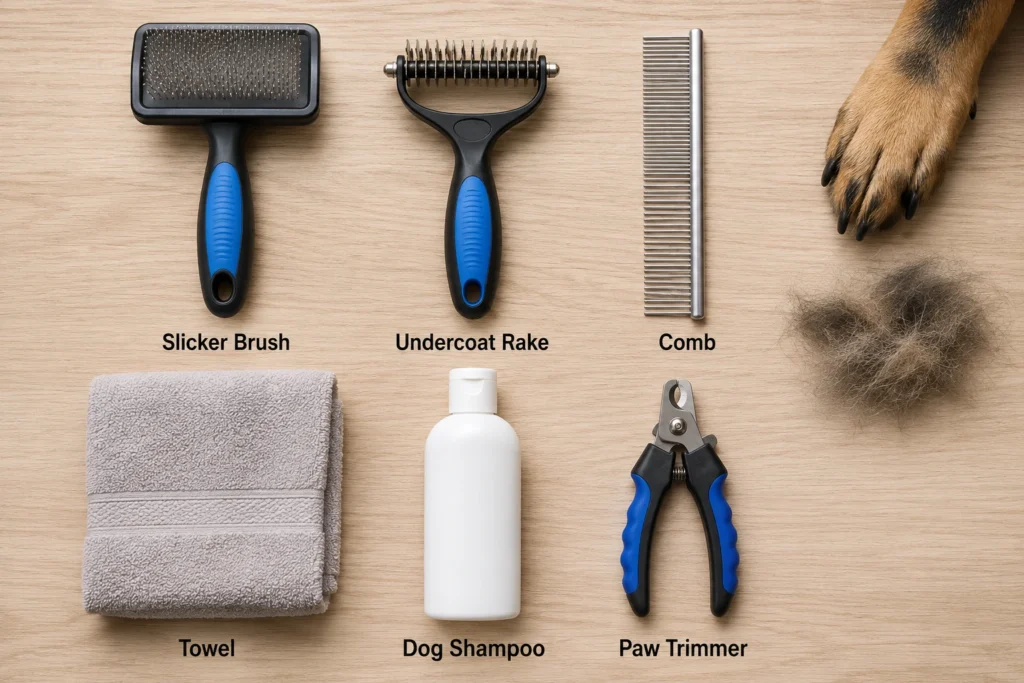
Useful tools may include:
- A slicker brush for loose hair and surface tangles
- An undercoat rake for dead undercoat
- A long-toothed comb for checking behind ears, armpits, groin, and leg feathering
- A grooming glove for finishing and bonding
2. Bathe Only When Needed
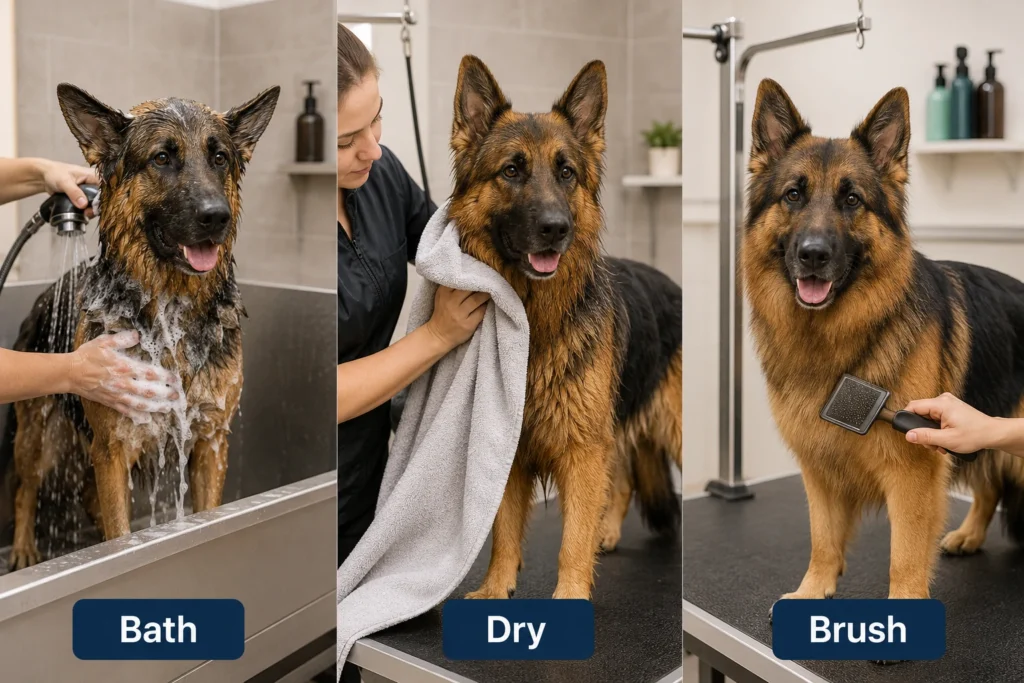
Most German Shepherds do not need constant bathing. Bathing too often or using harsh products can dry the skin. Use a dog-safe shampoo, rinse thoroughly, and make sure the coat dries properly.
A bath during seasonal shedding can help loosen dead undercoat, especially when followed by a proper blow-dry and brushing. If your dog has allergies or skin disease, ask your veterinarian before using medicated products.
3. Trim Hygiene Areas Carefully
A small trim around the paws, pads, rear area, or belly feathering can improve hygiene without damaging the coat. This is especially helpful for older dogs, dogs that get dirty outdoors, or dogs with stool or urine catching in the fur.
For senior care concerns beyond grooming, Furbivo’s German Shepherd lifespan guide explains age-related changes that can affect comfort, mobility, and daily care.
4. Check the Skin While Grooming
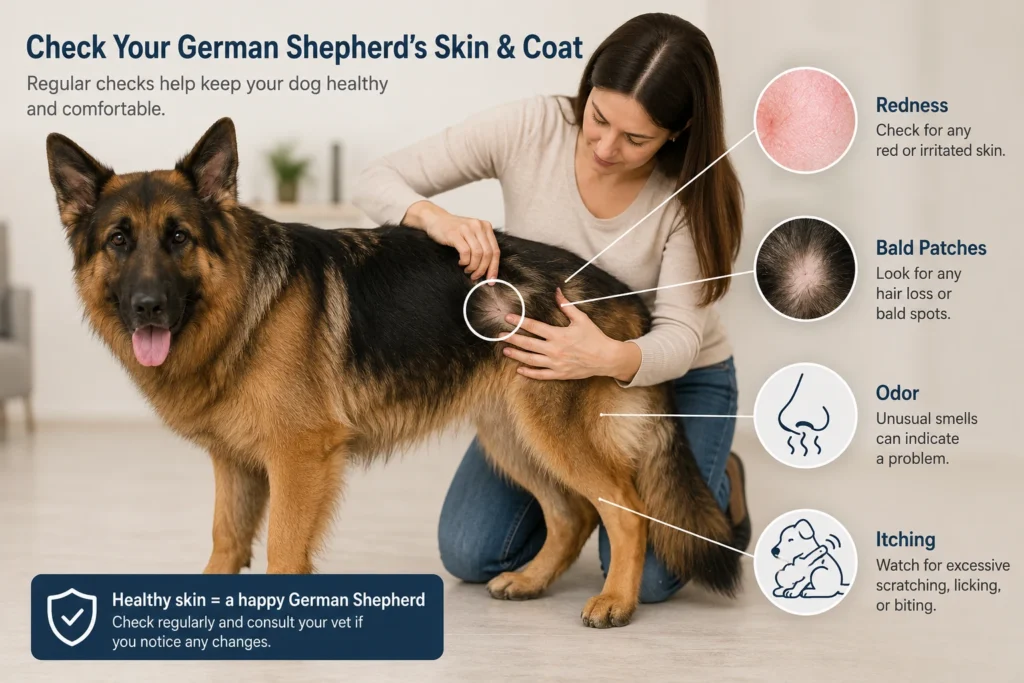
Brushing is also a health check. Look for fleas, ticks, redness, lumps, scabs, hot spots, dandruff, greasy patches, hair thinning, and painful areas.
Coat quality can reflect nutrition and health. If your dog’s coat is dull, brittle, greasy, or shedding unusually, review diet and veterinary care. Furbivo’s German Shepherd dog food guide can help owners understand how food choice, life stage, and body condition relate to skin and coat support.
How to Keep a German Shepherd Cool Without Shaving
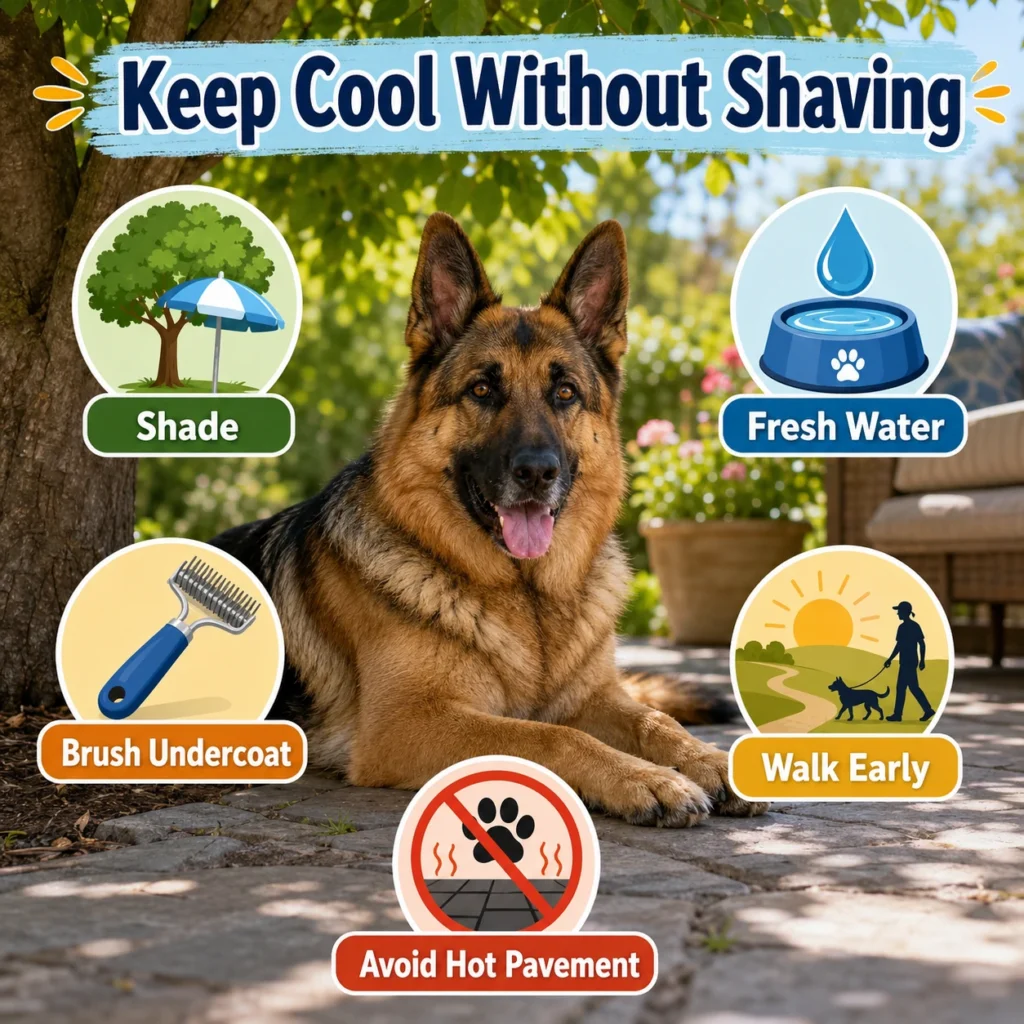
Instead of shaving, use heat-management habits that actually protect your dog:
- Walk early morning or late evening.
- Avoid hot pavement and direct afternoon sun.
- Provide cool water indoors and outdoors.
- Keep your dog in shade or air conditioning during heat waves.
- Use fans, cooling mats, or damp towels under supervision.
- Brush out loose undercoat so the coat is not packed with dead hair.
- Skip intense fetch, running, or training in hot weather.
- Never leave your dog in a parked car.
If your German Shepherd is overweight, elderly, very young, dark-coated, anxious, or has heart, breathing, or mobility problems, be extra careful in warm weather.
What Most Articles Miss
Many articles answer can you shave a German Shepherd with a simple “never.” That is easy to remember, but it misses the important nuance.
The better rule is: do not shave a healthy German Shepherd for heat or shedding, but do allow medically necessary clipping when the coat or skin creates a welfare problem.
A painful mat is not “natural protection.” A dirty, urine-soaked rear coat is not healthy. A wound hidden under thick fur may need clipping so it can be treated. The goal is not to protect the coat at all costs. The goal is to protect the dog.
Common Mistakes to Avoid
Do not shave because your dog is shedding. Shedding is normal for a double-coated breed.
Do not use human shampoo, baby shampoo, or strong fragrance products unless your veterinarian recommends a specific product.
Do not cut mats with scissors close to the skin. Dog skin can fold into mats, and accidental cuts can be serious.
Do not assume a dull coat is only a grooming issue. Nutrition, allergies, parasites, pain, endocrine problems, and infections can all affect the skin and coat.
Do not wait if your dog shows heat-stroke signs. Heavy panting with weakness, confusion, collapse, vomiting, seizures, or abnormal gum color needs urgent veterinary attention.
FAQs
Can you shave a German Shepherd in summer?
Can you shave a German Shepherd in summer? Usually, no. Shaving is not the best way to cool this breed and may expose the skin to sunburn or coat damage. Brushing, shade, cool water, and avoiding peak heat are safer.
Will a shaved German Shepherd’s coat grow back?
A shaved German Shepherd’s coat often grows back, but it may return unevenly, slowly, or with a different texture. The undercoat can grow faster than the guard hairs, which may make the coat look patchy.
Can I shave my German Shepherd to stop shedding?
No. Shaving does not stop shedding; it only makes the shed hair shorter. Regular brushing, undercoat removal, bathing during shedding season, and a healthy diet are better ways to manage loose hair.
Is it okay to trim a German Shepherd’s belly?
A light belly trim may be okay if it is done carefully and enough coat remains to protect the skin. Ask a professional groomer if your dog has long belly feathering, hygiene problems, or mats.
What if my German Shepherd is badly matted?
Bad mats should be handled by a professional groomer or veterinarian. Severe mats can pull on the skin and hide irritation. Clippers are usually safer than scissors for removing mats close to the body.
How often should I brush a German Shepherd?
Most German Shepherds benefit from brushing several times per week. During heavy seasonal shedding, daily brushing may be needed to remove dead undercoat and reduce hair around the home.
When should I call a vet about my dog’s coat?
Call a vet if you notice bald patches, sores, bad odor, constant scratching, greasy skin, dandruff, pain during grooming, repeated ear problems, or sudden coat changes. Grooming helps, but it cannot diagnose or treat medical skin disease.
Final Thoughts
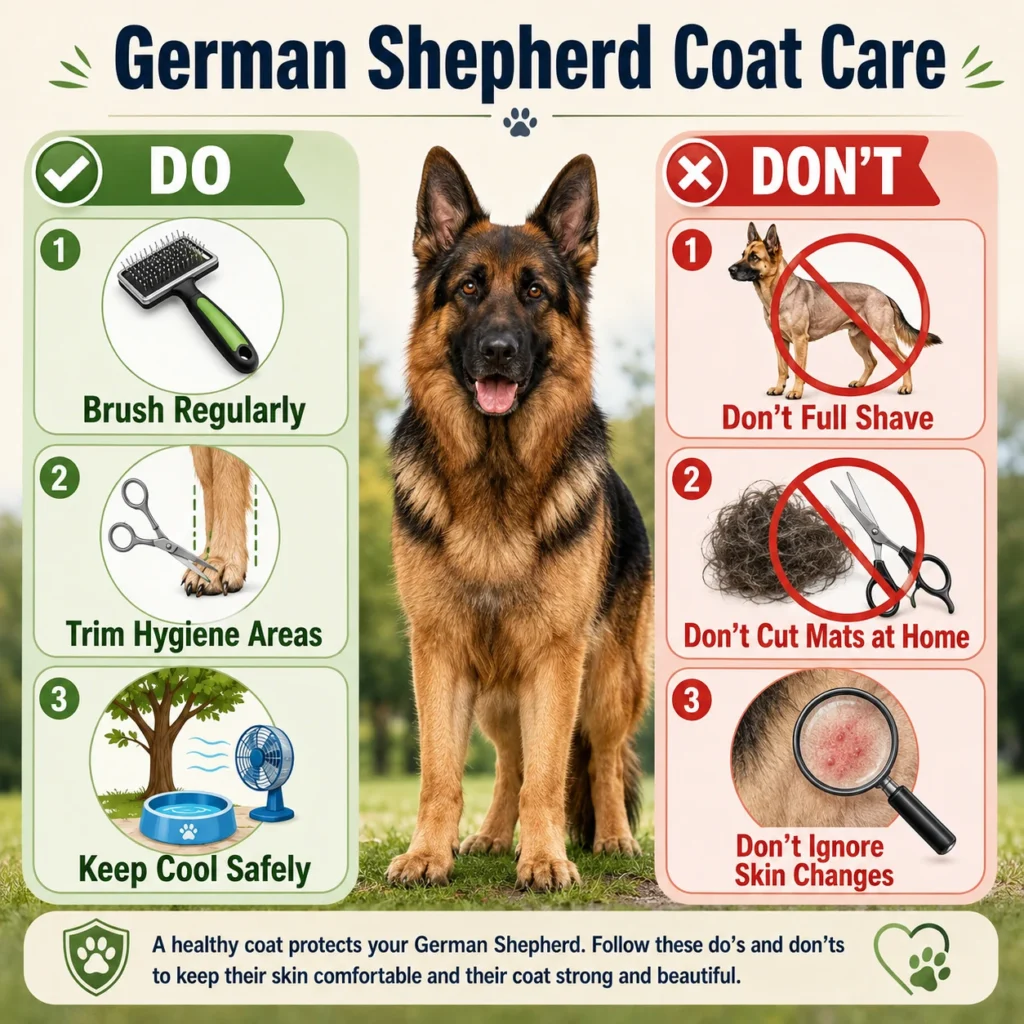
Can you shave a German Shepherd? For a healthy dog with normal shedding, the safest answer is no. A German Shepherd’s double coat has a job, and removing it can create new problems without solving heat or shedding.
Use brushing, undercoat removal, careful trimming, good bathing habits, and heat-safety routines instead. If the coat is severely matted, dirty, painful, or blocking medical care, ask a groomer or veterinarian about targeted clipping.
Have questions about your dog’s health, nutrition, grooming, or daily care? Visit our Contact Us page to reach the Furbivo team. For any medical symptoms, diagnosis, or treatment advice, always consult a qualified veterinarian.