
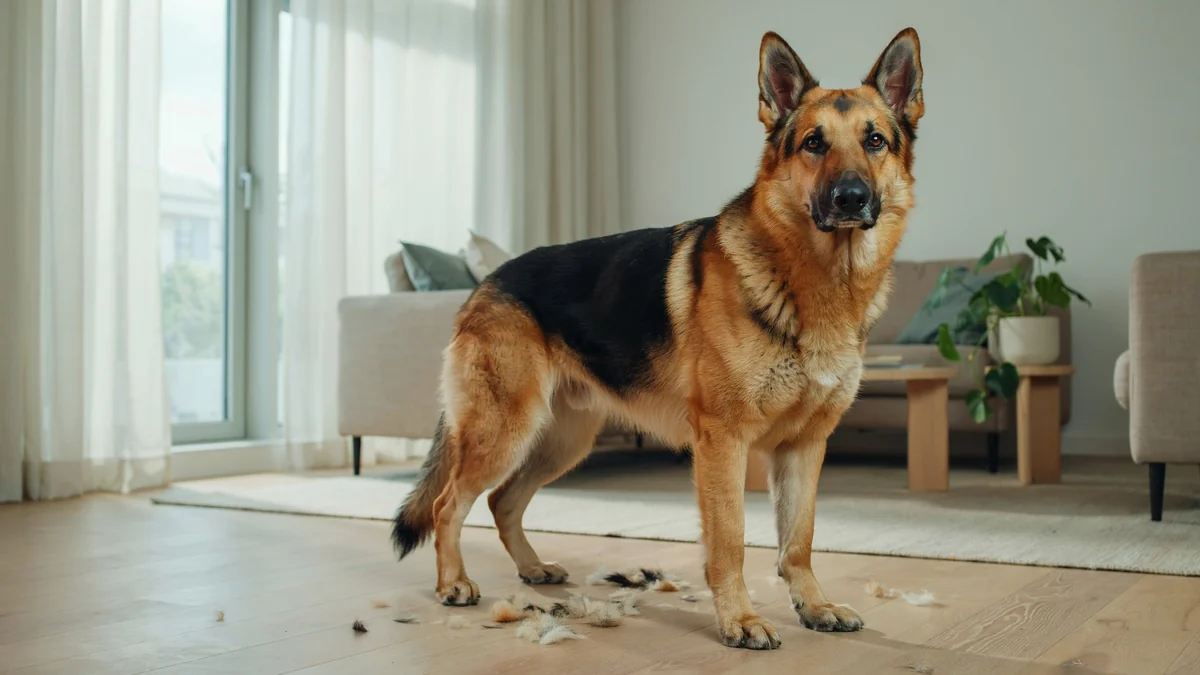
If you are asking how much does a German Shepherd shed, prepare for visible loose hair throughout the year and much heavier shedding during seasonal coat changes. German Shepherds are high-shedding, double-coated dogs. Most healthy adults need brushing several times per week, with daily coat care often helpful when they “blow” their undercoat.
The exact amount cannot be measured by a reliable daily hair count. It changes with coat density, season, climate, indoor living, age, grooming, nutrition, stress, and health. What matters most is learning your dog’s normal pattern and noticing when shedding becomes patchy, sudden, itchy, painful, or linked with skin changes.
Quick Answer: How Much Does a German Shepherd Shed?
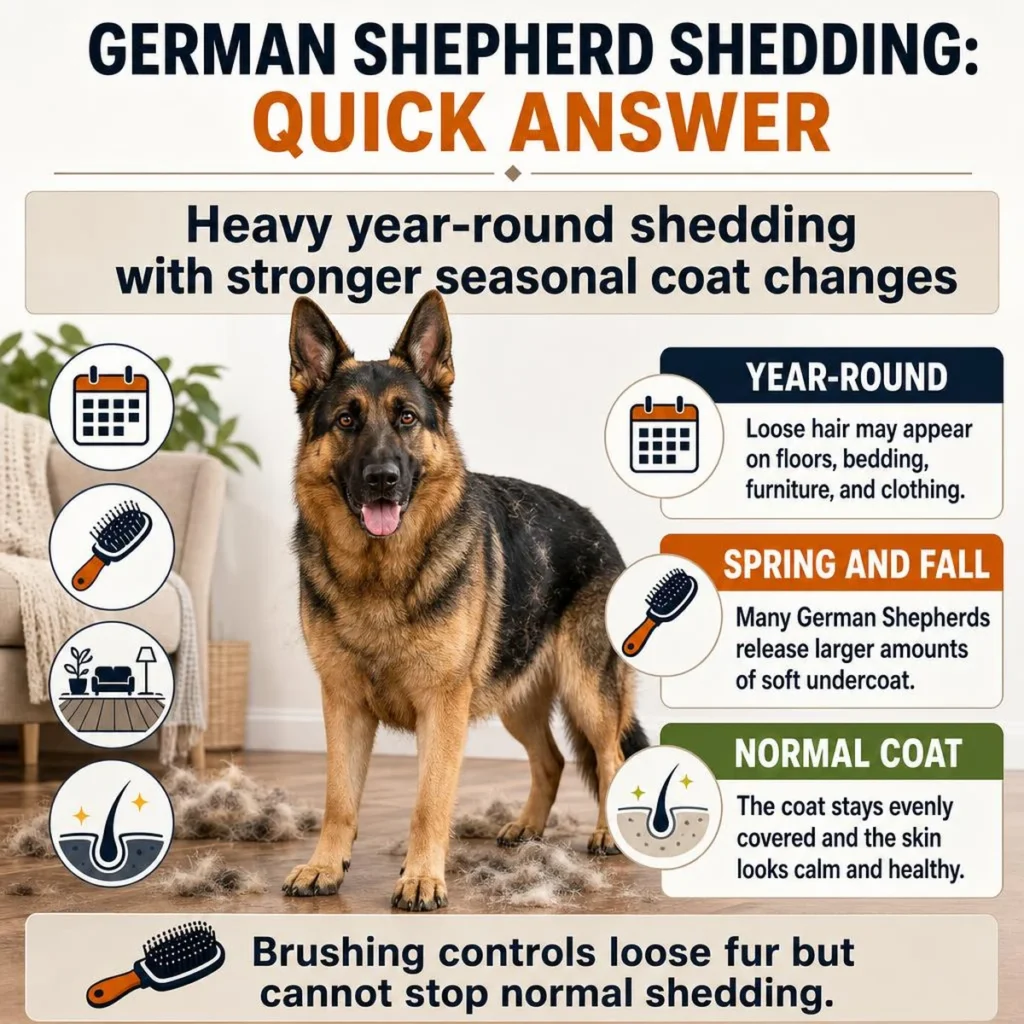
A German Shepherd sheds a noticeable amount all year and usually much more during spring and fall coat changes. Loose hair may appear on floors, furniture, clothing, bedding, and in the brush after every grooming session. Regular brushing controls where the hair lands, but no safe grooming method can stop normal shedding completely.
The American Kennel Club describes the German Shepherd as having a medium-length double coat with a softer undercoat and notes that the breed sheds more profusely once or twice each year.
| Shedding pattern | What you may notice | Usually normal? | Best response |
| Light daily shedding | Hair on clothing, floors, bedding, and the brush | Yes | Brush several times per week |
| Seasonal coat blow | Loose undercoat, tufts, clumps, and faster household buildup | Usually | Brush daily or near-daily for a temporary period |
| Indoor year-round shedding | Steady hair loss with less dramatic seasons | Often | Keep a consistent weekly routine |
| Puppy coat transition | Soft puppy coat gradually replaced by a denser adult coat | Usually | Use gentle tools and short sessions |
| Sudden heavy shedding with normal skin | May follow stress or a major environmental change | Sometimes | Watch closely and discuss persistent change with a vet |
| Bald spots, redness, odor, sores, or strong itching | Hair loss rather than simple loose-coat turnover | No | Arrange a veterinary examination |
Why Do German Shepherds Shed So Much?
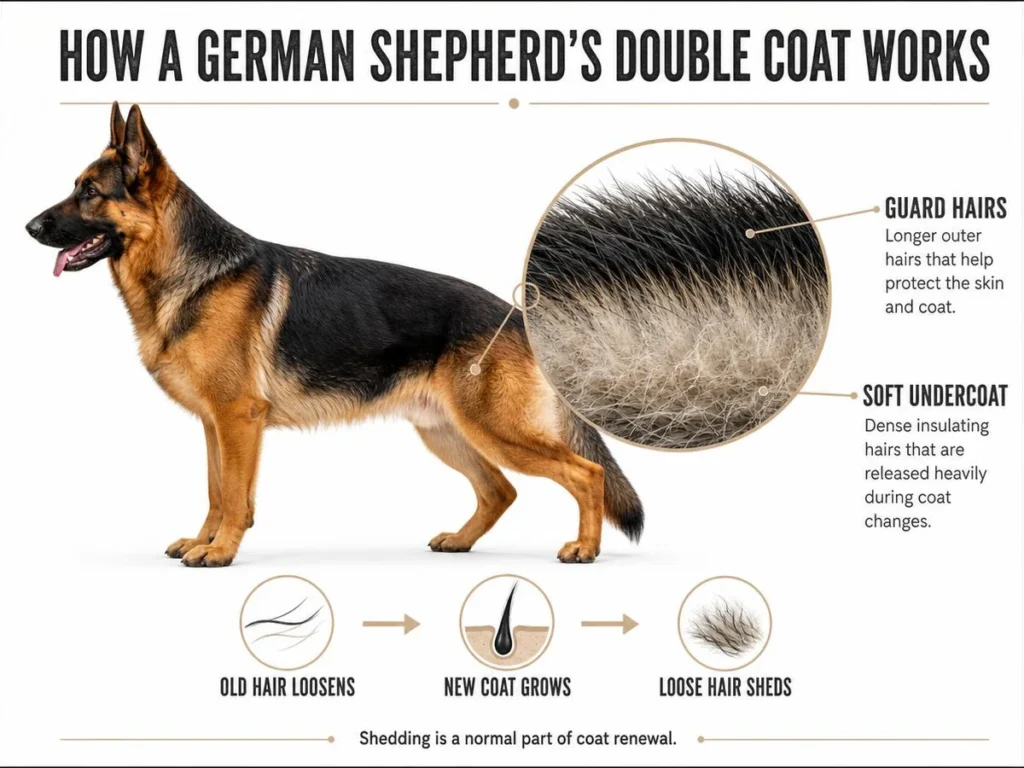
German Shepherds have a functional double coat. The outer layer is made of denser guard hairs, while the softer undercoat provides insulation. Old hairs must loosen and fall as new coat grows, so shedding is part of normal coat renewal rather than a sign that the coat is failing.
This coat structure explains why German Shepherd shedding can seem intense even when the dog is healthy. Loose undercoat may stay hidden beneath the outer layer until brushing, bathing, rubbing against furniture, or normal movement releases it.
A standard-coated German Shepherd may drop shorter hairs that work into carpet and fabric. A long-coated dog may release longer strands that look more dramatic and can collect in visible wisps. Coat length changes how the mess looks, but it does not make the long-haired variety non-shedding.
For more detail on coat length, genetics, and undercoat differences, read Furbivo’s guide to the long-haired German Shepherd.
How Much Does a German Shepherd Shed in Daily Life?
There is no medically useful number of hairs, ounces, handfuls, or vacuum canisters that defines normal shedding. A healthy dog can produce what looks like a large amount of loose hair without developing bald areas or a visibly thin coat.
A practical answer to how much does a German Shepherd shed is this: enough that most owners should expect routine brushing, frequent floor cleaning, hair on soft furnishings, and a clear increase during coat-blow periods. During peak shedding, a short grooming session may release a surprising amount of undercoat, but the coat should still look evenly covered afterward.
Judge the pattern by the dog, not the vacuum alone. Normal shedding usually has these features:
- The coat remains evenly covered.
- The skin looks calm rather than red, crusty, greasy, or sore.
- The dog is not constantly scratching, chewing, or rubbing.
- Loose hair comes from many areas rather than one sharply defined bald patch.
- The heavier period gradually settles rather than worsening without explanation.
- Appetite, weight, energy, and behavior remain normal.
When Is German Shepherd Shedding Season?
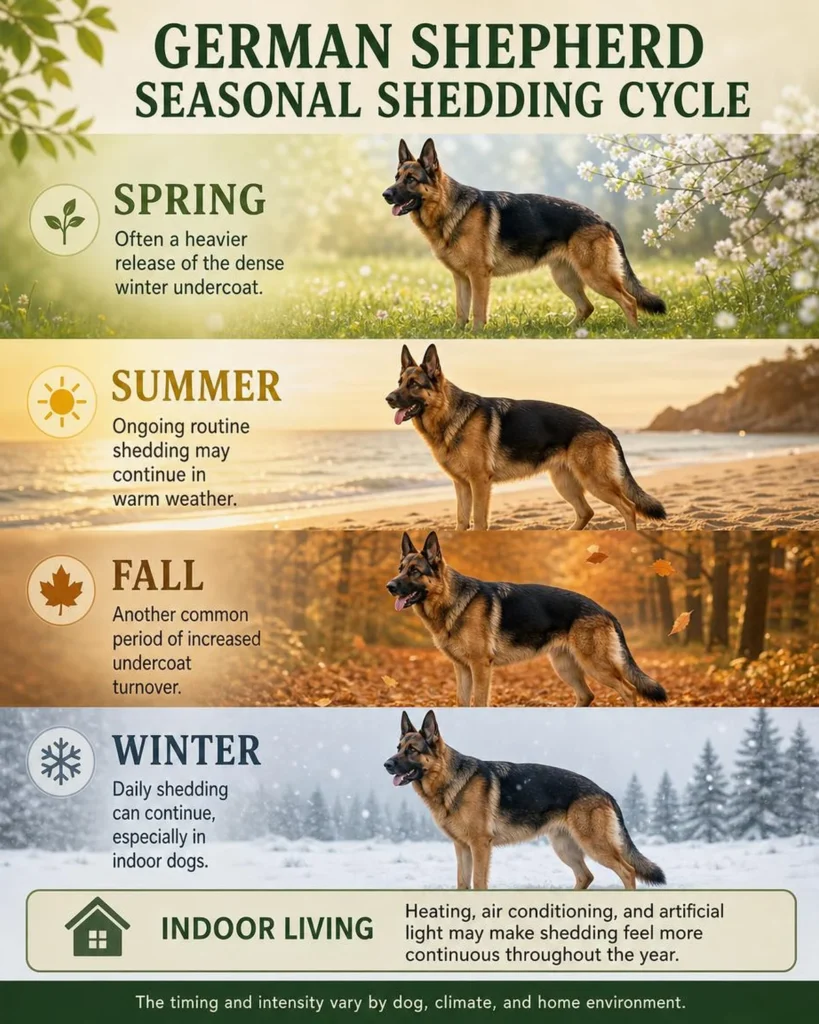
Many German Shepherds shed throughout the year and have heavier coat changes in spring and fall. In spring, the denser cold-weather coat is released as warmer conditions arrive. In fall, the coat changes again as thicker insulation develops. AKC and VCA guidance describe heavier seasonal undercoat loss in double-coated dogs, often occurring once or twice yearly.
Indoor living can blur this schedule. Artificial lighting and stable indoor temperatures may lead to more consistent year-round shedding, even when a dog still has one or two heavier periods.
Seasonal shedding does not follow an exact calendar in every home. Climate, daylight, heating, air conditioning, time spent outdoors, and the individual coat all affect timing. A coat blow may last from a few weeks to a couple of months rather than ending on a fixed date.
What Does “Blowing the Coat” Look Like?
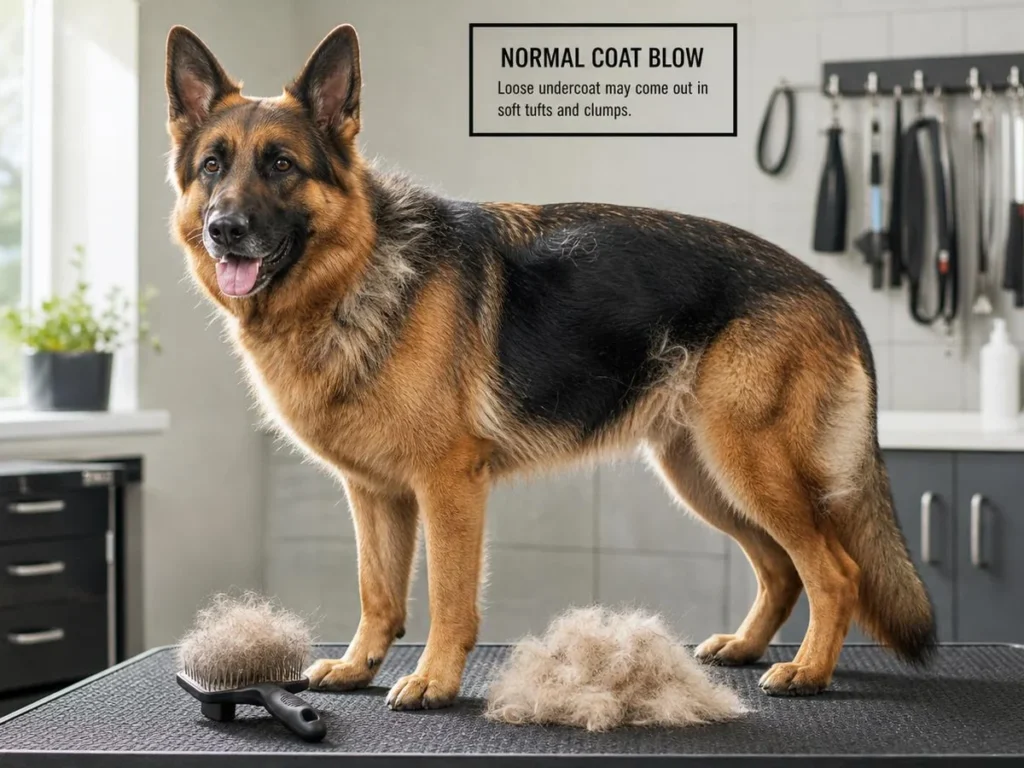
A coat blow is a concentrated release of undercoat. You may see:
- Soft tufts lifting from the neck, shoulders, sides, thighs, and rear
- Clumps coming out during brushing
- Hair gathering quickly along baseboards and under furniture
- A fuller brush after only a few passes
- A temporary need for daily grooming
A coat blow should not create raw skin or clearly bare areas. If the dog looks moth-eaten, painful, inflamed, or unusually thin-coated, do not assume it is merely seasonal.
Do Puppies Shed as Much as Adult German Shepherds?
Young puppies often shed differently from adults because their soft puppy coat is still changing. As the adult double coat develops, owners may notice more loose fluff, coarser guard hairs, changing color depth, and a new pattern of undercoat release.
A puppy may not produce the same heavy seasonal coat blow as a mature adult, but gentle grooming should begin early. Short, rewarded handling sessions make adult coat care safer and easier. Furbivo’s German Shepherd puppy grooming guide explains how to introduce brushing, bathing, paw handling, and skin checks without turning grooming into a struggle.
Sudden puppy hair loss, broken skin, circular bald areas, severe dandruff, intense itching, or a bad odor is not a normal “adult coat coming in” assumption. Puppies can develop parasites, infections, nutritional problems, and other skin conditions that need veterinary evaluation.
Do Long-Haired German Shepherds Shed More?
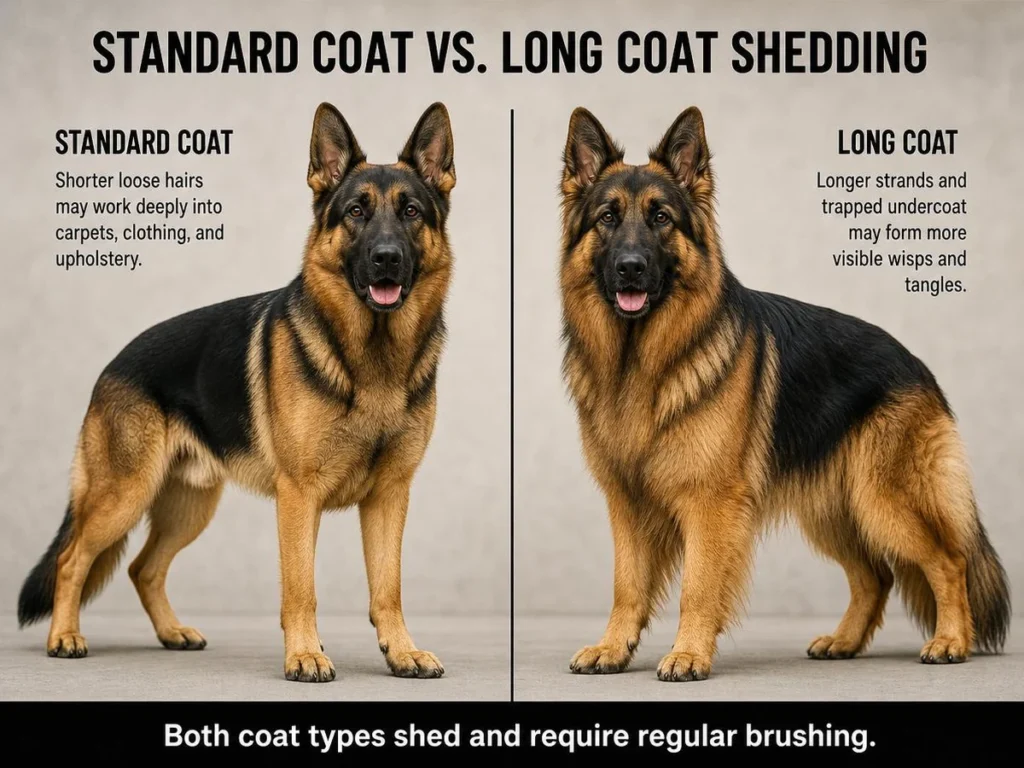
Long-haired German Shepherds still shed because coat length does not switch off the normal hair-growth cycle. The longer strands may be easier to see, and loose undercoat can become trapped in feathering behind the ears, around the neck, on the rear legs, belly, and tail.
That means the answer to how much does a German Shepherd shed may feel different in a long-coated home even when the biological shedding rate is not clearly greater. Longer hair can form visible wisps and tumbleweeds, while shorter hair may weave into upholstery and clothing.
Long coats usually need careful section-by-section brushing and comb checks in friction areas. Mats should not be pulled, ripped, or cut close to the skin with scissors. A professional groomer can help when tangles are tight, painful, or close to delicate skin.
What Affects How Much a German Shepherd Sheds?
Season, Daylight, and Indoor Climate
Changes in daylight and temperature influence seasonal coat turnover. Indoor dogs may shed more steadily because electric lighting, heating, and air conditioning reduce natural environmental swings.
Coat Density and Length
A dense undercoat creates more loose material during seasonal turnover. Long hair may make shed strands more visible, while shorter hairs may be harder to remove from fabric.
Age and Coat Development
Puppies transition into adult coats. Mature adults often show the most recognizable seasonal pattern. Senior dogs may develop changes in coat texture, grooming tolerance, mobility, or health that alter what owners notice.
Grooming Consistency
Brushing does not increase the total amount the body needs to shed. It collects hair before it spreads through the home and prevents loose undercoat from remaining trapped.
Stress and Routine Disruption
Some dogs release noticeably more hair during stressful events. VCA notes that anxious dogs may shed heavily in situations such as veterinary visits or the show ring.
Skin and General Health
Parasites, allergies, infections, hormonal disorders, systemic illness, and other conditions can cause abnormal hair loss or excessive shedding. These problems often produce additional signs, such as itching, redness, odor, scaling, sores, or bald areas.
Nutrition
A complete and balanced diet supports normal skin and coat function, but changing food is not an automatic cure for shedding. Poor coat quality can sometimes accompany nutritional problems, yet allergies, parasites, infections, and endocrine disease can look similar. Discuss persistent coat changes with a veterinarian rather than adding multiple supplements or repeatedly switching foods.
Furbivo’s German Shepherd dog food guide can help owners understand age-appropriate food selection without treating nutrition as a substitute for diagnosis.
How to Manage German Shepherd Shedding
You cannot safely stop normal shedding. The realistic goal is to remove loose coat efficiently, protect the skin, prevent tangles, and keep most shed hair in the brush rather than around the house.
1. Brush on a Schedule
Most German Shepherds benefit from brushing several times each week. During a strong coat blow, daily or near-daily brushing may be useful for a temporary period. AKC grooming guidance reports routines ranging from every other day to daily during heavy shedding.
Keep sessions short enough that your dog remains comfortable. A calm ten-minute session repeated consistently is usually more useful than an aggressive hour-long session after the coat has built up.
2. Use Tools That Match the Coat
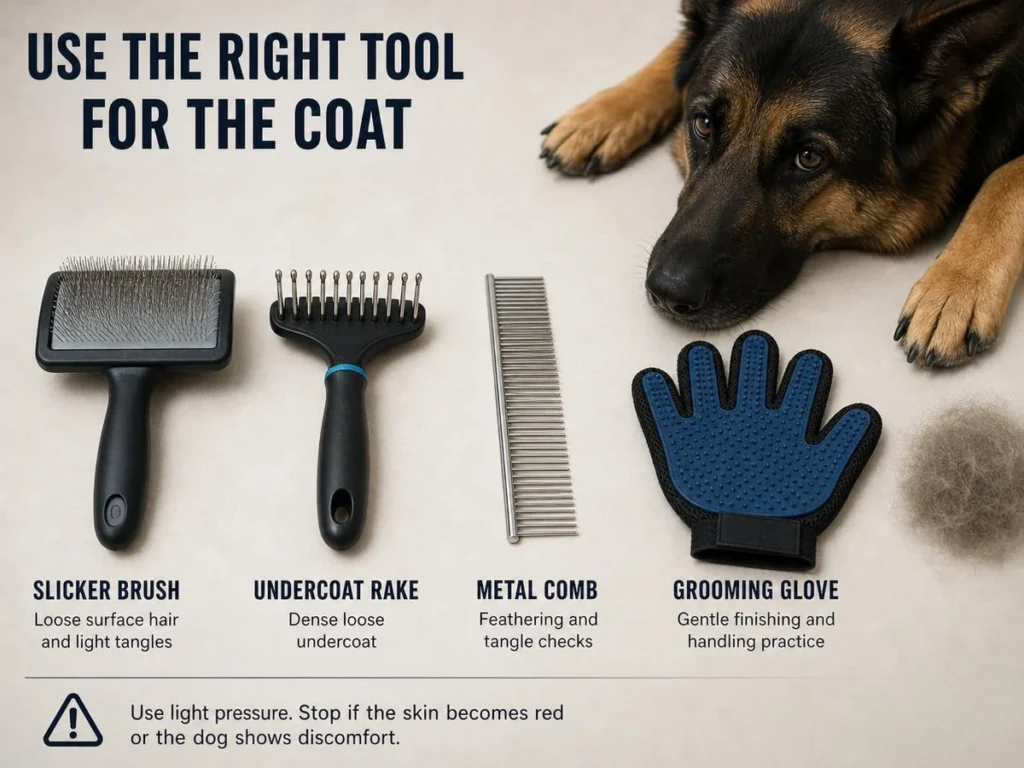
A useful basic kit may include:
- A slicker brush for loose surface hair and light tangles
- An undercoat rake with pins long enough for your dog’s coat
- A metal comb for checking feathering and friction areas
- A grooming glove for finishing and gentle handling
- A de-shedding tool used lightly and according to its instructions
Undercoat rakes can be used on double coats, but the pin length should fit the coat length. De-shedding tools can damage guard hairs or irritate skin when used with excessive pressure or too many repeated passes.
3. Brush in Sections Instead of Skimming the Surface
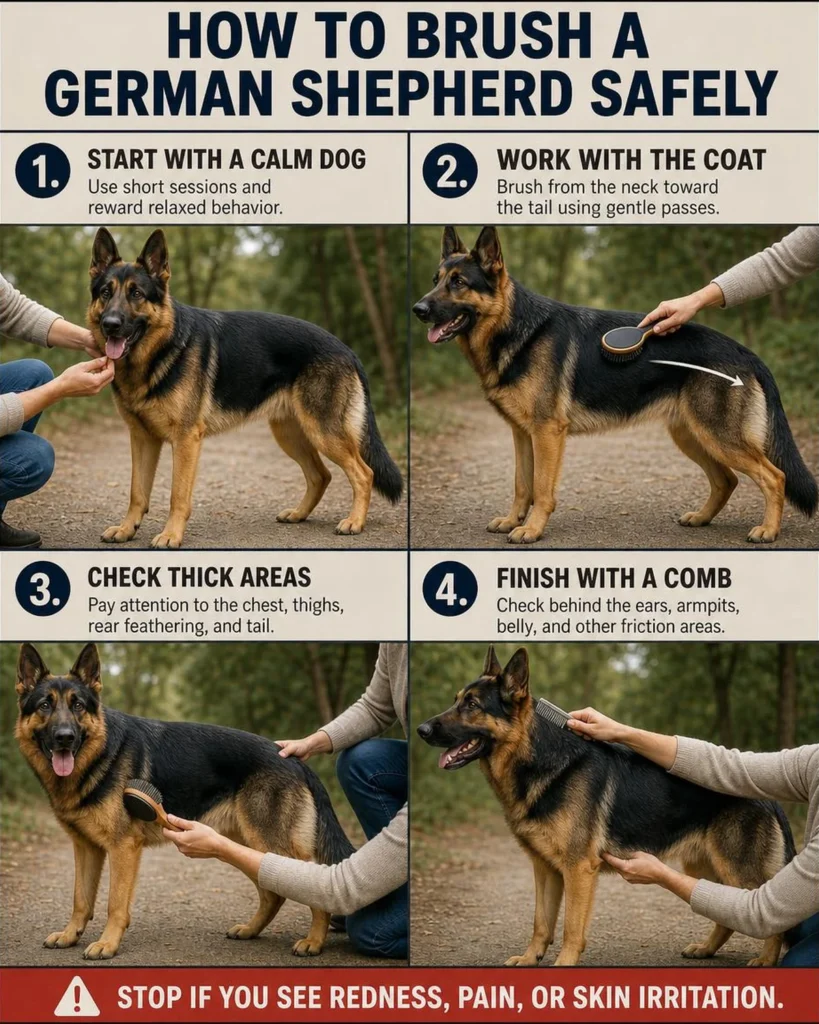
Work from the neck toward the tail, then cover the chest, sides, belly, thighs, rear feathering, and tail. Part thick hair so the tool reaches loose undercoat without scraping the skin.
Use your comb as a quality check. If it catches behind the ears, in the armpits, groin, trousers, or tail feathering, slow down and work gently rather than pulling through resistance.
4. Bathe When the Dog Needs It
A bath can loosen dead coat, especially during a seasonal shed, but bathing too often may dry or irritate the skin. The American Animal Hospital Association notes that brushing is more effective for long-term shedding management and that over-bathing can dry the skin.
Use a dog-safe shampoo, rinse thoroughly, and dry the undercoat completely. Dampness trapped in a dense coat can contribute to odor, tangles, and skin discomfort. Dogs with diagnosed skin disease should follow the bathing products and schedule recommended by their veterinarian.
5. Do Not Shave the Double Coat to Reduce Hair
Shaving does not stop the hair-growth cycle. It only changes the length of the hair that falls and may interfere with normal coat regrowth or expose the skin. AKC grooming guidance advises against shaving or cutting the German Shepherd double coat.
For the full safety explanation, read Can You Shave a German Shepherd?.
6. Support the Coat With Appropriate Nutrition
Feed a complete and balanced diet appropriate for your dog’s life stage and health needs. Avoid assuming that more oil, more protein, or a random “coat supplement” will solve every shedding problem.
If shedding changes after a diet switch, or the dog also develops itching, recurrent ear trouble, diarrhea, weight change, or poor coat quality, discuss the whole pattern with a veterinarian. Do not begin a restrictive elimination diet without professional guidance.
7. Make Home Cleanup Easier
The following habits reduce daily frustration:
- Brush outdoors or in one easy-to-clean area.
- Wash dog bedding regularly.
- Use washable covers on favorite furniture.
- Vacuum high-traffic areas before hair compacts into carpet.
- Keep a lint roller or reusable hair remover near the entry and sofa.
- Use a damp microfiber cloth on hard surfaces.
- Clean heating and cooling filters on the manufacturer’s schedule.
- Groom before transporting the dog in a car.
These steps do not change how much does a German Shepherd shed, but they make the normal coat cycle easier to live with.
A Practical Weekly Shedding Routine
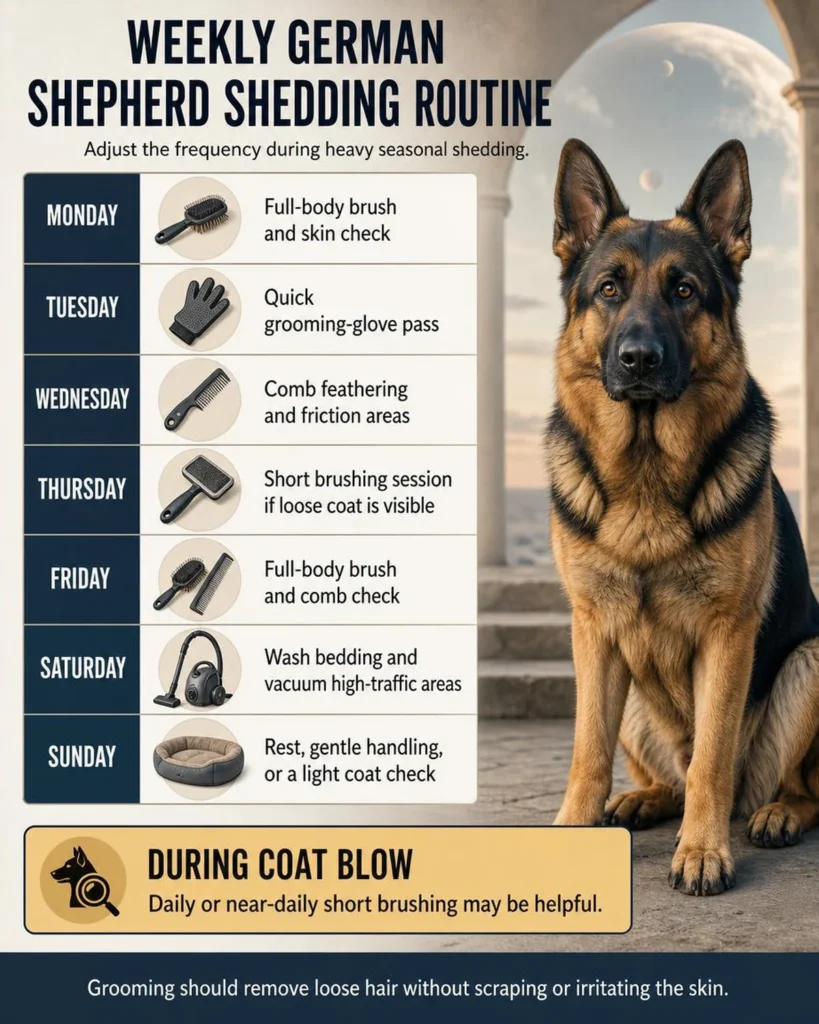
| Day | Routine outside coat-blow season | Routine during heavy shedding |
| Monday | Full-body brush and skin check | Full-body brush with undercoat focus |
| Tuesday | Quick grooming-glove pass | Short brush of neck, sides, and thighs |
| Wednesday | Rest or spot-comb feathering | Full-body brush |
| Thursday | Quick coat and paw check | Short undercoat session |
| Friday | Full-body brush | Full-body brush and comb check |
| Saturday | Bedding and floor cleanup | Brush, then wash bedding and vacuum |
| Sunday | Rest or gentle handling | Light brush if loose tufts remain |
Adjust the plan to your dog’s tolerance and coat. Stop if the skin becomes red or the dog shows pain. Grooming should remove loose hair, not scrape out healthy coat.
Normal Shedding vs. Hair Loss That Needs a Vet
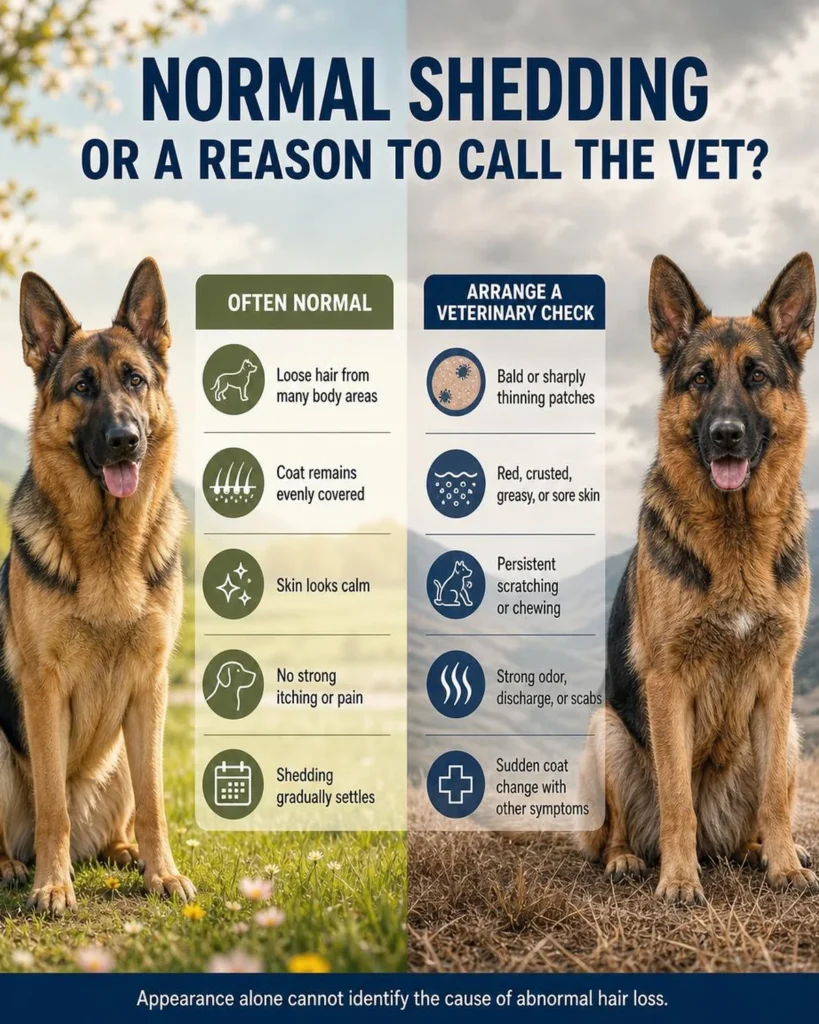
The most important distinction is not “a lot” versus “a little.” It is loose hair from an evenly covered coat versus visible loss of coat, skin inflammation, or other illness signs.
The Merck Veterinary Manual explains that natural replacement of old hair is expected, while shedding becomes concerning when it leads to obvious coat loss or bald spots.
Contact your veterinarian when you notice:
- Bald or sharply thinning patches
- Red, crusted, greasy, thickened, or darkened skin
- Persistent scratching, chewing, licking, or rubbing
- Sores, scabs, discharge, swelling, or strong odor
- Broken hairs or circular areas of hair loss
- Sudden shedding that is dramatically different from your dog’s baseline
- Weight loss, lethargy, appetite change, increased thirst, or other body-wide signs
- Pain when the skin or coat is touched
- Poor regrowth after clipping or a previous skin problem
AAHA lists bald spots, patchy hair loss, irritated skin, and a sudden dramatic increase as reasons to contact a veterinarian. Possible causes include parasites, infection, allergies, nutrition problems, hormonal disease, stress, and systemic illness.
For a broader overview of health signs that may appear alongside coat changes, see Furbivo’s guide to common diseases in German Shepherds.
Common Shedding Mistakes
Waiting Until the Coat Is Coming Out in Clumps
Consistent grooming is easier on the dog and the owner. Waiting for severe buildup turns a simple routine into a long, frustrating session.
Pressing Harder When the Tool Stops Working
More pressure does not mean better undercoat removal. It can scratch the skin, break guard hairs, and make the dog avoid future grooming.
Using One Tool for Every Coat Area
The body coat, ear feathering, tail, trousers, belly, and armpits do not always need the same tool. Use a rake or de-shedding tool for loose undercoat and a comb for delicate, tangle-prone areas.
Bathing Repeatedly to Force Out More Hair
A well-timed bath can help loosen coat, but repeated bathing with harsh products may dry the skin. Brushing remains the main long-term control method.
Shaving Because the House Is Covered in Hair
The coat will still cycle, and the hair may return unevenly. Focus on controlled de-shedding and home management instead.
Treating Every Coat Change With Supplements
Coat problems can have many causes. Supplements are not a diagnosis, and excessive or poorly chosen products can complicate nutrition.
Assuming All Heavy Shedding Is Normal for the Breed
German Shepherds are heavy shedders, but breed tendency should not be used to dismiss bald spots, pain, infection, odor, or sudden unexplained changes.
What Most Articles Miss: Build a Shedding Baseline
The best way to answer how much does a German Shepherd shed for your individual dog is to create a simple baseline rather than compare your floor to another owner’s photos.
For two weeks, record:
- How often you brush.
- Which body areas release the most hair.
- Whether loose coat is soft undercoat, longer guard hair, or broken hair.
- Whether the skin is calm, itchy, flaky, red, greasy, or sore.
- Whether the dog has any appetite, weight, energy, stool, or behavior changes.
- Recent events such as travel, boarding, illness, surgery, heat, stress, diet change, or a new grooming product.
- Whether the shedding is stable, improving, or getting worse.
This record gives your veterinarian or groomer better information than saying, “My dog sheds a lot.” It also helps you recognize your dog’s usual spring and fall pattern over time.
Take clear photos if you see thinning or skin changes. Photograph the same area in similar light every few days. Do not wait for severe hair loss if the dog is itchy, painful, unwell, or developing sores.
FAQs
Do German Shepherds Shed a Lot?
Yes. German Shepherds are high-shedding double-coated dogs. They commonly release some hair throughout the year and much more during seasonal undercoat changes. Regular brushing reduces loose hair in the home but does not stop the natural cycle.
How Much Does a German Shepherd Shed During Coat-Blow Season?
How much does a German Shepherd shed during coat blow varies, but owners may see tufts, clumps of soft undercoat, a rapidly filling brush, and much faster buildup around the home. The coat should remain evenly covered without raw skin or bald spots.
What Months Do German Shepherds Shed the Most?
Many shed most heavily in spring and fall, but the exact months depend on climate, daylight, indoor temperature, and the individual dog. Indoor German Shepherds may shed steadily year-round with less predictable seasonal peaks.
How Long Does German Shepherd Shedding Season Last?
A heavy shedding period may last a few weeks to a couple of months. Coat type, climate, indoor living, and grooming affect the duration, so a gradual taper matters more than a fixed deadline.
How Often Should I Brush a German Shepherd?
Brush most German Shepherds several times per week, increasing to daily or near-daily sessions during heavy seasonal shedding. Adjust frequency to coat density, skin sensitivity, and how much loose undercoat the brush removes.
Can I Stop My German Shepherd From Shedding?
No safe method can stop normal shedding completely. You can control it with regular brushing, appropriate tools, sensible bathing, complete nutrition, and routine home cleaning. Shaving is not a reliable shedding solution.
Why Is My German Shepherd Suddenly Shedding So Much?
A sudden increase may be seasonal or stress-related, but it can also occur with parasites, allergies, infection, nutrition problems, hormonal disorders, or systemic illness. Contact your veterinarian if the change is dramatic, persistent, patchy, itchy, painful, smelly, or linked with other symptoms.
Final Thoughts
So, how much does a German Shepherd shed? Expect visible daily hair, regular brushing, and one or two periods of much heavier undercoat loss in many dogs. Long-haired and standard-coated German Shepherds both shed, and indoor living can make the pattern feel year-round.
You do not need to eliminate every loose hair. Build a repeatable grooming routine, use coat-appropriate tools gently, avoid shaving, and learn what normal looks like for your dog. Seek veterinary help when the pattern changes suddenly or comes with bald spots, itching, redness, odor, pain, sores, or changes in general health.
Have questions about your dog’s health, nutrition, grooming, or daily care? Visit our Contact Us page to reach the Furbivo team. For any medical symptoms, diagnosis, or treatment advice, always consult a qualified veterinarian.