
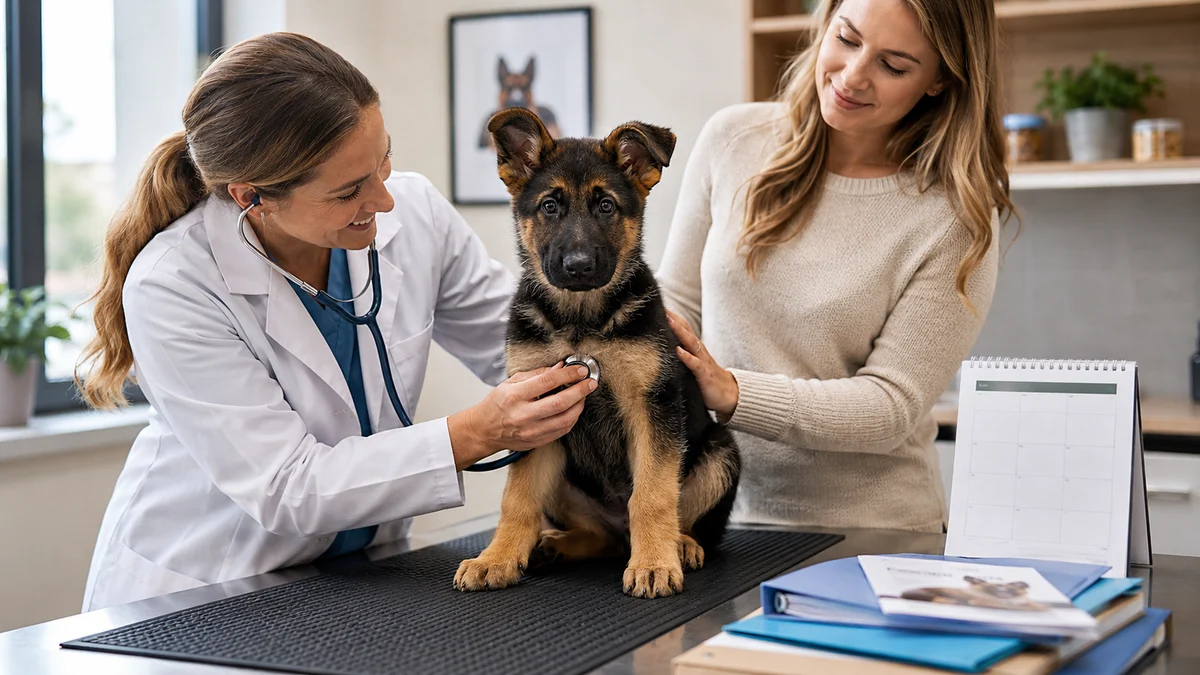
A German Shepherd puppy vaccination schedule typically starts at 6–8 weeks of age. The core combination vaccine is repeated every 2–4 weeks until at least 16 weeks. Leptospirosis vaccination usually begins at 12 weeks, and rabies timing is determined by vaccine labeling and local regulations.
Appointment dates may vary due to differences in puppy age, incomplete records, or local disease risks. Your veterinarian will finalize the schedule after assessing your puppy’s age, health, vaccination history, lifestyle, and location.
German Shepherd Puppy Vaccination Schedule: Quick Answer
German Shepherd puppies typically receive a core distemper, adenovirus, and parvovirus combination vaccine at 6–8 weeks, repeated every 2–4 weeks until at least 16 weeks. Leptospirosis starts at 12 weeks with two initial doses, and rabies is usually administered from 12 weeks based on local law and product instructions.
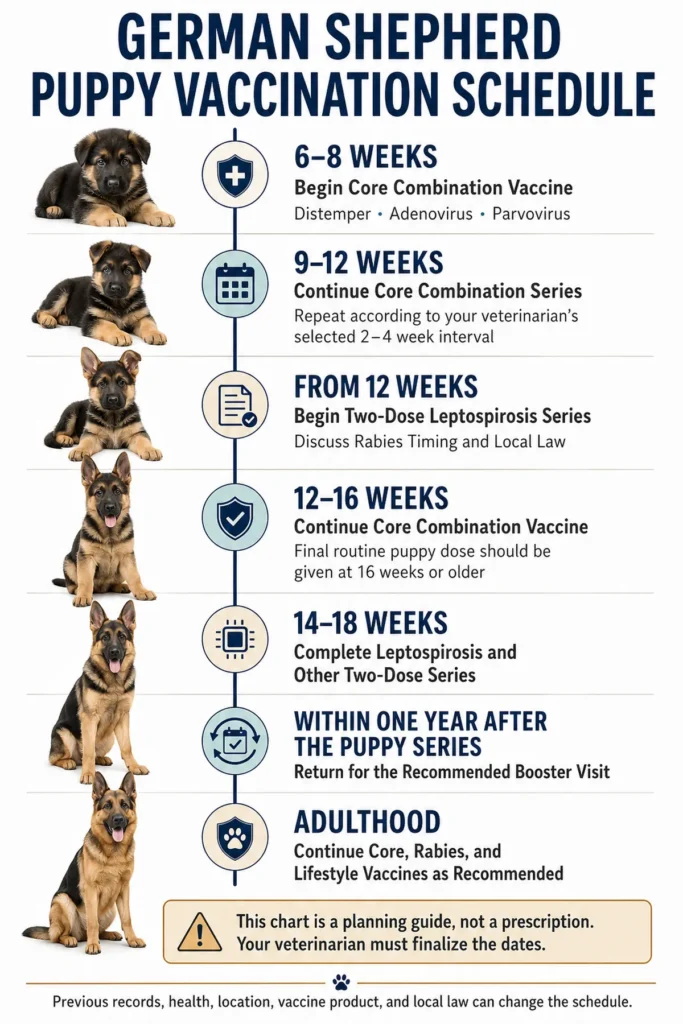
Puppy Vaccination Schedule at a Glance
| Puppy age | Vaccines commonly discussed | Important notes |
| 6–8 weeks | First DAPP, DA2PP, or DHPP combination dose | Starts protection against major viral diseases |
| 9–12 weeks | Next combination dose | Continue at the interval selected by the veterinarian |
| From 12 weeks | First leptospirosis dose; rabies when legally and medically appropriate | Leptospirosis needs a second initial dose |
| 12–16 weeks | Continue combination vaccine every 2–4 weeks | The final routine puppy dose should be at 16 weeks or older |
| 14–18 weeks | Second leptospirosis dose; risk-based vaccine doses | Timing depends on when each series began |
| Within one year after the puppy series | Combination booster and other vaccines when due | Rabies follows local law and the product used |
| Adulthood | Core and lifestyle boosters at their recommended intervals | The veterinarian reassesses risk at least annually |
AAHA recommends at least three core combination doses between 6 and 16 weeks, spaced 2–4 weeks apart. The 2024 update designates leptospirosis as a core vaccine, with two initial doses starting at 12 weeks and annual revaccination. Rabies vaccination must comply with applicable law.
This table serves as a planning guide, not a prescription. The veterinarian may adjust dates based on the puppy’s health, vaccination history, local outbreaks, shelter exposure, or manufacturer instructions.
Does a German Shepherd Puppy Vaccination Schedule Differ From Other Breeds?
German Shepherd puppies do not require a unique core vaccination schedule based solely on breed. Current AAHA recommendations apply to all dogs, identifying core vaccines by disease severity, prevalence, public health importance, and exposure risk.
Breed remains relevant during veterinary visits, as the veterinarian may address growth, body condition, inherited risks, digestion, joints, training, and preventive care. However, these factors typically do not alter the core vaccine schedule.
For a wider health overview, see Furbivo’s guide to common diseases in German Shepherds.
What Do DAPP, DA2PP, and DHPP Mean?
Veterinary clinics and vaccine records may use various abbreviations for similar combination vaccines.
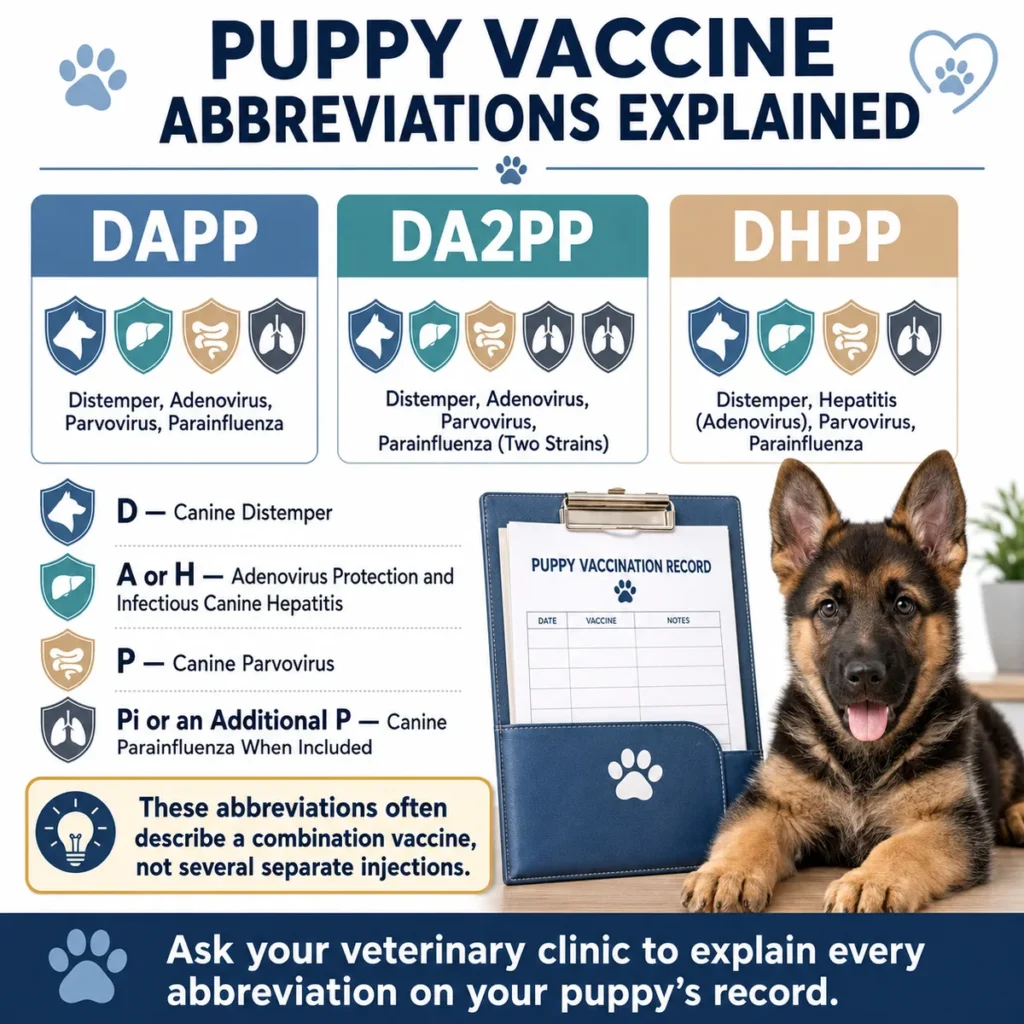
Common letters include:
- D: Canine distemper virus
- A or H: Canine adenovirus protection; “H” refers to infectious canine hepatitis
- P: Canine parvovirus
- Pi or another P: Canine parainfluenza when included
A record labeled DAPP, DA2PP, DHPP, or DHPPV typically refers to a combination vaccine, not multiple separate injections.
Distemper, adenovirus, and parvovirus are core vaccines recommended for all dogs. Parainfluenza may be included in combination vaccines, while other respiratory vaccines depend on the puppy’s exposure risk.
Do not identify vaccines by memory or sticker color. Ask the clinic to explain each abbreviation on the certificate.
German Shepherd Puppy Vaccination Schedule by Age
6–8 Weeks: First Core Combination Vaccine
Most puppies receive their first core combination dose at 6–8 weeks of age, which is the typical minimum starting age for distemper-containing vaccines.
This first dose is important, but it does not mean the puppy series is complete.
Puppies receive maternal antibodies, which provide early protection but may interfere with vaccination. Since the duration of this interference varies, veterinarians use a series of vaccines rather than relying on a single early dose.
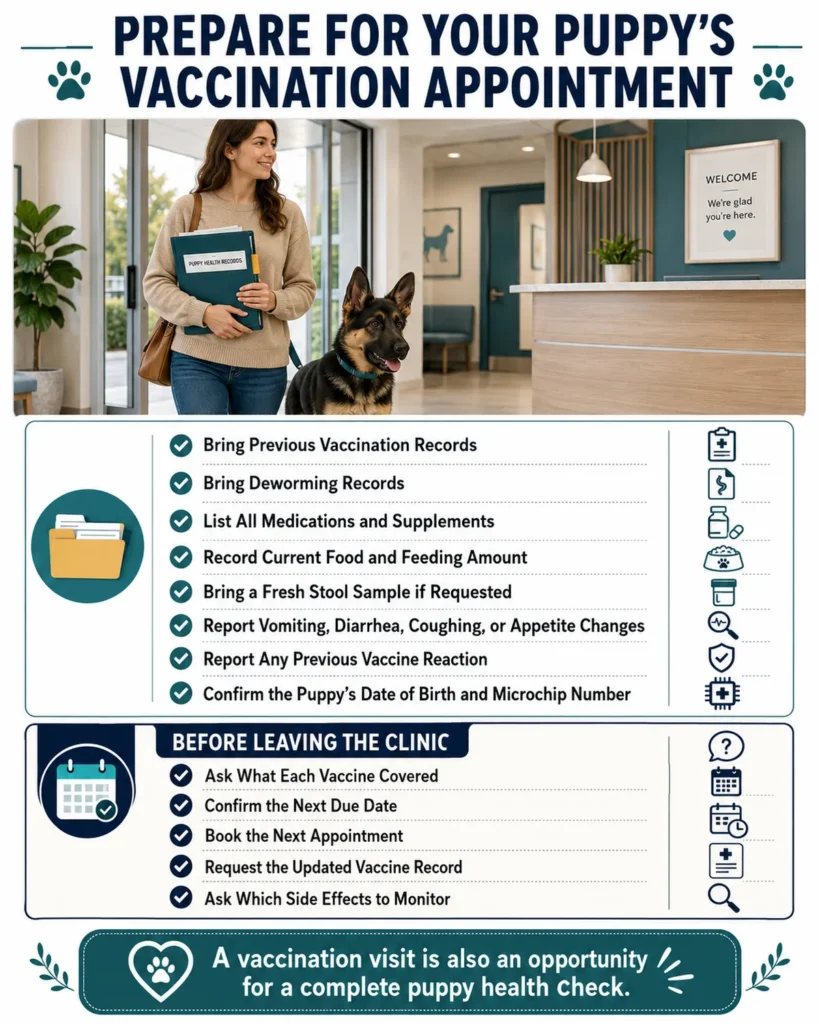
At the first visit, take:
- Breeder, shelter, or rescue vaccination records
- Deworming records
- Food and feeding information
- Medication and supplement details
- A fresh stool sample when requested
- Notes about coughing, vomiting, diarrhea, appetite, or energy
Do not repeat a vaccine due to unfamiliar abbreviations. Allow the veterinary team to interpret the product, administration date, puppy age, and record validity.
Keep the Core Series
The next core combination dose is typically given 2–4 weeks after the previous valid dose. The veterinarian determines the interval based on the vaccine product, puppy age, vaccination history, disease risk, and clinic protocol.
This visit may also include:
- Physical examination
- Growth and body-condition review
- Fecal testing
- Parasite-prevention planning
- Nutrition discussion
- Socialization-risk assessment
- Arranging the next vaccine visit
A healthy-appearing puppy may still carry intestinal parasites. Vaccination and parasite prevention should be managed as separate aspects of preventive care.
From 12 Weeks: Leptospirosis and Rabies Planning
AAHA updated its canine guidelines in 2024; AAHA’s 2024 guidelines designate leptospirosis vaccination as core. The recommendation is a two-dose initial series, 2–4 weeks apart, starting at 12 weeks, with annual revaccination. All working dogs. AAHA notes that exposure can occur in rural, suburban, and urban locales, and the disease can affect both animal and human health.
Rabies vaccination is usually given at or after 12 weeks, but final timing depends on product labeling and local law. The CDC advises that schedules vary by product and jurisdiction, and most dogs should not receive rabies vaccination before 12 weeks.
Ask the clinic:
- At what age does local law require rabies vaccination?
- When does the certificate become legally valid?
- Is the product licensed for one or three years?
- When is the next legally required rabies dose?
- Are separate travel rules relevant?
Do not rely on general online charts for legal rabies compliance.
12–16 Weeks: Complete the Core Puppy Series
The core combination vaccine is given every 2–4 weeks until the puppy receives a dose at 16 weeks or older. The timing of the final dose is important because mother-derived antibodies may interfere with earlier vaccinations.
A puppy vaccinated at 6, 9, and 12 weeks may still require another core dose at or after 16 weeks. The puppy’s age at the final valid dose is more important than the number of stickers in the health record.
The veterinarian may recommend an additional dose in high-risk situations, such as significant infectious-disease exposure or certain shelter environments. WSAVA’s 2024 guidelines use more intensive schedules for shelter puppies due to their higher exposure risk compared to those in private homes.
14–18 Weeks: Complete Two-Dose Vaccine Series
Killed or inactivated vaccines often require two initial doses to establish immunity. Leptospirosis, Lyme disease, and injectable canine influenza vaccines typically use two doses, 2–4 weeks apart.
If the first leptospirosis vaccine is given at 12 weeks, the second dose will fall within this age range. One initial leptospirosis dose does not complete the series.
Risk-based vaccines may also be completed during this period, depending on when they were started.
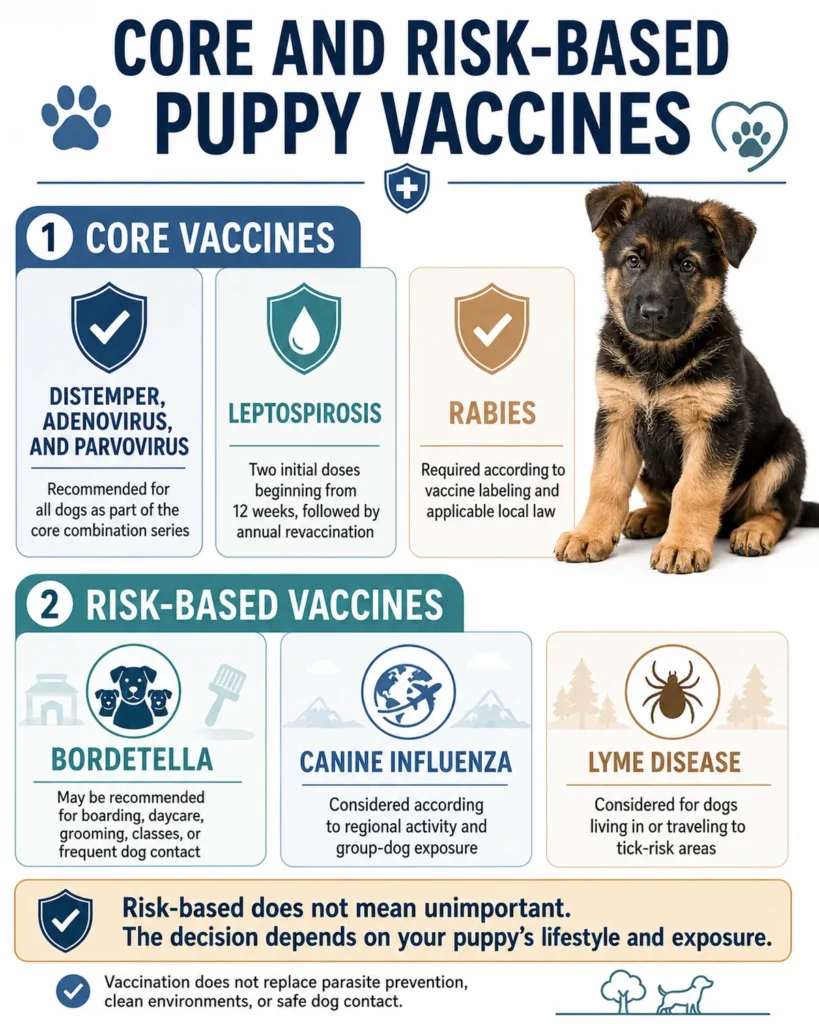
Core and Risk-Based Vaccines
Core Combination Vaccine
The core viral combination protects against diseases that include:
- Canine distemper
- Canine adenovirus
- Canine parvovirus. These components are recommended for all dogs unless a veterinarian identifies a medical reason to withhold vaccination.inate.
Leptospirosis
AAHA now recommends leptospirosis vaccination as core, starting with two doses from 12 weeks of age and continuing annually.
Rabies
Rabies vaccination is governed by law and medical guidance. Timing and booster intervals depend on jurisdiction and vaccine product.
Bordetella
Bordetella vaccination may be recommended for puppies exposed to boarding, daycare, grooming, training classes, shelters, or frequent dog contact. Oral, intranasal, and injectable products have different initial schedules.
Canine Influenza
Canine influenza vaccination may be recommended based on regional disease activity and group exposure. The initial injectable series typically uses two doses, 2–4 weeks apart, with revaccination as needed based on risk and veterinary advice.
Lyme Disease
Lyme vaccination may be recommended for puppies living in or traveling to tick-risk areas. It does not replace tick prevention or daily checks. The initial series includes two doses, 2–4 weeks apart, with boosters for ongoing risk.
A noncore vaccine is not unimportant; it means the decision depends on the individual dog’s exposure risk.
How to Use the German Shepherd Puppy Vaccination Schedule
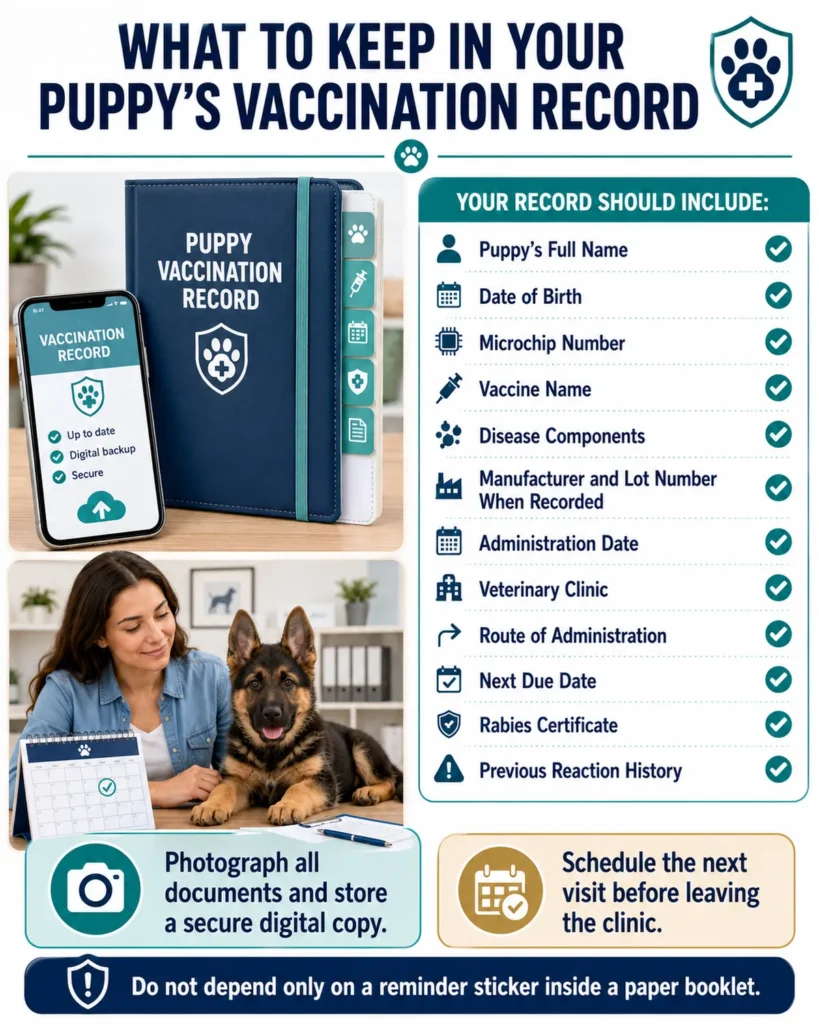
Keep one permanent record containing:
- Puppy’s full name and date of birth
- Microchip number
- Vaccine name
- Disease components
- Manufacturer
- Product or lot number when recorded
- Administration date
- Clinic and veterinarian
- Route of administration
- Next due date
- Rabies certificate
- Previous reaction history
Bring the record to every veterinary clinic, training facility, boarding facility, groomer, and travel appointment as requested.
Photograph the documents and keep a digital copy. Do not rely solely on a note sticker. Schedule the next visit before leaving the clinic. Booking the next appointment immediately makes it easier to follow the vaccination schedule. Instructed later.
Why One Puppy Shot Is Not Enough
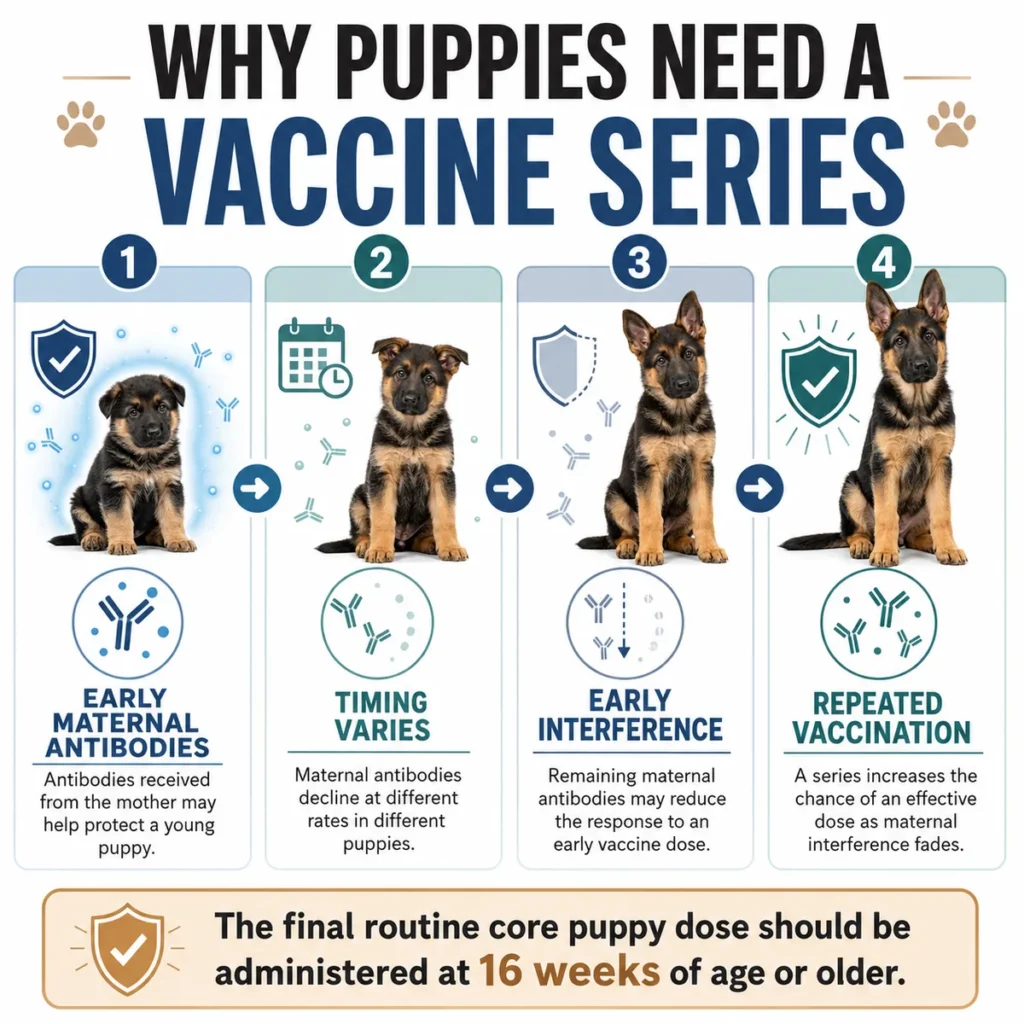
The puppy vaccine series is not just a set of identical boosters.
Maternal antibodies decline at varying rates. A vaccine given while these antibodies are high may not produce the desired immune response. Repeated vaccination during this period increases the likelihood of effective protection as maternal interference decreases.
For this reason, owners should not assume that:
- One breeder vaccine means full protection
- Two early vaccines always complete the series
- A large or fast-growing puppy can finish earlier
- An indoor puppy has no exposure risk
- The first shot creates immediate freedom to visit every public dog area
The final core dose at 16 weeks or older is a key part of current guidance for puppies in private homes.
Herd Puppy Vaccination Schedule and Socialization
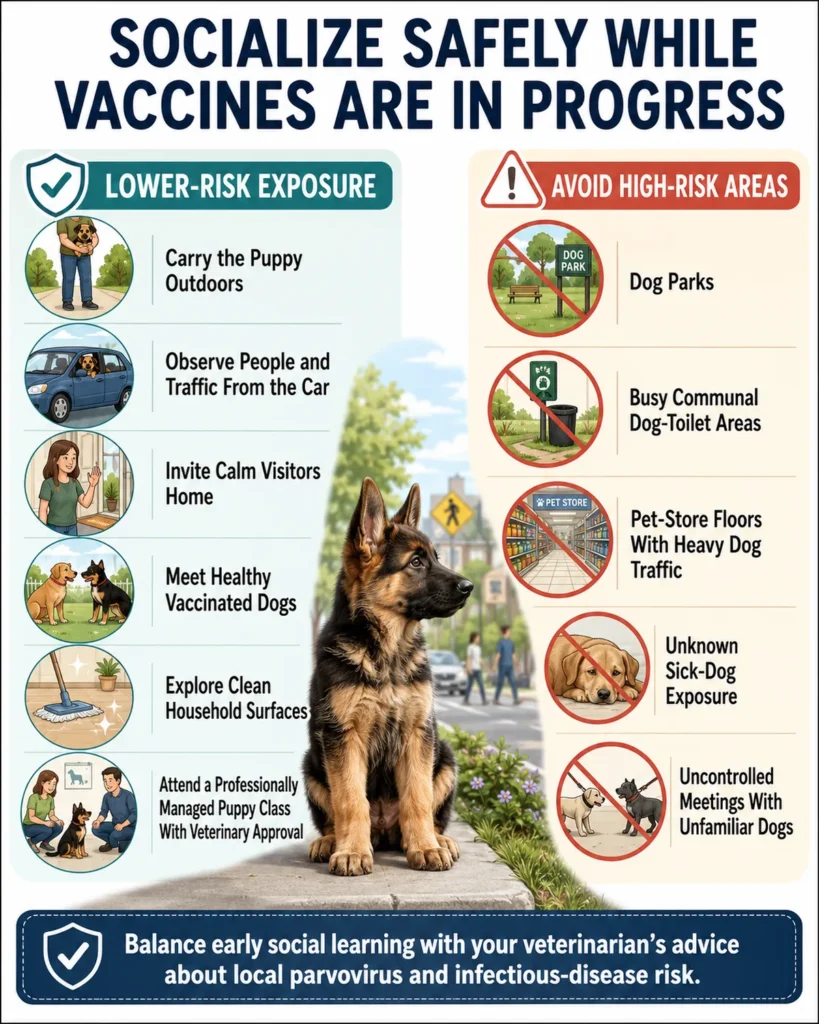
Vaccination safety and early socialization should be balanced, not viewed as opposing choices.
Avoid high-risk locations such as:
- Dog parks
- Heavily used communal dog-toilet areas
- Floors at busy pet stores
- Areas with unknown sick-dog traffic
- Uncontrolled meetings with unfamiliar dogs
Safer initial exposure may include:
- Carrying the puppy outdoors
- Watching people and traffic from the car
- Meeting calm, healthy, vaccinated dogs
- Inviting calm visitors home
- Exploring clean household surfaces
- Practicing veterinary handling
- Joining a professionally managed puppy class approved by your veterinarian
AVSAB states that puppy socialization classes may begin as early as 7–8 weeks when a puppy has received at least one vaccine set at least seven days earlier, has received initial deworming, and remains current during class. Your veterinarian should still evaluate local parvovirus and infectious-disease risk.
Use Furbivo’s German Shepherd puppy socialization guide to plan regulated exposure without isolating or flooding the puppy. Furbivo’s German Shepherd puppy daily routine can help fit short socialization sessions around meals, potty breaks, training, and rest.
What to Expect After Puppy Vaccination
Mild, short-lived effects may include:
- Tenderness at the injection site
- Mild swelling
- Lower activity
- Reduced appetite
- Low-grade fever
These effects should remain mild and resolve quickly. Contact the clinic if they are severe, persistent, or concerning.
Plan a calm day after vaccination. Let your puppy rest, provide water, avoid intense exercise, and monitor appetite, breathing, movement, and behavior.
Use Furbivo’s German Shepherd puppy sleep schedule to protect normal rest after an appointment. If reduced appetite continues or appears with other symptoms, read Why Is My German Shepherd Not Eating and contact your veterinarian.
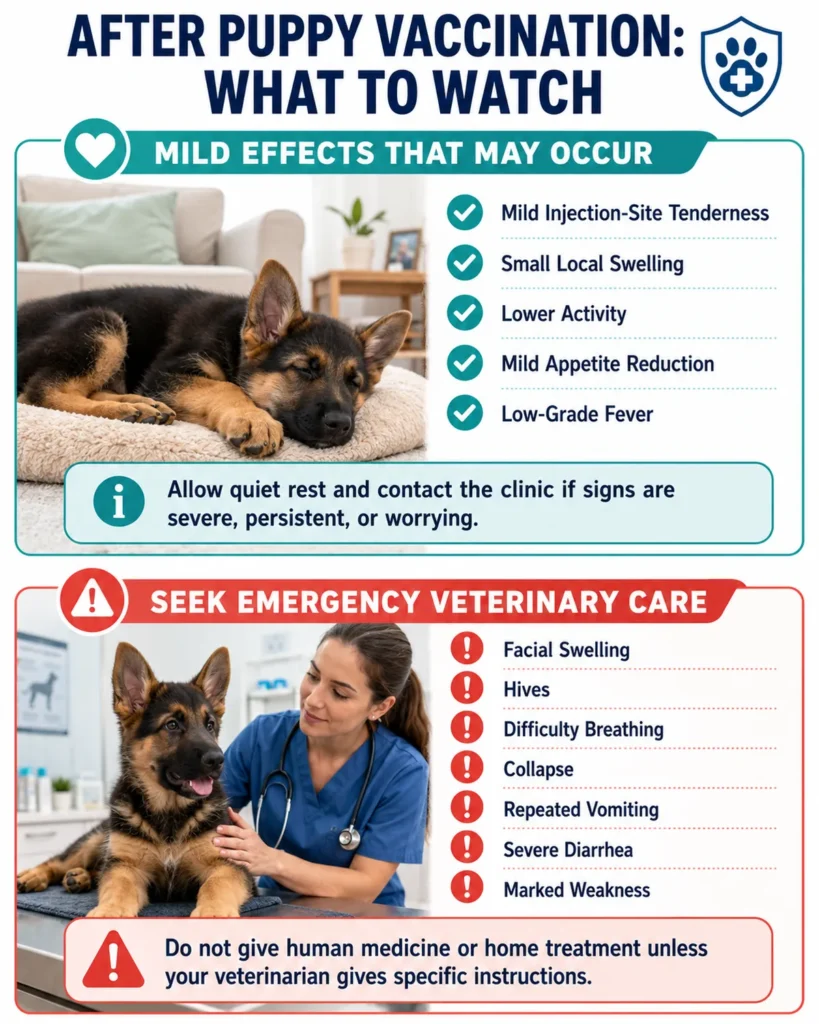
When a Vaccine Reaction Is an Emergency
Allergic reactions are uncommon but may develop within minutes or hours and can become life-threatening. Seek immediate veterinary care for facial swelling, hives, difficulty breathing, collapse, repeated vomiting, severe diarrhea, or marked weakness after vaccination.
Do not give human antihistamines, pain medication, or other home treatments unless instructed by a veterinarian for your specific puppy.
Inform the clinic of any previous reactions before future vaccinations. A reaction history does not necessarily prevent vaccination, but the veterinarian may adjust timing, observation, product choice, or the number of vaccines given at one visit.
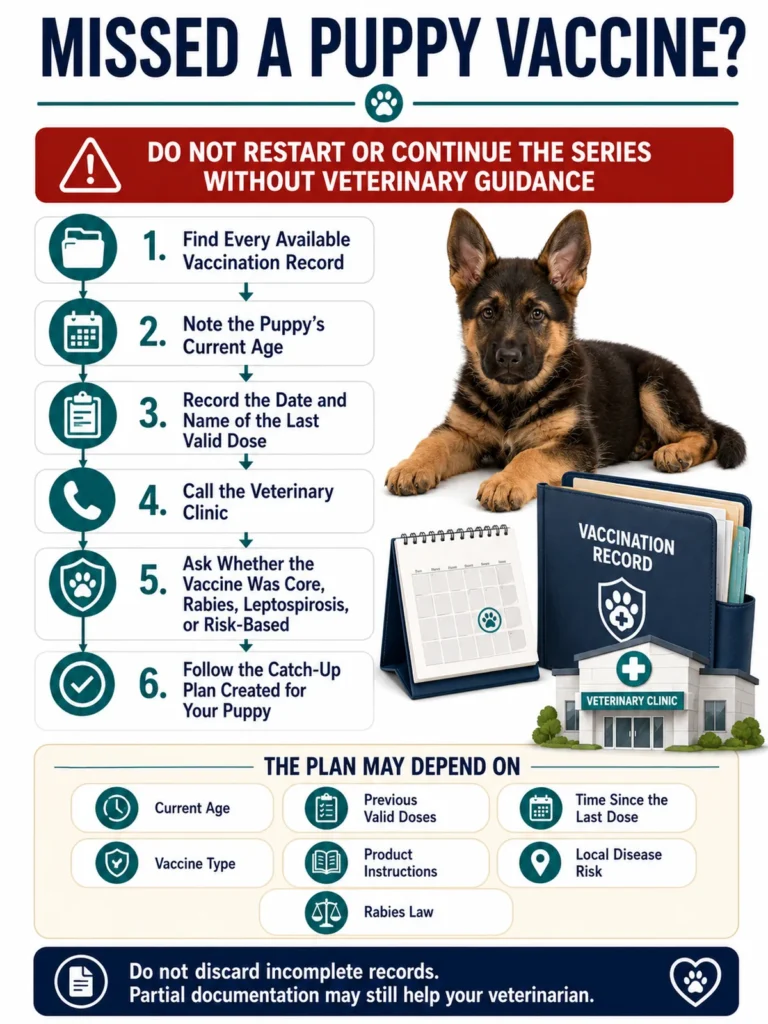
What If You Miss a Puppy Vaccine?
Contact your veterinary clinic with the puppy’s records instead of restarting or continuing the series on your own.
The correct response depends on:
- Which vaccine was missed
- Puppy’s current age
- Date of the last valid dose
- Vaccine type
- Whether the vaccine requires two initial doses
- Local disease risk
- Product instructions
- Rabies law
For the viral core combination, an older puppy may need a different catch-up plan from a young puppy still affected by passive maternal antibodies. Killed vaccines such as leptospirosis typically require completion of their two-dose initial series.
Do not discard unfinished records. Even partial documentation can help the veterinarian make safer decisions.
First-Year Booster and Adult Vaccinations
AAHA recommends one core combination dose within one year after the last initial puppy-series dose. Later core combination boosters are generally administered at three-year intervals.
Leptospirosis is revaccinated annually after the initial two-dose series. Bordetella, canine influenza, and Lyme vaccines are generally repeated according to continuing exposure risk and product guidance.
Rabies follows local law and the vaccine used. Some products and jurisdictions use one-year intervals, while others permit three-year intervals after the appropriate initial vaccination and booster.
An annual veterinary examination is valuable even if not all vaccines are due. It allows the veterinarian to reexamine weight, growth, teeth, joints, parasites, behavior, travel, and disease exposure.y Vaccination Schedule Articles Miss
The Last Puppy Dose Matters More Than the Number of Stickers
Three early injections do not complete the core series if none was given at 16 weeks or older.
Leptospirosis Guidance Changed
Older articles may list leptospirosis as optional. AAHA’s 2024 update now classifies it as a core vaccine and recommends annual vaccination, starting with a two-dose series from 12 weeks.
A Vaccine Appointment Is Also a Health Check
A veterinarian should assess the puppy’s health before vaccination. Owners should report vomiting, diarrhea, coughing, unusual tiredness, appetite changes, medications, and previous reactions.
Noncore Does Not Mean Unnecessary
Bordetella, influenza, or Lyme vaccination may be necessary for some puppies and unnecessary for others. The decision depends on exposure risk, not importance.
Vaccination Does Not Replace Risk Management
A puppy still requires safe socialization, parasite prevention, clean environments, controlled dog contact, and prompt veterinary care for illness.
Legal and Medical Schedules Are Not Always Identical. Rabies timing must meet vaccine label and local law requirements. Travel, boarding, and import rules may require additional documentation. ents.
Frequently Asked Questions
What Is a Normal German Shepherd Puppy Vaccination Schedule?
A typical plan begins with the core combination vaccine at 6–8 weeks and repeats it every 2–4 weeks until at least 16 weeks. Leptospirosis starts at 12 weeks with two initial doses, while rabies follows local law and vaccine labeling.
How Many Vaccines Does a German Shepherd Puppy Need?
There is no fixed total, as combination vaccines cover multiple diseases and lifestyle vaccines vary. Most puppies receive at least three core combination doses between 6 and 16 weeks, plus leptospirosis, rabies, and any exposure-based vaccines recommended by the veterinarian.
When Can My German Shepherd Puppy Go Outside After Vaccination?
Your puppy can have controlled exposure before completing the series but should avoid high-risk dog areas. Ask your veterinarian about local parvovirus risk, appropriate puppy classes, known vaccinated dogs, and safe outdoor environments.
Is Leptospirosis a Core Vaccine for German Shepherd Puppies?
Yes. AAHA updated its guidelines in 2024 to classify leptospirosis vaccination as core. The initial schedule uses two doses 2–4 weeks apart starting at 12 weeks, followed by annual revaccination.
Can My Puppy Be Vaccinated While Sick?
Inform the clinic of any vomiting, diarrhea, coughing, fever, unusual tiredness, appetite loss, medications, or recent illness before the appointment. The veterinarian will examine the puppy and decide whether to proceed with vaccination or delay it.
What If the Breeder Already Vaccinated My Puppy?
Bring the authentic record to your veterinarian. A valid record should include the product, date, clinic or administrator, and puppy’s age. The veterinarian will determine which doses are valid and when the next vaccine is due.
Is Sleepiness Normal After Puppy Vaccination?
Mild tiredness may occur after vaccination and is usually brief. Contact the clinic if sleepiness is severe, persistent, or accompanied by vomiting, facial swelling, breathing difficulty, collapse, or other concerning signs.
Final Thoughts on the German Shepherd Puppy Vaccination Schedule
A safe German Shepherd puppy vaccination schedule is based on age, maternal antibody interference, vaccination history, local disease risk, vaccine labeling, and legal requirements.
The core framework is simple:
- Start the combination series at approximately 6–8 weeks
- Repeat it every 2–4 weeks
- Ensure the final routine puppy dose occurs at 16 weeks or older
- Begin the two-dose leptospirosis series from 12 weeks
- Give rabies according to law and product instructions
- Add exposure-based vaccines when the puppy’s lifestyle justifies them
- Return for the first-year booster and later adult preventive care
Maintain accurate records, schedule the next visit before leaving the clinic, and report any previous reactions or current illness before vaccination.
The German Shepherd puppy vaccination schedule should be finalized by a veterinarian familiar with your puppy’s health, environment, and legal requirements, rather than copied from a generic chart.
If you have questions about your dog’s health, nutrition, grooming, or daily care, visit our Contact Us page to reach the Furbivo team. For medical symptoms, diagnosis, or treatment, always consult a qualified veterinarian.