
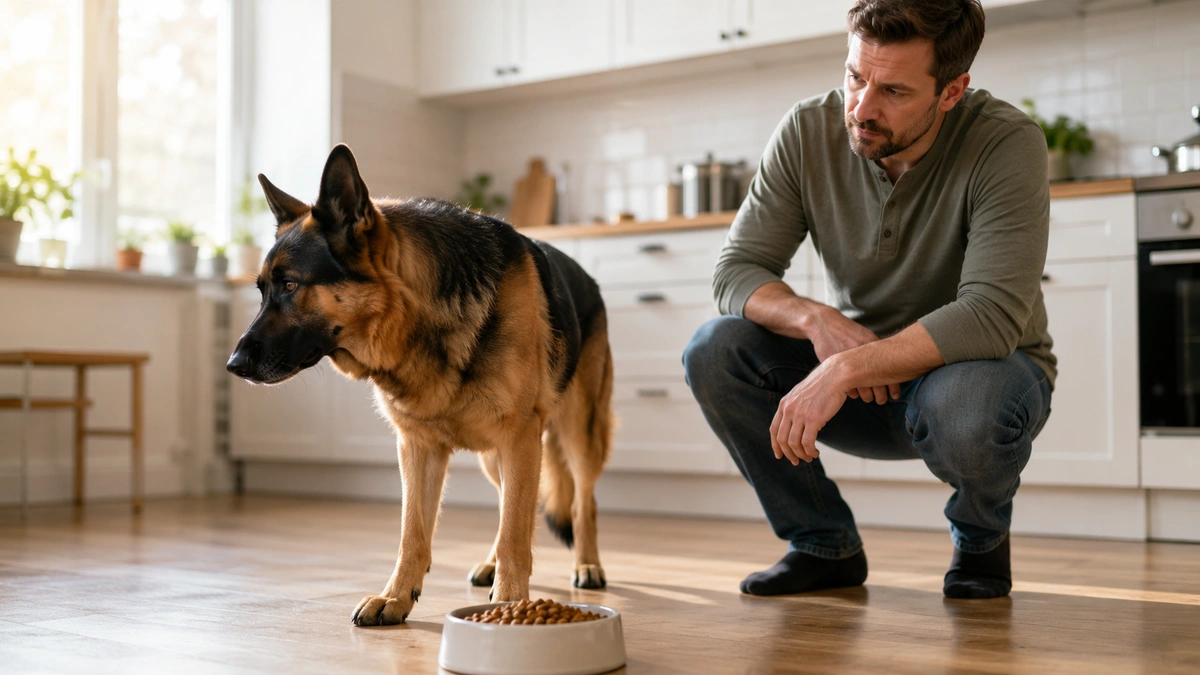
If you are asking Why Is My German Shepherd Not Eating, first check whether your dog has skipped one meal or is refusing all food, and whether vomiting, diarrhea, pain, weakness, bloating, or unusual behavior is also present.
A brief appetite change can follow stress, a routine change, too many treats, teething, or mild post-vaccination discomfort. Sudden or persistent food refusal can also signal illness and should not be dismissed.
Why Is My German Shepherd Not Eating? Quick Answer
A German Shepherd may stop eating because of stress, overfeeding, food changes, mouth pain, nausea, parasites, infection, medication, a swallowed object, toxin exposure, or another illness. Check for emergency signs first. Contact a veterinarian promptly if food refusal persists, affects a puppy, or occurs with vomiting, diarrhea, pain, weakness, or bloating.
Poor appetite is a symptom rather than a diagnosis. A dog may lack appetite or may want food but be unable to chew or swallow comfortably. Both situations deserve attention. VCA explains that poor appetite or complete food refusal can be associated with potentially serious underlying conditions.
Check for an Emergency Before Trying to Tempt Your Dog to Eat
When owners search Why Is My German Shepherd Not Eating, the most important first step is not choosing a new topper. It is checking whether the dog needs urgent veterinary care.
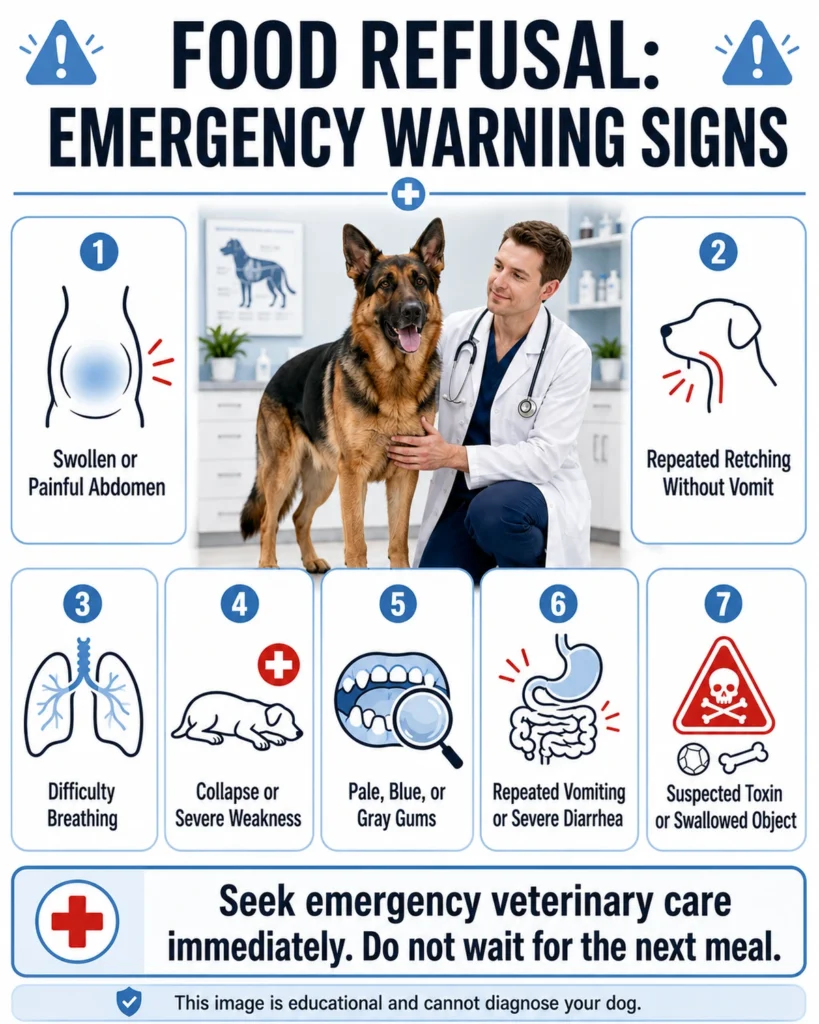
Go to an emergency veterinary hospital now if your German Shepherd has:
- A swollen, tight, or painful abdomen
- Repeated retching without producing vomit
- Difficulty breathing
- Collapse, severe weakness, or reduced responsiveness
- Pale, white, blue, or gray gums
- Repeated vomiting or severe diarrhea
- Blood in vomit or stool
- A seizure
- Severe pain or an inability to settle
- Suspected poisoning
- Possible ingestion of a toy, bone, fabric, sock, or another object
- An inability to keep water down
German Shepherd Dogs are deep-chested. An enlarged abdomen with unproductive retching, drooling, restlessness, weakness, or breathing trouble can be consistent with gastric dilatation-volvulus, commonly called GDV or bloat.
GDV is a time-sensitive emergency. Do not offer food, water, medication, or a home remedy while waiting to see whether the dog improves. Furbivo’s guide to common diseases in German Shepherds covers the major GDV warning signs in more detail.
Repeated vomiting or diarrhea, suspected obstruction, toxin exposure, weakness, or reduced responsiveness also requires urgent professional advice. VCA lists persistent vomiting and diarrhea among signs that may be associated with poisoning, obstruction, or acute gastrointestinal disease.
Do not induce vomiting unless a veterinarian or animal poison specialist specifically instructs you.
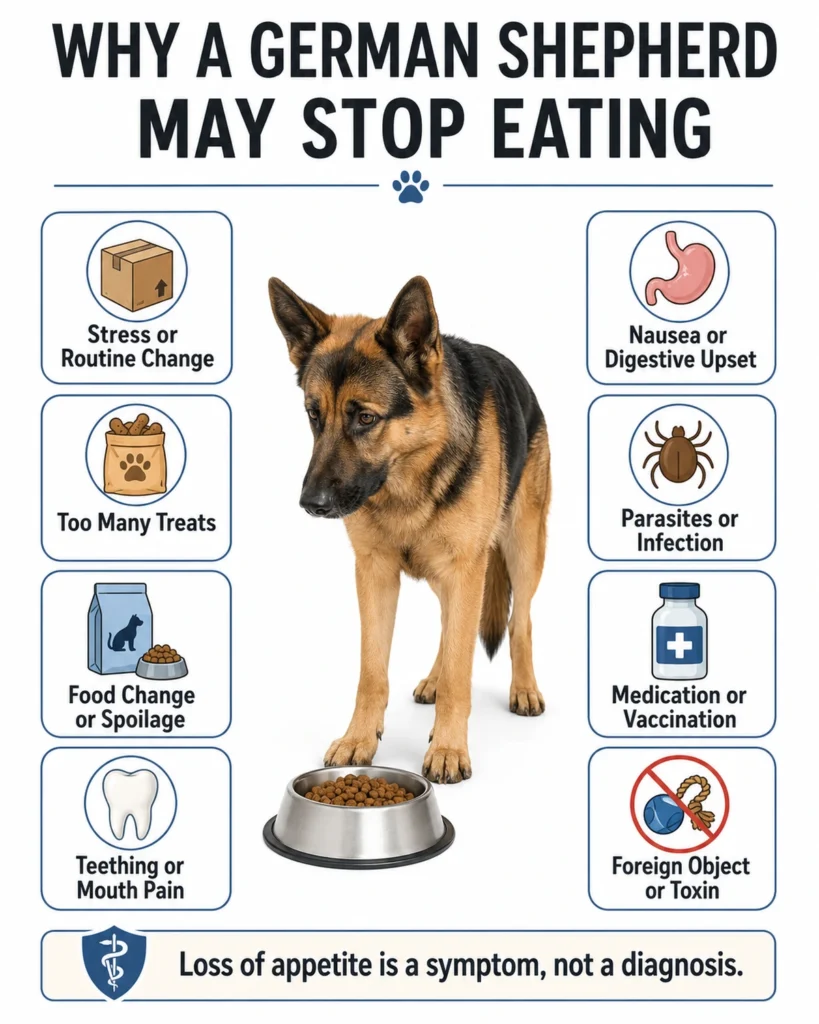
Common Reasons a German Shepherd Stops Eating
| Possible reason | Clues you may notice | Appropriate next step |
| Stress or routine change | New home, boarding, visitors, travel, loud events, or separation | Provide a calm routine and monitor closely |
| Too many treats or food | Eats treats but leaves meals; body condition is increasing | Measure all food and count treats |
| Food problem | New formula, stale smell, damaged bag, or sudden recipe change | Check storage, date, odor, and recent changes |
| Teething or mouth pain | Approaches food but drops kibble, chews on one side, or drools | Arrange an oral examination if it persists |
| Nausea or digestive upset | Lip licking, swallowing, vomiting, diarrhea, or discomfort | Contact a veterinarian if signs continue |
| Parasites or infection | Poor growth, diarrhea, lethargy, fever, or vomiting | Veterinary examination and testing |
| Medication or vaccination | Appetite change began after treatment or vaccination | Contact the prescribing or vaccinating clinic |
| Foreign object or toxin | Missing object, vomiting, pain, drooling, or sudden illness | Seek urgent veterinary care |
| Pain or another disease | Limping, coughing, increased thirst, weight loss, or lethargy | Schedule a veterinary assessment |
1. Stress, Fear, or a Major Routine Change
German Shepherds are observant dogs, and appetite can fall when their environment suddenly changes.
Possible triggers include:
- Moving to a new home
- Boarding
- Travel
- A new person or pet
- Loud construction
- Household conflict
- Separation from a familiar person
- Feeding near another intimidating pet
VCA recognizes stress and anxiety as possible non-medical causes of reduced appetite. However, medical causes become more concerning when food refusal occurs with lethargy or other physical changes.
Give your dog privacy, keep meal times predictable, and place the bowl in a calm location. Do not assume stress is the cause when your dog is painful, vomiting, losing weight, weak, or continuing to refuse food.
2. Too Many Treats, Table Scraps, or an Oversized Portion
Sometimes a German Shepherd appears picky because it is already full.
Training rewards, dental chews, food-filled toys, table scraps, and snacks offered by several family members can supply a large number of calories.
Measure the full daily ration, reserve part for training, and record extras. Repeatedly replacing a refused meal with chicken, cheese, or another favorite food may teach the dog to wait for something richer.
VCA notes that some dogs presented as picky eaters are being overfed and are simply not hungry enough to finish their regular meals.
For a balanced overview of normal food choices, see what German Shepherds eat. Puppies need a growth-appropriate diet rather than meals built from random high-value foods.
3. The Food Has Changed, Spoiled, or Become Unappealing
Check the food before blaming the dog.
Ask:
- Was a new bag opened recently?
- Does the food smell oily, sour, stale, or different?
- Is the packaging torn, damp, or contaminated by insects?
- Was it stored in heat or humidity?
- Did the manufacturer change the recipe?
- Did you change diets suddenly?
- Is the bowl dirty or strongly scented with detergent?
- Is another pet guarding the feeding area?
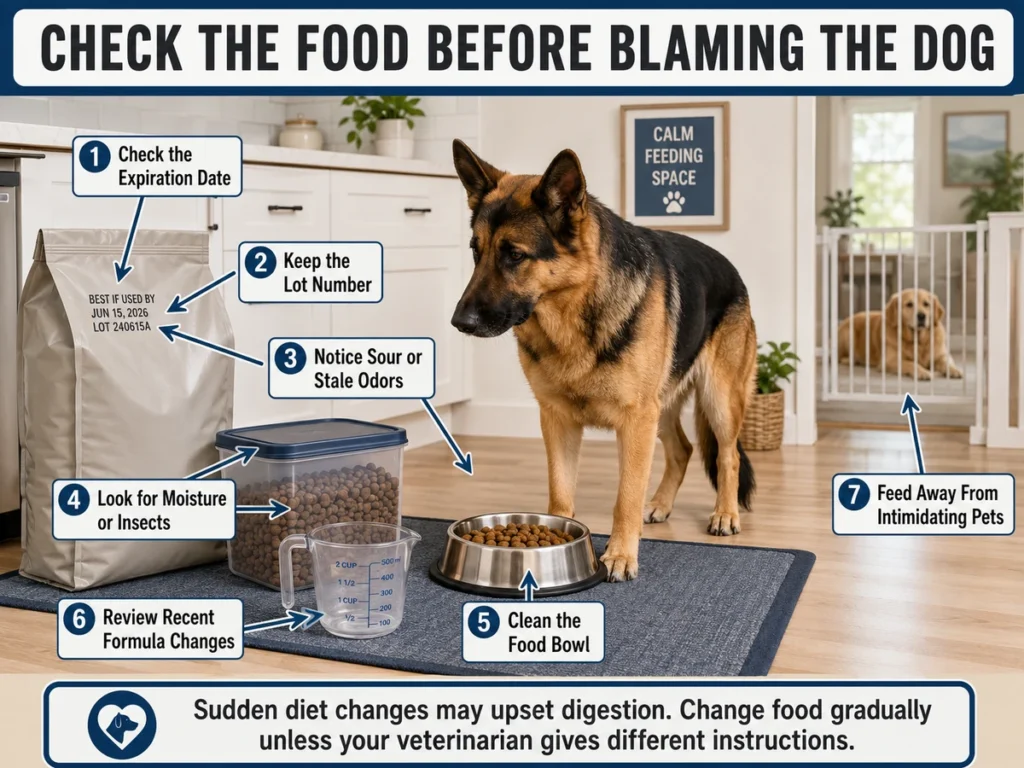
A rapid food change may cause digestive upset. When no medical restriction applies, transition gradually rather than changing brands or formulas every few days.
Keep the original packaging, expiration information, and lot number. These details can be important if the food appears damaged or a recall needs to be checked.
4. Teething, Dental Pain, or Difficulty Chewing
A dog may be hungry but unable or unwilling to chew. This is one reason Why Is My German Shepherd Not Eating cannot be answered by appetite alone.
Watch what happens when food is offered.
Does your dog:
- Approach the food and then back away?
- Pick up kibble and drop it?
- Chew only on one side?
- Prefer soft food but refuse hard kibble?
- Drool more than usual?
- Paw at the mouth?
- Have facial swelling, bleeding, or unusual bad breath?
- Cough, gag, or struggle to swallow?
Young puppies may find hard kibble uncomfortable during active teething. Furbivo’s guide to German Shepherd puppy teething stages explains normal tooth replacement and warning signs such as facial swelling, painful chewing, retained baby teeth, and difficulty eating.
Do not pry into a painful mouth or pull on string, bone, or material that appears lodged. A veterinarian may need to examine the mouth, teeth, jaw, throat, or esophagus.
5. Nausea, Gastrointestinal Upset, Parasites, or Infection
Dogs with nausea do not always vomit.
They may:
- Lick their lips
- Swallow repeatedly
- Drool
- Sniff food and walk away
- Eat grass
- Appear restless
- Stretch or guard the abdomen
Reduced appetite may occur with gastroenteritis, intestinal parasites, infection, pancreatitis, or other digestive problems. Persistent vomiting or diarrhea, blood, abdominal pain, weakness, or reduced responsiveness needs veterinary care.
Unvaccinated or incompletely vaccinated puppies require particular caution. Canine parvovirus may cause appetite loss, lethargy, vomiting, and severe diarrhea. A puppy with these signs should be isolated from other dogs and assessed urgently rather than treated only with a diet change.
6. A Swallowed Object or Toxic Substance
German Shepherd puppies and adolescents may swallow:
- Socks
- Toy pieces
- Bones
- Fabric
- Rocks
- Corn cobs
- Food packaging
- Pieces of bedding
An intestinal or esophageal obstruction may cause appetite loss, vomiting, pain, drooling, difficulty swallowing, reduced stool production, or weakness.
Toxin exposure may cause vomiting, appetite loss, weakness, tremors, seizures, drooling, abnormal gum color, or collapse.
Potential hazards include:
- Human medication
- Cleaning products
- Pesticides
- Chocolate
- Grapes and raisins
- Onions and garlic
- Xylitol-containing products
Call a veterinarian or emergency clinic immediately when ingestion is known or suspected. Cornell advises contacting a veterinarian or emergency clinic rather than attempting unapproved home treatment for possible poisoning.
7. Vaccination or Medication Effects
A mild appetite decrease can occur after vaccination with tiredness, mild fever, or injection-site soreness.
The American Veterinary Medical Association advises contacting the veterinarian if minor vaccine effects continue for more than a day or two or if the pet seems extremely uncomfortable.
Seek emergency help for:
- Facial swelling
- Hives
- Difficulty breathing
- Persistent vomiting
- Collapse
- Severe weakness
Prescription and over-the-counter products may also affect appetite. Never stop prescribed medication, repeat a missed dose, or alter an insulin plan without veterinary instructions.
Contact the prescribing clinic and explain:
- The medication name
- The dose
- When it was given
- When appetite changed
- Whether vomiting, diarrhea, weakness, or another symptom is present
8. Pain or Illness Outside the Digestive System
Pain commonly affects appetite.
A German Shepherd with dental, joint, spinal, urinary, respiratory, abdominal, or other discomfort may eat less before the source becomes obvious.
Look for:
- Limping or stiffness
- Difficulty rising
- Reluctance to use stairs
- Coughing or labored breathing
- Increased thirst or urination
- Straining to urinate or defecate
- Hiding or irritability
- Weight loss
- Changes in sleep or activity
- Reduced interest in play
Symptoms alone cannot identify the diagnosis. Appetite loss is an outward sign that may occur with many medical conditions and should be assessed alongside the dog’s other changes.
German Shepherd Puppy Not Eating Food: Why Puppies Need Faster Attention
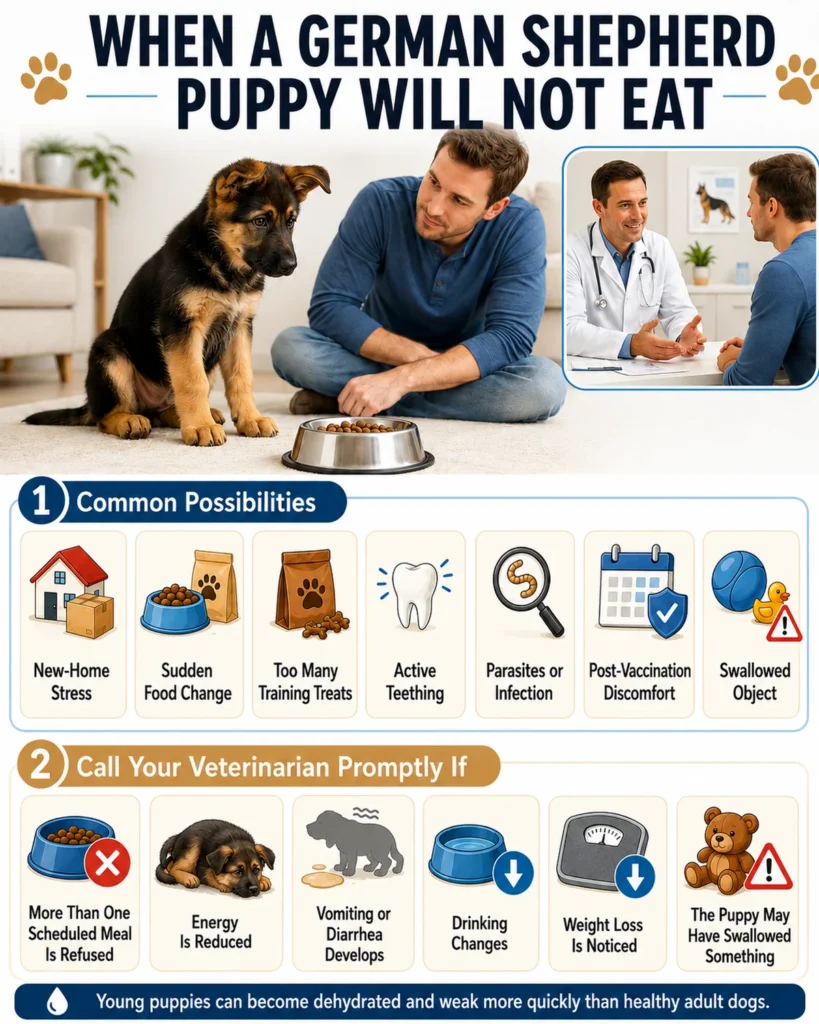
When German Shepherd puppy not eating food is the problem, age changes the level of concern.
Growing puppies require regular nutrition. Puppies experiencing vomiting or diarrhea may also become dehydrated more quickly than a healthy adult. VCA recommends veterinary examination for puppies that are not eating well or are rapidly losing weight.
Common puppy-related reasons include:
- Stress after leaving the breeder or shelter
- A sudden food change
- Too many training treats
- Active teething
- Intestinal parasites
- Vaccination discomfort
- Infectious disease
- Swallowing a toy or household item
Use scheduled meals so changes are easy to detect. Furbivo’s German Shepherd puppy feeding chart explains age-appropriate meal frequency and why free-feeding can hide appetite changes.
Call your veterinarian the same day when a young puppy:
- Refuses more than one scheduled meal
- Becomes less active
- Has vomiting or diarrhea
- Is not drinking normally
- Has not completed its vaccination series
- May have swallowed something
- Begins losing weight
Seek emergency care rather than waiting for a routine appointment when the puppy is weak, collapsing, repeatedly vomiting, bloated, struggling to breathe, or showing possible toxin exposure.
For the broader routine around meals, sleep, exercise, training, grooming, and preventive care, read how to take care of a German Shepherd puppy.
Why Is My German Shepherd Not Eating? What to Check at Home
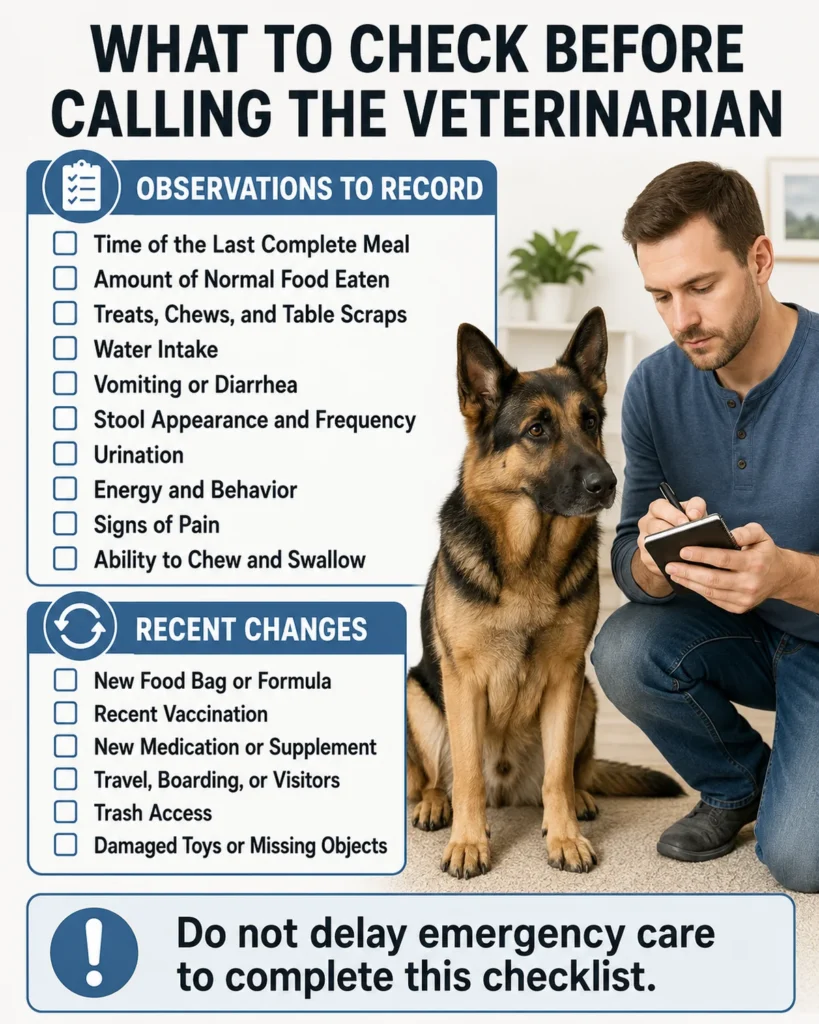
Before calling the clinic, collect useful information. Do not delay emergency care to complete this checklist.
Record:
- How much normal food was eaten
- Treats, chews, and table scraps consumed
- The time of the last complete meal
- Water intake
- Vomiting or diarrhea
- Stool appearance and frequency
- Urination
- Energy and behavior
- Signs of pain
- Whether the dog approaches food
- Whether it can chew and swallow normally
Review the previous several days for:
- A new food bag
- A recent vaccination
- New medication or supplement
- Boarding or travel
- House guests
- Trash access
- Damaged toys
- Missing socks or fabric
- Exposure to toxic food, medication, chemicals, or plants
Age and medical history also matter. Puppies, seniors, pregnant dogs, diabetic dogs, and dogs with known kidney, liver, pancreatic, or gastrointestinal disease may need faster or more specific veterinary instructions.
What to Do When Your German Shepherd Refuses Food
When no emergency signs are present and your veterinarian has not given different instructions:
- Offer the normal food in a clean bowl. Use a fresh, measured portion.
- Choose a quiet location. Separate pets if competition or guarding may be involved.
- Keep fresh water available. Call promptly if drinking stops or water cannot be kept down.
- Count treats and extras. Include chews, rewards, scraps, and food-filled toys.
- Inspect the food. Check its odor, moisture, packaging, expiration information, and lot details.
- Observe without pressuring. Note whether your dog sniffs, attempts to chew, drops food, gags, or walks away.
- Call with a clear timeline. Provide age, weight, last meal, water intake, stool, vomiting, medication, vaccine, and possible ingestion information.
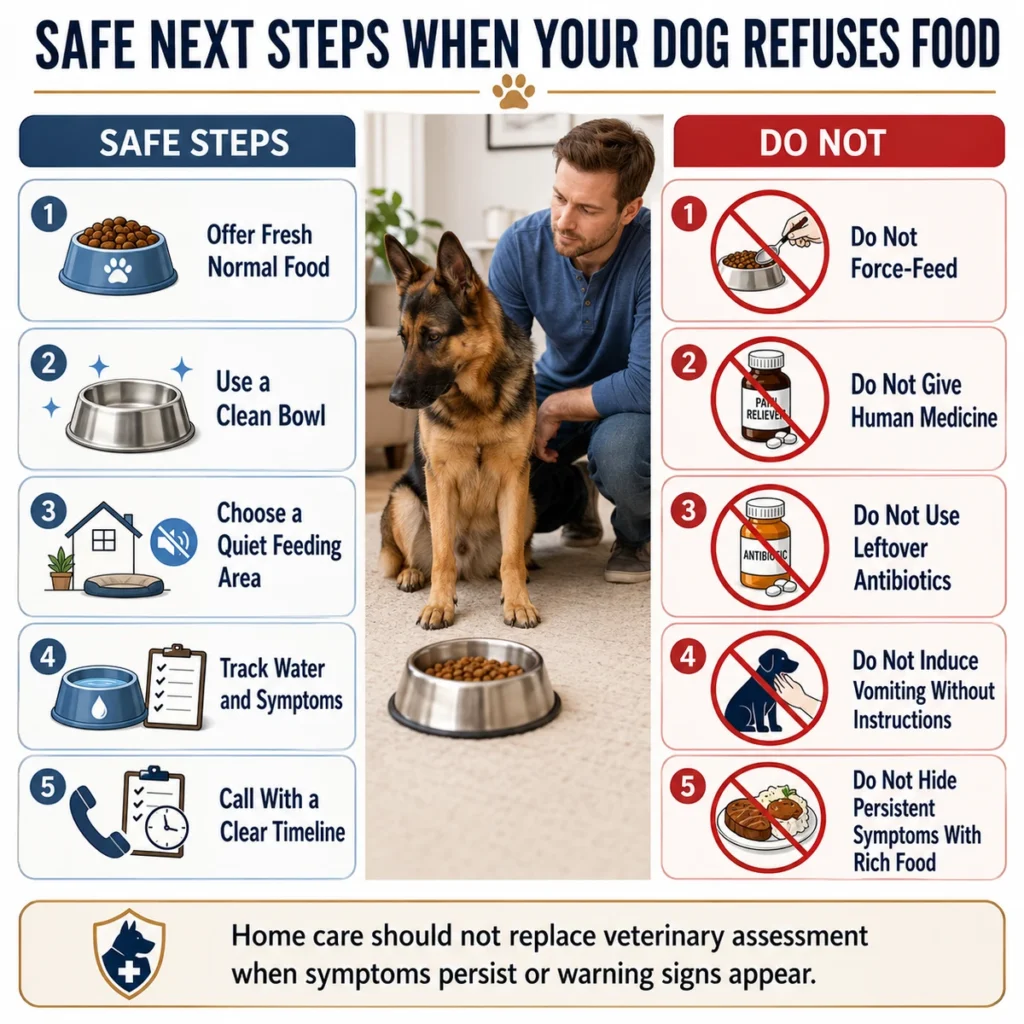
Do not repeatedly replace the regular meal with richer food. A topper may temporarily increase interest, but it can also hide worsening appetite or teach the dog to wait for upgrades.
Never force-feed a nauseated, painful, weak, or poorly swallowing dog.
What Not to Give a German Shepherd That Is Not Eating
Avoid home treatment that could delay diagnosis or cause harm.
Do not give:
- Human pain medication
- Human anti-nausea or anti-diarrhea medication
- Leftover antibiotics
- Unprescribed appetite stimulants
- Essential oils
- Large amounts of fatty food
- Raw meat as an emergency appetite fix
- Calcium or growth supplements
- Syringe-fed food or water without veterinary instructions
Chicken and rice is not a complete long-term diet and is not appropriate for every cause of appetite loss.
A dog with an obstruction, pancreatitis, food intolerance, infection, or another illness needs assessment rather than a generic bland meal.
Why Is My German Shepherd Not Eating Long Enough to Call the Vet?
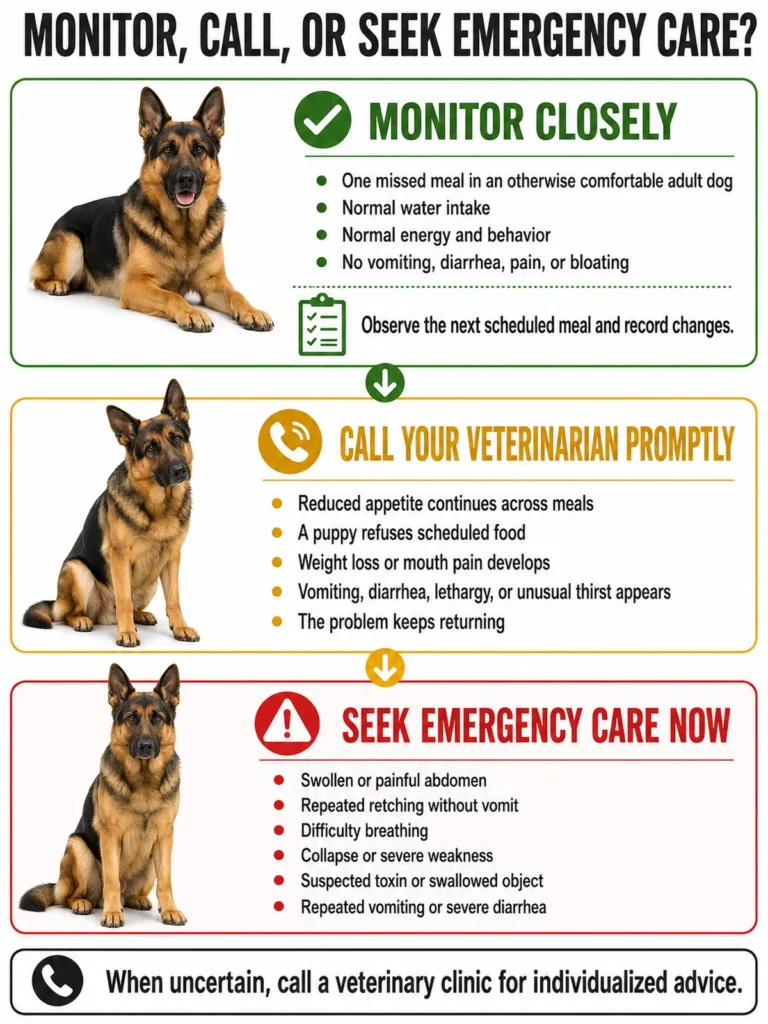
An otherwise alert adult dog that skips one meal but continues drinking and behaving normally can be monitored closely until the next scheduled meal.
Contact a veterinarian promptly when:
- The dog refuses food for approximately 24 hours
- Appetite remains reduced across several meals
- A puppy is not eating properly
- Weight loss is occurring
- The dog eats treats but repeatedly refuses its normal diet
- There is dental pain or difficulty swallowing
- Vomiting or diarrhea is present
- The dog is lethargic, painful, or behaving unusually
- Thirst or urination changes
- The problem repeatedly returns
Do not wait for a 24-hour threshold when emergency signs are present.
VCA advises taking poor appetite seriously because food refusal may accompany potentially life-threatening conditions. A regular feeding schedule also makes a change in food intake easier to recognize.
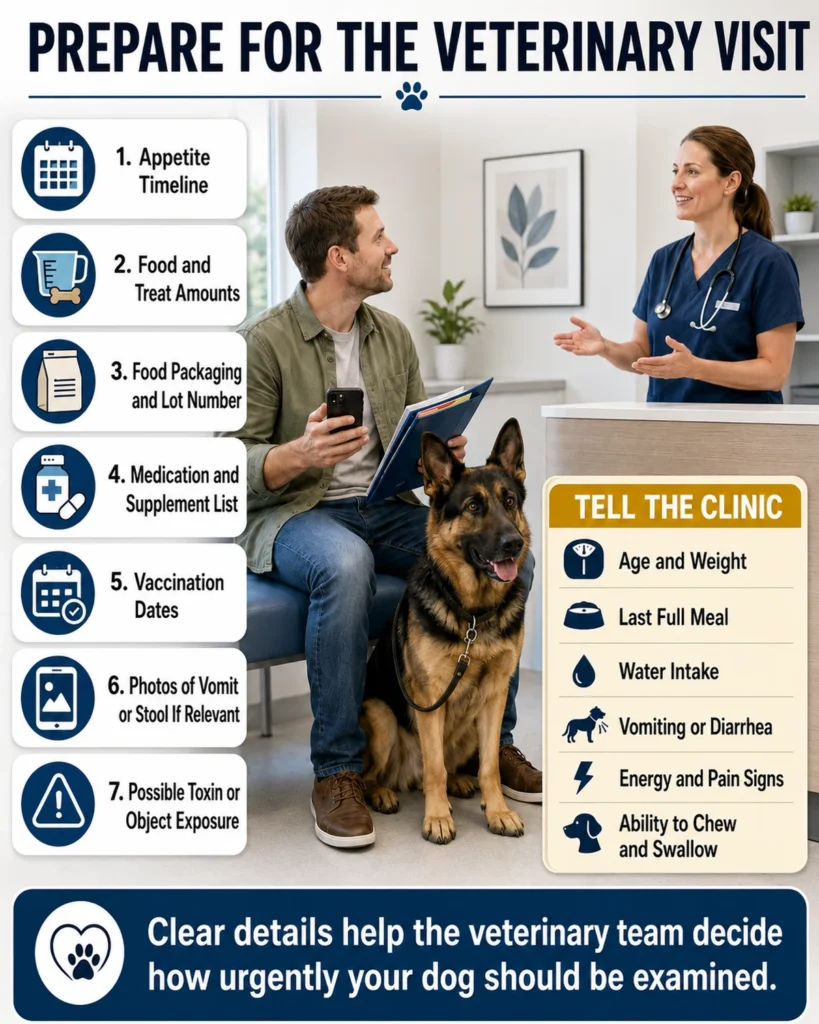
What the Veterinarian May Check
The veterinarian will usually begin with a health history and physical examination.
Depending on the dog’s age, signs, and duration of appetite loss, the visit may include:
- Temperature and hydration assessment
- Body-condition and weight evaluation
- Mouth, teeth, jaw, and throat examination
- Abdominal examination
- Fecal testing for parasites
- Blood testing
- Urinalysis
- X-rays
- Ultrasound
- Infectious-disease testing
- Review of food, treats, medication, and supplements
The purpose is to identify the cause rather than merely stimulate hunger.
Treatment depends on the diagnosis and may involve:
- Fluid support
- Nausea control
- Dental treatment
- Parasite treatment
- Dietary management
- Pain management
- Removal of a foreign object
- Treatment of an identified infection or disease
What Most Articles Miss
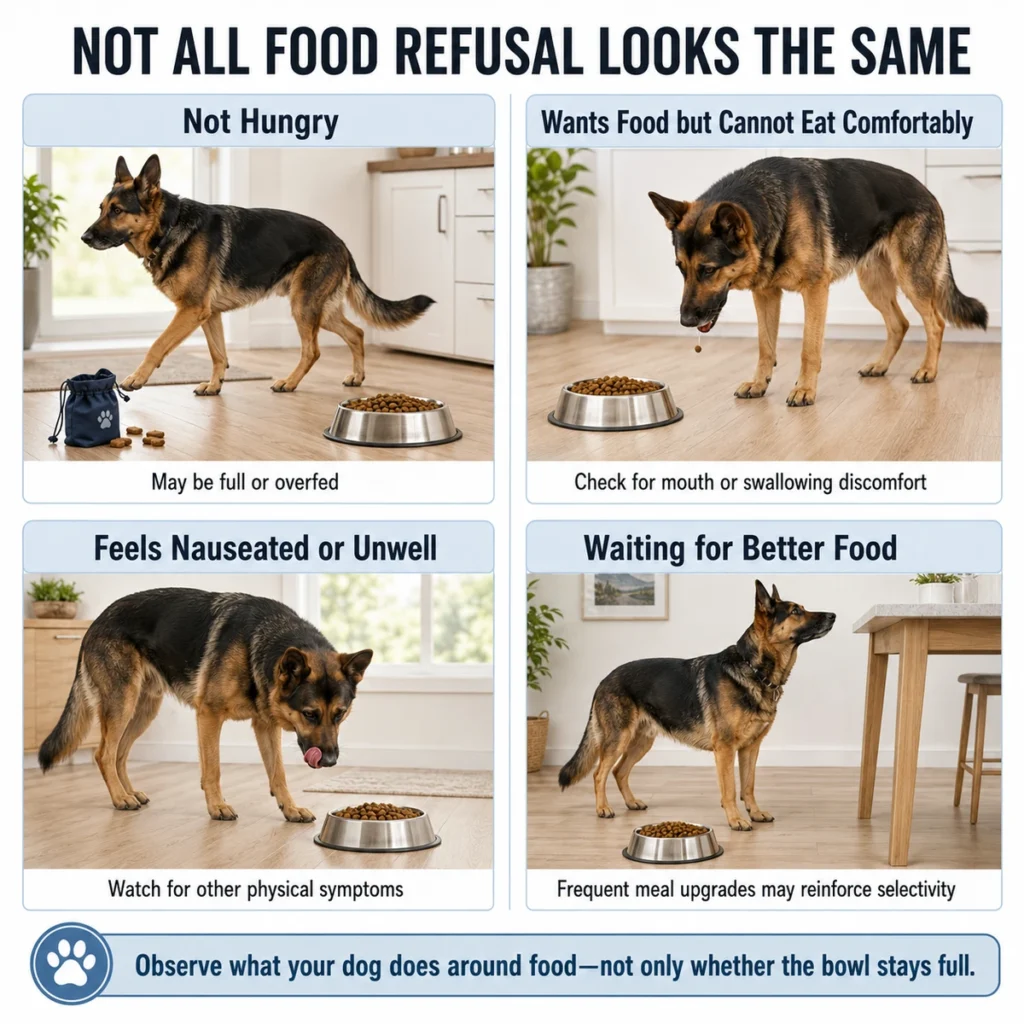
The answer to Why Is My German Shepherd Not Eating often becomes clearer when four different situations are separated.
1. The Dog Is Not Hungry
The dog may be overfed, full of treats, stressed, or temporarily less active.
2. The Dog Wants Food but Cannot Eat Comfortably
Possible reasons include mouth pain, jaw problems, swallowing difficulty, or an obstruction.
3. The Dog Feels Nauseated or Unwell
Digestive disease, infection, pain, medication effects, or another illness may reduce appetite.
4. The Dog Has Learned to Wait for Better Food
Repeatedly replacing balanced meals with high-value food can strengthen selective eating. Medical causes should still be considered before labeling a dog picky.
Accepting treats does not prove a dog is healthy. A dog with mild nausea or pain may still eat a highly rewarding food while refusing its normal meal.
Tell the veterinarian exactly what was consumed rather than simply reporting that the dog “ate something.”
Track appetite alongside:
- Body weight
- Stool
- Water intake
- Urination
- Energy
- Pain
- Medication
- Behavior
Scheduled meals provide more useful information than leaving food available throughout the day.
Frequently Asked Questions
Why Is My German Shepherd Not Eating but Still Drinking Water?
Your dog may have stress, nausea, dental pain, a food problem, or an early illness even if it continues drinking. Water intake does not rule out disease. Contact a veterinarian if food refusal persists or occurs with vomiting, diarrhea, pain, lethargy, weight loss, or unusual thirst.
Why Is My German Shepherd Not Eating but Acting Normal?
An otherwise comfortable dog may skip food after too many treats, a routine change, reduced activity, warm weather, or a food-quality issue. Monitor the next scheduled meal, water intake, stool, and energy. Call the veterinarian if appetite does not return or the pattern repeats.
Why Is My German Shepherd Not Eating Kibble but Will Eat Treats?
Your dog may be full, prefer higher-value food, dislike a changed or stale product, or have discomfort that makes hard food difficult to chew. Check the food and watch how the dog uses its mouth. Do not assume pickiness when the change is sudden or persistent.
Is It Normal for a German Shepherd Puppy Not to Eat After Vaccination?
A mild, short-lived appetite decrease may occur after vaccination with tiredness or injection-site soreness. Contact the veterinarian if it lasts more than one or two days or the puppy seems very uncomfortable. Facial swelling, breathing difficulty, repeated vomiting, collapse, or severe weakness requires emergency care.
Can Teething Make a German Shepherd Puppy Stop Eating?
Teething may make hard kibble uncomfortable, causing a puppy to chew slowly, drop food, or prefer a softer texture. Complete refusal, severe pain, facial swelling, bleeding, unusual bad breath, difficulty swallowing, or continuing appetite loss should be examined by a veterinarian.
How Long Can a German Shepherd Go Without Eating?
Do not use a dog’s theoretical survival time as a waiting rule. Contact a veterinarian when an adult refuses food for approximately 24 hours or sooner when other symptoms occur. Puppies, medically vulnerable dogs, and dogs taking meal-dependent medication need earlier advice.
Should I Change Food When My German Shepherd Stops Eating?
Do not repeatedly change diets before checking for pain, illness, spoilage, overfeeding, or a swallowed object. When the veterinarian agrees that a diet change is appropriate, transition gradually unless specific medical instructions require another approach.
Final Thoughts
If you are still asking Why Is My German Shepherd Not Eating, focus on the whole dog rather than the bowl alone.
Check:
- Age
- Duration of food refusal
- Water intake
- Energy
- Vomiting
- Stool
- Pain
- Abdominal shape
- Recent changes
- Medication
- Vaccinations
- Access to unsafe objects
One missed meal in a comfortable adult may be less concerning than reduced eating in a weak puppy. Accepting treats or a food topper does not rule out illness.
Seek immediate care for bloating, unproductive retching, breathing difficulty, collapse, severe weakness, repeated vomiting, severe diarrhea, suspected poisoning, or possible foreign-object ingestion.
Contact your regular veterinarian promptly for persistent appetite loss, weight change, mouth pain, or recurring food refusal.
Have questions about your dog’s health, nutrition, grooming, or daily care? Visit our Contact Us page to reach the Furbivo team. For any medical symptoms, diagnosis, or treatment advice, always consult a qualified veterinarian.