
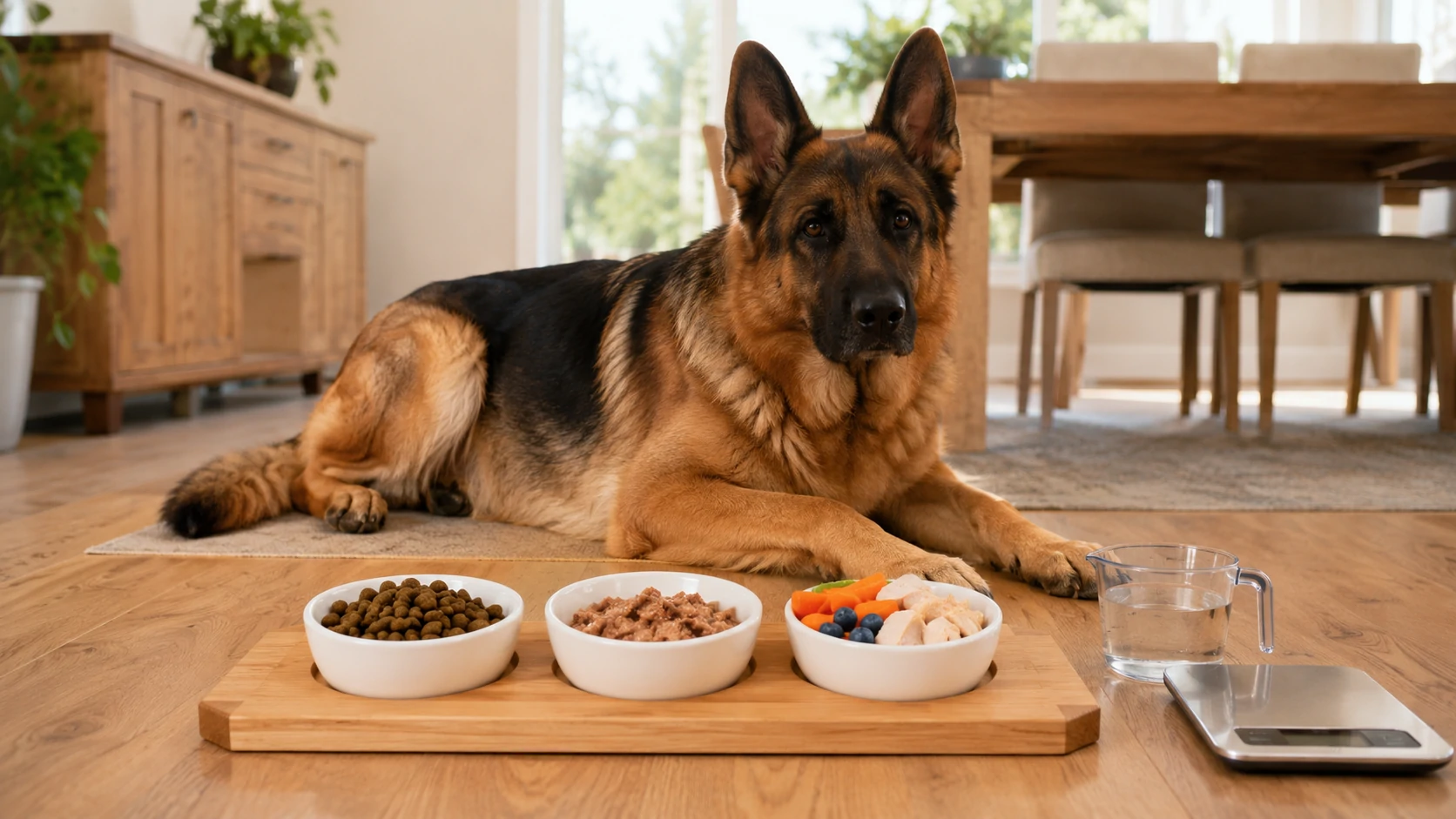
If you’re asking what do German Shepherds eat, the best answer is complete and balanced dog food made for their age, size, activity level, and health needs. German Shepherds can eat dry food, wet food, fresh food, or vet-recommended diets, plus safe treats in small amounts.
German Shepherds are large, athletic dogs. They need steady nutrition that supports lean muscle, controlled growth in puppies, healthy digestion, and a strong body condition.
Below, you’ll learn what a German Shepherd can eat, which foods should stay out of the bowl, how feeding changes from puppyhood to the senior years, and what label details matter before you buy.
In simple terms, understanding what do German Shepherds eat helps you choose food that supports daily energy, healthy weight, and long-term wellbeing.
What Do German Shepherds Eat Daily?
German Shepherds eat complete and balanced dog food as their main diet. Puppies usually need large-breed puppy food, adults need measured meals that support lean weight, and seniors may need adjusted calories. Safe treats can be added in small amounts, but table scraps and unsafe foods should be limited or avoided.
The daily diet should not be built around random meats, leftovers, or treats. Those may fill your dog’s stomach but still miss important nutrients. So when owners ask what do German Shepherds eat every day, the safest answer is a measured, complete, and balanced diet rather than random human food.
A good feeding plan starts with your dog’s life stage. A German Shepherd puppy, active adult, overweight adult, and senior dog may all need different food types and portions.
The goal is not to feed the most expensive food. The goal is to feed a safe, balanced diet your dog digests well and can eat consistently.
Quick Table: What German Shepherds Can Eat
| Food Type | Good Use | Notes for German Shepherds |
|---|---|---|
| Large-breed puppy food | Growing puppies | Helps support steady growth and proper mineral balance |
| Adult dog food | Healthy adult dogs | Choose complete and balanced food for adult maintenance |
| Senior dog food | Older dogs with changing needs | May help with calories, digestion, or age-related needs |
| Wet food | Picky eaters or extra moisture | Can cost more for a large dog |
| Fresh or gently cooked food | Owners wanting pre-portioned meals | Must be complete and balanced |
| Safe fruits and vegetables | Occasional treats | Use plain, dog-safe options in small amounts |
| Veterinary diet | Medical needs | Use only with vet guidance |
This table is a starting point. Your dog’s weight, stool quality, appetite, energy, skin, coat, and vet exam should guide the final choice.
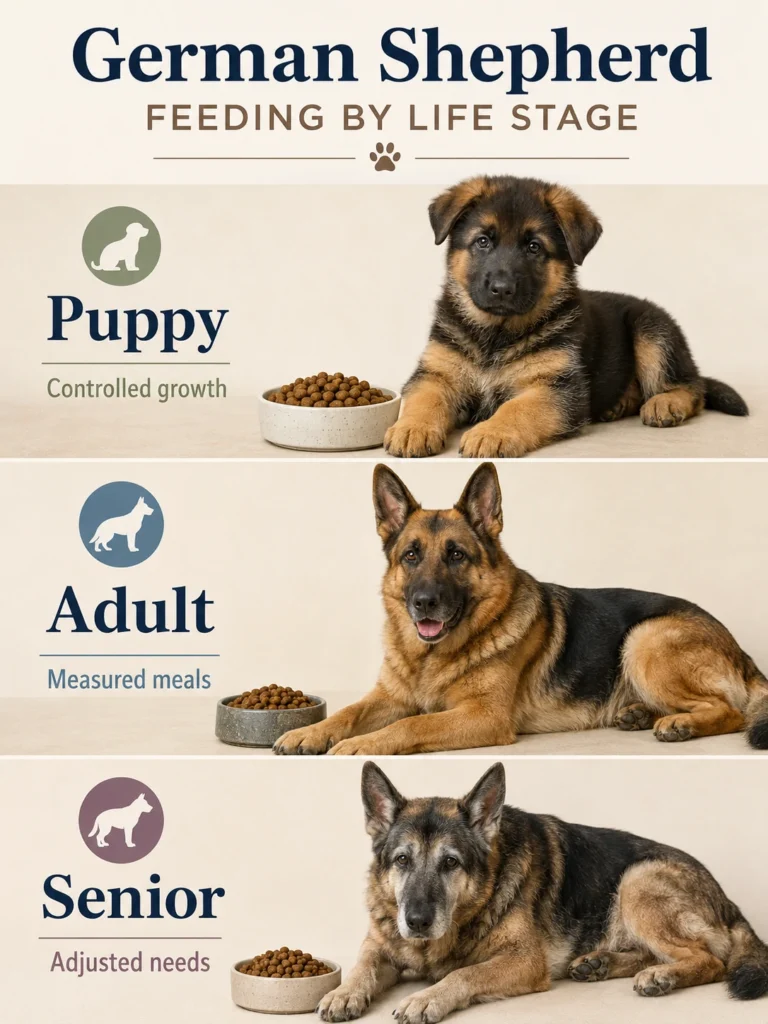
What German Shepherd Puppies Should Eat
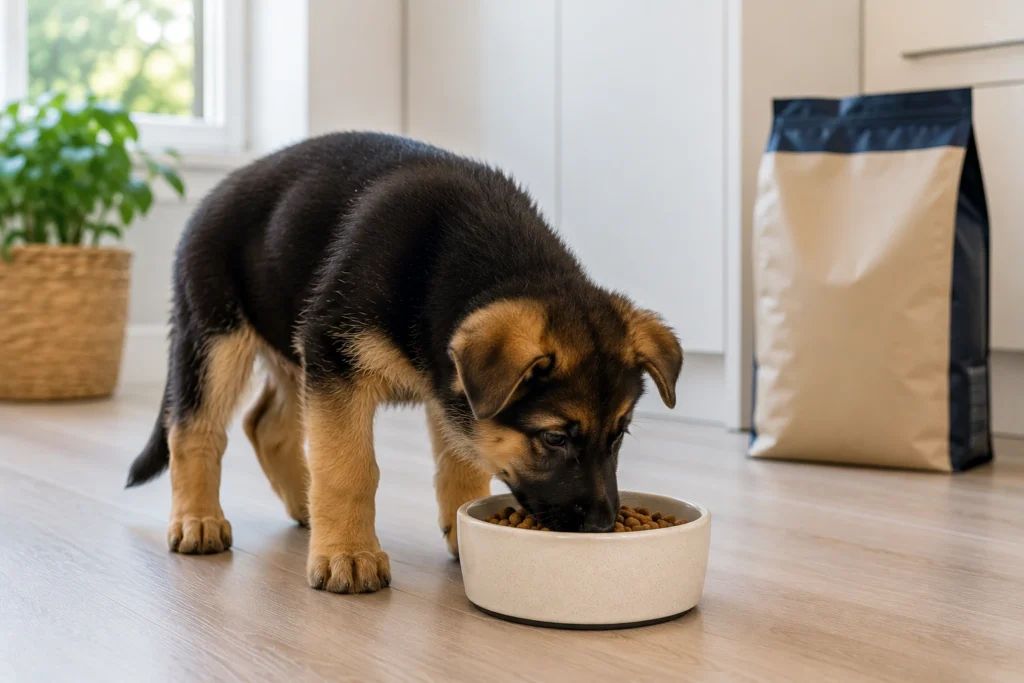
German Shepherd puppies need food made for growth, but they should not grow too fast. Fast growth and extra weight can put stress on developing bones and joints.
Most German Shepherd puppies do best on a complete and balanced large-breed puppy food. These formulas are made to support controlled growth in bigger puppies. For puppies, what do German Shepherds eat is not just about calories; it is also about controlled growth, proper minerals, and avoiding extra weight.
Large-breed puppies need careful calcium and phosphorus balance. More calcium is not always better. Extra minerals can create problems when growth is not properly controlled.
Puppies also need enough calories, protein, fat, vitamins, and minerals. But overfeeding can make a puppy too heavy for young joints.
Feed measured meals instead of leaving a full bowl out all day. Free-feeding can make it harder to track appetite, stool changes, and weight gain.
Ask your vet when to switch from puppy food to adult food. Many German Shepherds switch after most growth is complete, but the right timing depends on the dog.
What Adult German Shepherds Should Eat
Adult German Shepherds need food that helps maintain lean muscle and steady energy.Their meals should be measured carefully so they can stay active without adding unhealthy body fat.
A complete and balanced adult dog food is a good base. Some adults do well on large-breed adult food, while others do well on standard adult food that fits their calorie and digestion needs.
Protein helps support muscle, but the whole diet matters. A food should also include the right balance of fat, carbohydrates, fiber, vitamins, and minerals.
Fat gives energy and helps food taste good. Very active German Shepherds may need more calories than dogs with a calm routine.
Less active dogs may gain weight on rich food. If your dog is putting on weight, check the calorie count and measure portions before switching brands.
A healthy adult German Shepherd should have a visible waist from above. When you run your hands along your dog’s sides, the ribs should be easy to feel without pressing hard.
What Senior German Shepherds Should Eat
Senior German Shepherds may need fewer calories, softer food, joint support, or food that is easier to digest.
Not every older dog needs senior food. Some healthy senior German Shepherds do well on the same adult food with adjusted portions.
Watch for weight gain, weight loss, muscle loss, dental pain, picky eating, vomiting, diarrhea, or drinking more water than usual. These signs need a vet conversation.
Older dogs can lose muscle even when they look heavy. That is why cutting food too much can backfire.
Your vet may suggest bloodwork, a dental exam, or a diet change if your senior dog’s appetite, weight, or energy changes.
Dry Food, Wet Food, or Fresh Food?
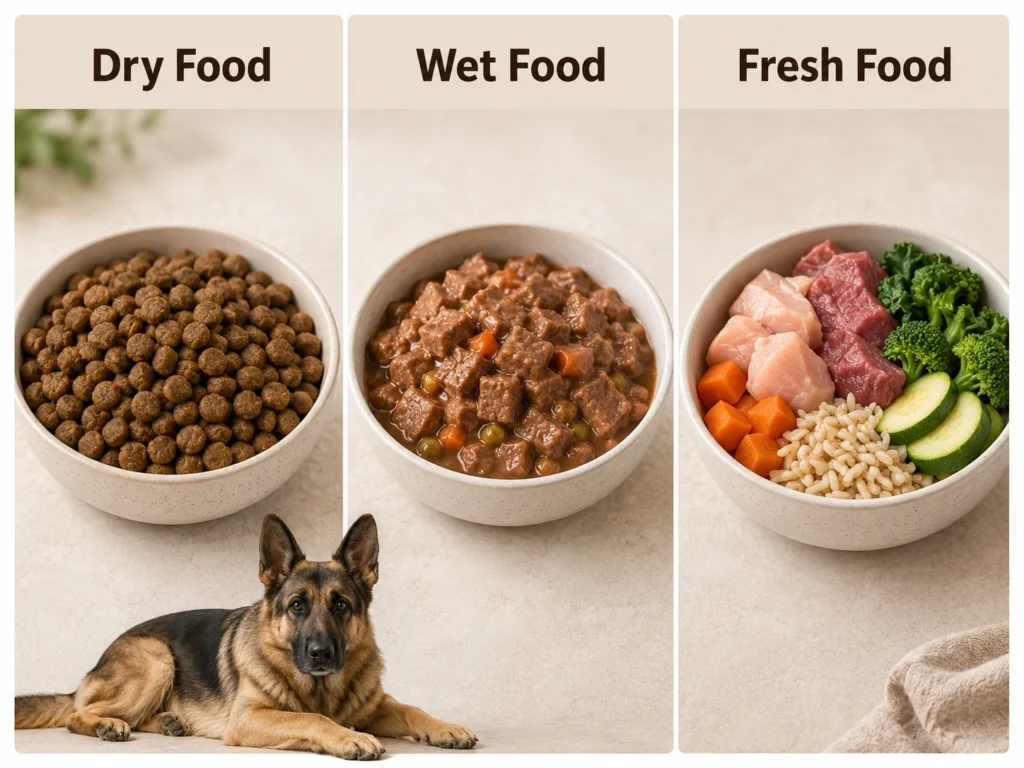
German Shepherds can eat different food types as long as the food is complete and balanced for their life stage.
Dry Food
Dry food is common because it is easy to store, easy to measure, and often more budget-friendly for large dogs.
It can work well if your dog digests it properly and stays at a healthy weight.
Some German Shepherds eat too fast. A slow feeder bowl, puzzle feeder, or smaller meals may help slow them down.
Wet Food
Wet food can help picky eaters or dogs that need more moisture in their diet. It may also be easier for some senior dogs to chew.
The downside is cost. A large German Shepherd may need a lot of wet food each day, which can become expensive.
A small spoonful of wet food can make kibble more appealing, but it should still be included in your dog’s daily food amount.
Fresh or Gently Cooked Food
Fresh or gently cooked dog food can be useful if it is complete and balanced. Some owners like the pre-portioned packaging and simple ingredient style.
Still, fresh does not automatically mean better. The food must meet your dog’s nutrition needs.
For a large dog, cost is a major factor. Always compare the daily feeding cost, not just the package price.
Homemade Food
Homemade food can be risky if it is not balanced by a qualified veterinary nutrition expert. Dogs need the right amount of protein, fat, calcium, phosphorus, vitamins, and trace minerals.
Plain chicken and rice may be used short term when a vet recommends it, but it is not a complete long-term diet.
Do not build a homemade diet from random online recipes without professional guidance.
Raw Food
Raw diets are popular online, but they come with safety risks. Raw meat can carry bacteria that may affect dogs and people in the home.
Food handling matters even more if the home has young children, older adults, pregnant people, or anyone with a weakened immune system.
If you are thinking about raw food, talk with your vet first. Do not switch a puppy, senior dog, or sick dog to raw food without guidance.
Safe Human Foods German Shepherds Can Eat
German Shepherds can eat some plain human foods as small treats. These should not replace a complete dog food. This is why the question what do German Shepherds eat should separate daily meals from occasional safe treats.
Safe options may include:
- Plain cooked chicken with no bones or seasoning
- Plain cooked turkey with no skin or seasoning
- Plain cooked egg
- Small pieces of apple without seeds or core
- Blueberries
- Plain pumpkin
- Carrots
- Green beans
- Plain cooked rice
- Plain cooked sweet potato
Keep treats small. Even healthy foods can cause weight gain or stomach upset if you feed too much.
Avoid butter, salt, garlic, onion, sauces, spices, and rich toppings. Plain is safer.
If your dog has allergies, pancreatitis, kidney disease, digestive problems, or another medical condition, ask your vet before adding new foods.
Foods German Shepherds Should Not Eat
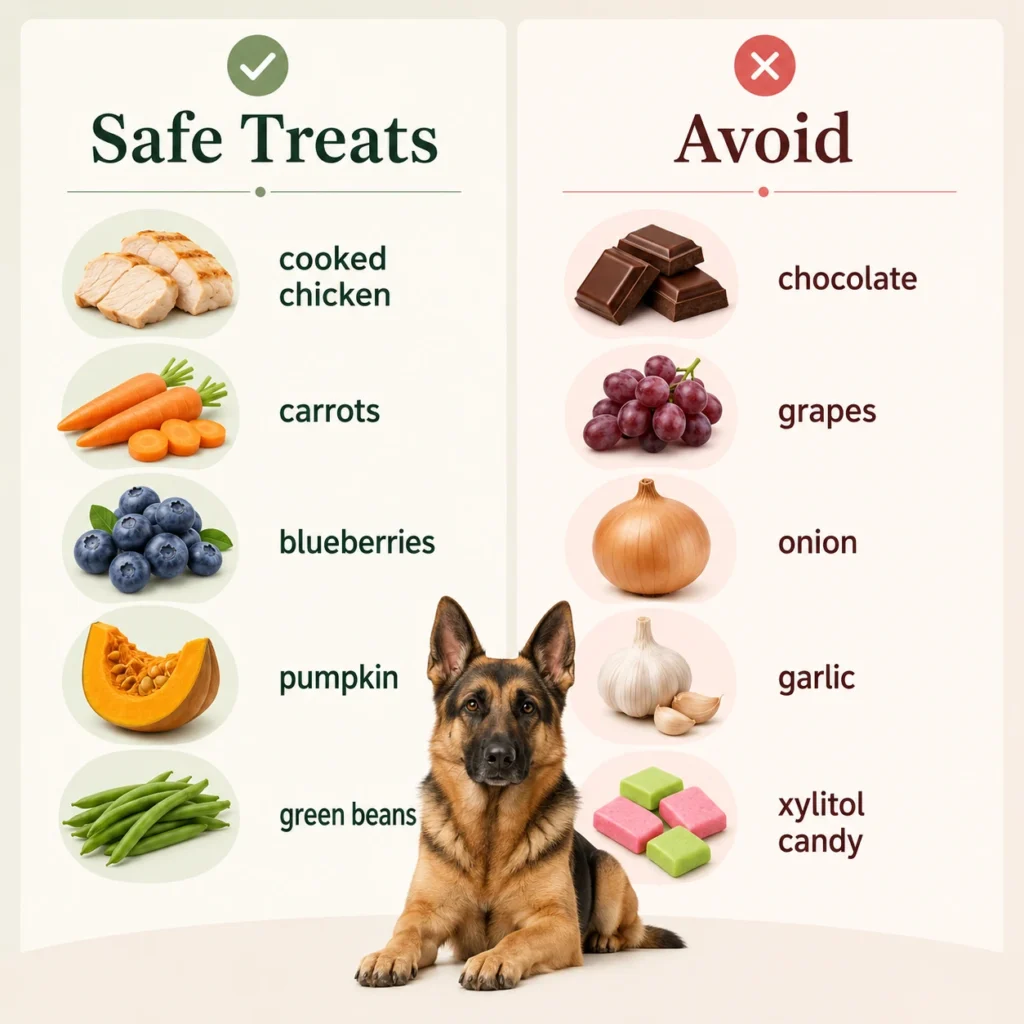
Some foods are unsafe for dogs and should be kept away from your German Shepherd.
Avoid:
- Chocolate
- Grapes and raisins
- Onions
- Garlic
- Xylitol, also called birch sugar
- Alcohol
- Coffee and caffeine
- Macadamia nuts
- Cooked bones
- Moldy food
- Very fatty leftovers
- Raw bread dough
- Candy and desserts
- Seasoned meat scraps
Safety warning: If your German Shepherd eats chocolate, grapes, raisins, xylitol, alcohol, or any unknown toxic food, call your vet or a pet poison hotline right away. Do not wait for symptoms to appear.
Cooked bones are also dangerous. They can splinter, damage the mouth, block the gut, or cause choking.
Fatty leftovers can upset the stomach and may raise the risk of pancreatitis in some dogs.
What to Look for on a Dog Food Label
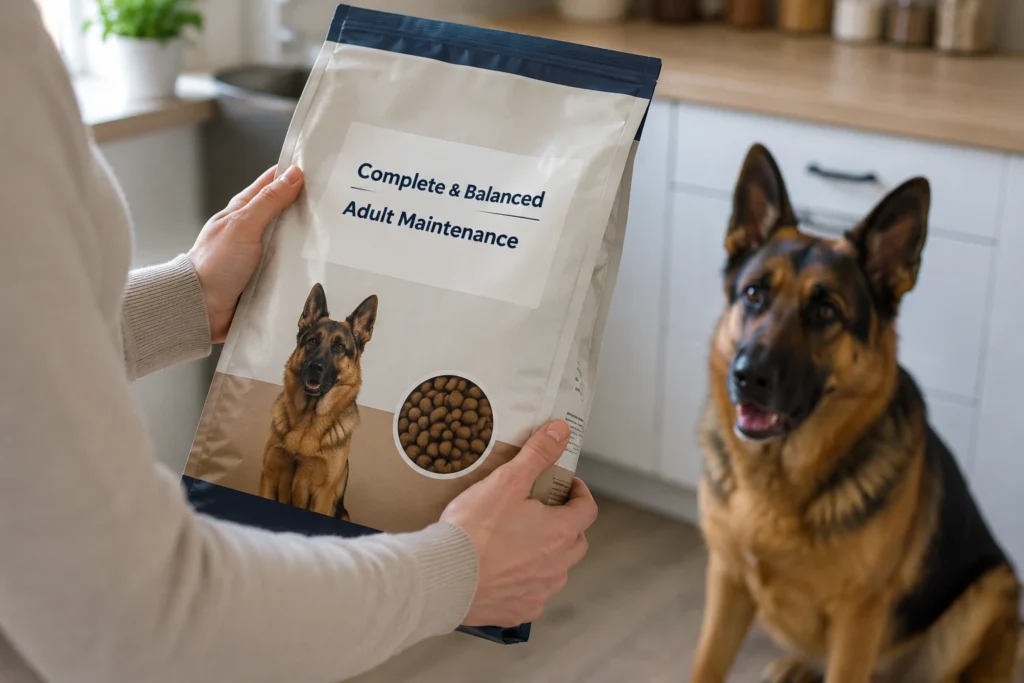
A dog food label can feel confusing, but a few details matter most. If you are comparing brands and asking what do German Shepherds eat, the label should confirm the food matches your dog’s life stage and is suitable as a main diet.
Complete and Balanced Statement
Look for a nutritional adequacy statement that says the food is complete and balanced for your dog’s life stage.
This statement helps you know whether the food is meant as a full diet or only as a treat, mixer, or supplement.
For German Shepherd puppies, look for growth language that fits large-size dogs when possible.
Life Stage
The food should match your dog’s age and needs. Puppy food, adult food, senior food, and all-life-stages food are not always the same.
If the label says it is for intermittent or supplemental feeding only, it is not meant to be your dog’s main food.
Calories
Calories are easy to overlook. Two foods can have the same cup size but very different calorie levels.
Check calories per cup, can, tray, or package. This helps you avoid overfeeding.
If your dog is gaining weight, calories matter more than marketing terms.
Feeding Guide
Feeding guides are starting points, not strict rules. Your dog may need more or less than the bag suggests.
Adjust based on body condition, activity, age, and vet guidance.
Use a measuring cup or kitchen scale. A random scoop can lead to weight gain over time.
How Much Should German Shepherds Eat?
There is no single amount that works for every German Shepherd. Portion size depends on your dog’s age, weight, metabolism, body condition, activity level, health, and the calorie level of the food.
Start with the feeding guide on the label. Then watch your dog’s body condition.
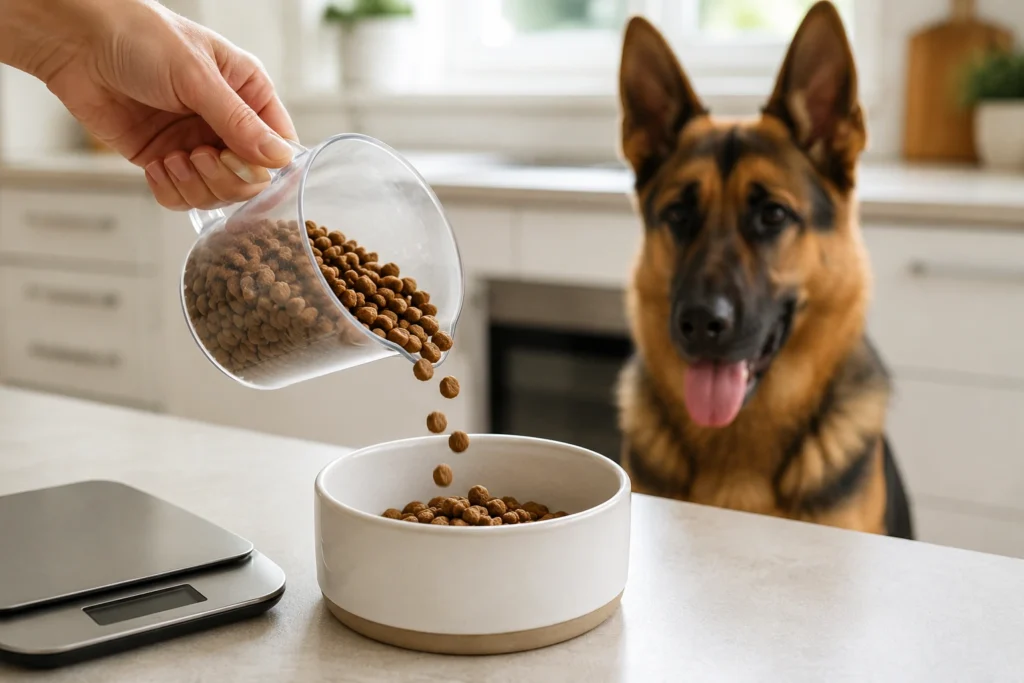
If your German Shepherd is too thin, losing weight, or always tired, call your vet before simply adding more food.
If your dog is gaining weight, reduce extras first. Treats, chews, table scraps, and toppers may add more calories than you think.
A kitchen scale can make portions more accurate. This is helpful for dogs that gain weight easily.
Common Feeding Mistakes
Many German Shepherd feeding problems come from simple mistakes.
Overfeeding
Overfeeding is common because German Shepherds are large dogs and may act hungry after eating.
Extra weight can make joint stress worse. It can also reduce stamina and comfort.
Measure every meal. Do not guess.
Too Many Treats
Training treats, dental chews, peanut butter, cheese, and leftovers all count as calories.
Treats should be a small part of the day’s intake. Use tiny pieces for training.
Switching Foods Too Fast
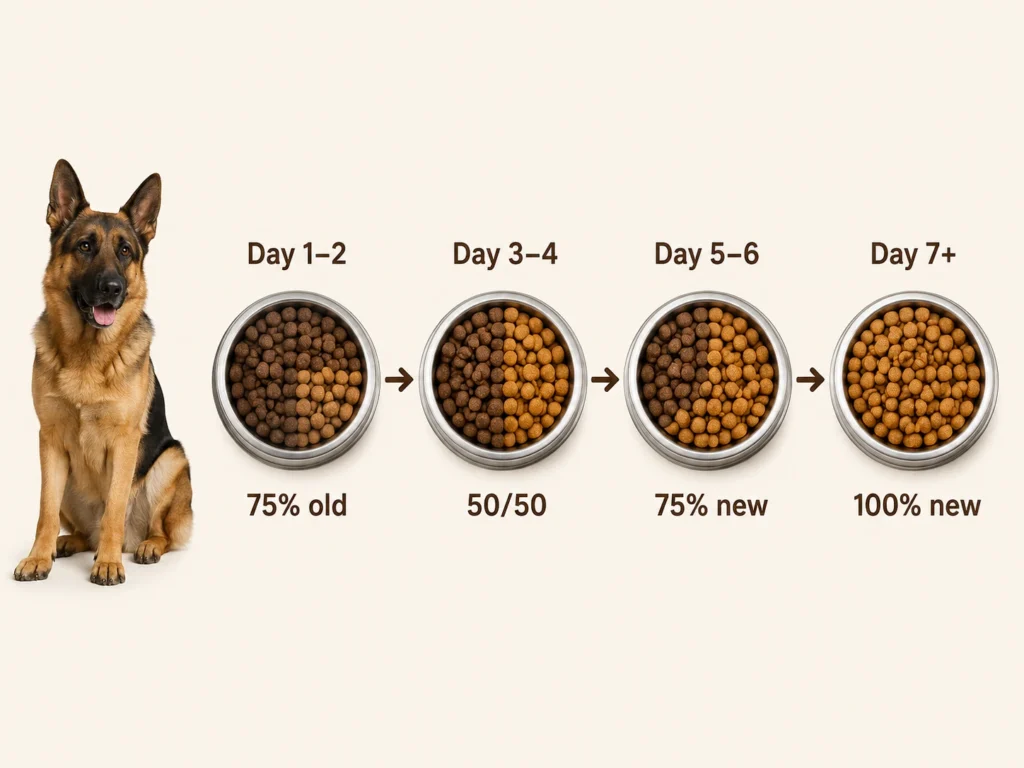
Fast food changes can cause diarrhea, gas, and vomiting.
Most dogs do better with a gradual transition. Mix the new food with the old food and slowly increase the new food over several days.
Sensitive dogs may need a longer transition.
Ignoring Stool Quality
Stool tells you a lot about digestion. Loose stool, greasy stool, very large stool volume, or repeated diarrhea may mean the food is not working or your dog has a health issue.
Call your vet if diarrhea lasts, keeps returning, or comes with vomiting, blood, weakness, weight loss, or poor appetite.
Feeding Tips for Sensitive Stomachs
Some German Shepherds have sensitive digestion. They may get gas, loose stool, or stomach upset with sudden diet changes or rich foods.
A simple, complete and balanced diet may help some dogs. But ongoing stomach problems should not be treated with guesswork.
If your dog has repeated diarrhea, weight loss, vomiting, or a huge appetite with weight loss, call your vet. German Shepherds can have medical digestive issues that need testing.
Avoid changing foods every few days. That can make digestion worse and make it harder to find the real problem.
Keep a food diary. Write down the food, treats, stool quality, appetite, and any symptoms.
Feeding Tips for Skin and Coat Health
A healthy diet can support your dog’s skin and coat. Some foods include omega fatty acids, which may help support a normal skin barrier.
But itching is not always a food issue. Fleas, environmental allergies, ear infections, skin infections, and grooming products can all cause scratching.
If your German Shepherd is licking paws, shaking the head, losing hair, getting hot spots, or smelling bad, schedule a vet visit.
Do not keep switching diets without a plan. Your vet may suggest a controlled food trial if food allergy is suspected.
Feeding Around Exercise and Bloat Risk
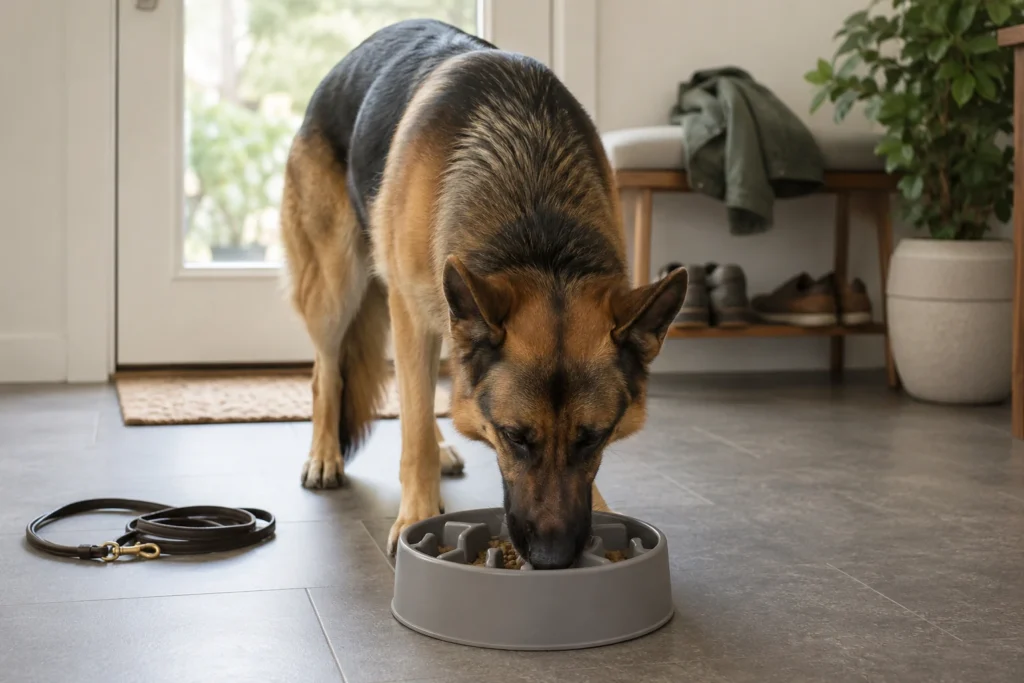
German Shepherds are deep-chested dogs, and deep-chested breeds can be at risk for bloat and GDV.
Do not feed a huge meal right before intense exercise. Many owners prefer smaller, measured meals and calm time around feeding.
A slow feeder may help dogs that gulp food quickly. Raising bowls is not a guaranteed prevention step, so ask your vet what is best for your dog.
If your dog has repeated dry heaving, a swollen belly, drooling, pacing, weakness, or collapse, seek emergency care right away.
Diet planning should never delay emergency treatment.
What Most Articles Miss
Many articles about what do German Shepherds eat list foods but do not explain how to make safe daily choices.
A Food Can Be “Healthy” and Still Wrong for Your Dog
A food may have good ingredients and still cause loose stool, weight gain, or poor appetite in your dog.
The right food is the one that fits your dog’s age, body condition, digestion, and health needs.
Portion Control Matters More Than Brand Hype
A respected food can still cause weight gain if you feed too much.
Measure meals, track treats, and check your dog’s waist and ribs.
Puppies Need Controlled Growth
German Shepherd puppies should not be pushed to grow quickly. Steady growth is safer for large-breed bodies.
Choose the right life stage and avoid adding calcium supplements unless your vet recommends them.
Unsafe Foods Are Often “Small Bites”
Many toxic food accidents happen when dogs get candy, baked goods, grapes, raisins, or sugar-free items from counters, bags, or kids.
Keep unsafe foods out of reach, even if your dog has never stolen food before.
When to Ask Your Vet About Your Dog’s Diet
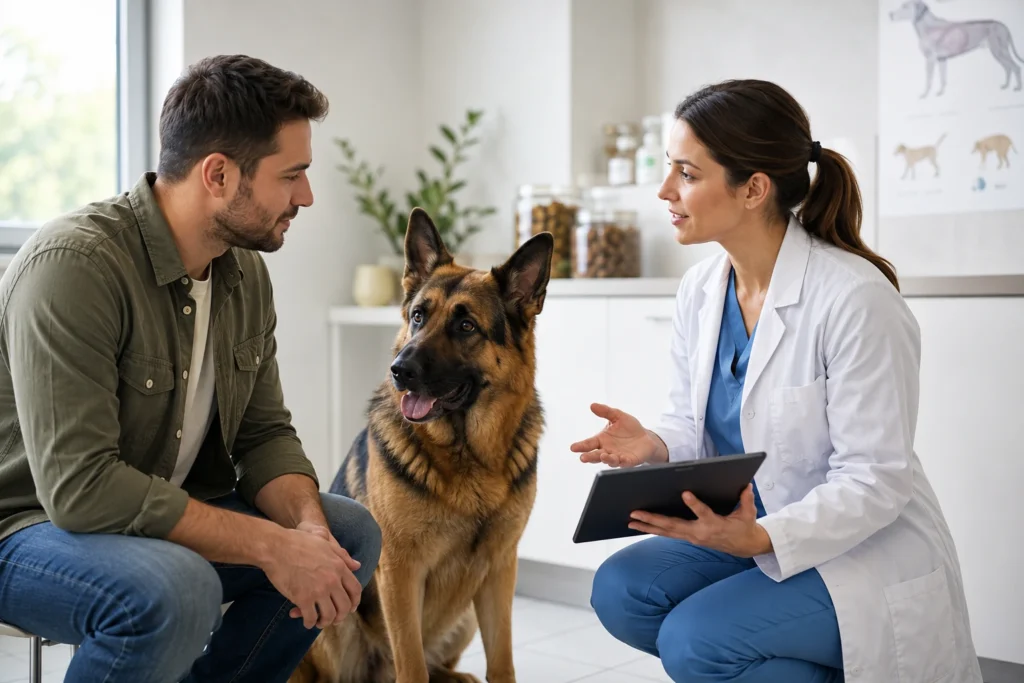
Talk with your vet before changing food if your German Shepherd is a puppy, senior, pregnant, overweight, underweight, or has a medical condition.
You should also call your vet if your dog has:
- Repeated vomiting
- Diarrhea for more than 24 to 48 hours
- Blood in stool
- Sudden weight loss
- Poor appetite
- Excessive thirst
- Constant itching
- Repeated ear infections
- Limping or stiffness
- A swollen belly
- Dry heaving
- Sudden weakness
Your vet may check body condition, teeth, stool history, skin, ears, and overall health. They may also suggest bloodwork, stool testing, or a special diet if symptoms point to a medical issue.
FAQs
1. What do German Shepherds eat every day?
German Shepherds should eat complete and balanced dog food that fits their life stage. Puppies usually need large-breed puppy food, adults need measured meals for healthy weight, and seniors may need adjusted calories or vet-guided nutrition.
2. Can German Shepherds eat chicken and rice?
German Shepherds can eat plain cooked chicken and rice short term if a vet recommends it, but it is not a complete long-term diet. It does not provide all nutrients your dog needs for daily feeding.
3. What foods are bad for German Shepherds?
Bad foods for German Shepherds include chocolate, grapes, raisins, onions, garlic, xylitol, alcohol, caffeine, cooked bones, moldy food, and very fatty leftovers. If your dog eats a toxic food, call a vet or pet poison hotline right away.
4. Should German Shepherds eat grain-free food?
Most German Shepherds do not need grain-free food unless there is a specific reason. Many dogs digest grains well. If you suspect a food allergy or sensitivity, ask your vet before making a major diet change.
5. How often should German Shepherds eat?
Many adult German Shepherds do well with two measured meals per day. Puppies usually need more frequent meals. The best schedule depends on your dog’s age, health, activity level, and your vet’s advice.
Final Thoughts on What German Shepherds Eat
So, what do German Shepherds eat? They should eat complete and balanced dog food that matches their life stage, size, activity level, and health needs. Safe human foods can be used as small treats, but they should not replace the main diet.
The best way to answer what do German Shepherds eat is to focus on balanced nutrition, measured portions, safe treats, and vet guidance when health issues appear.
Puppies need controlled large-breed growth support. Adults need measured meals that help them stay lean. Seniors may need food adjustments based on weight, teeth, digestion, and health.
Read the label, check the life stage, measure portions, limit treats, and transition slowly when changing foods. Keep unsafe foods out of reach, and call your vet if your dog has ongoing digestive issues, sudden weight changes, severe itching, or emergency signs.
Have questions about your dog’s health, nutrition, grooming, or daily care? Visit our Contact Us page to reach the Furbivo team. For any medical symptoms, diagnosis, or treatment advice, always consult a qualified veterinarian.