
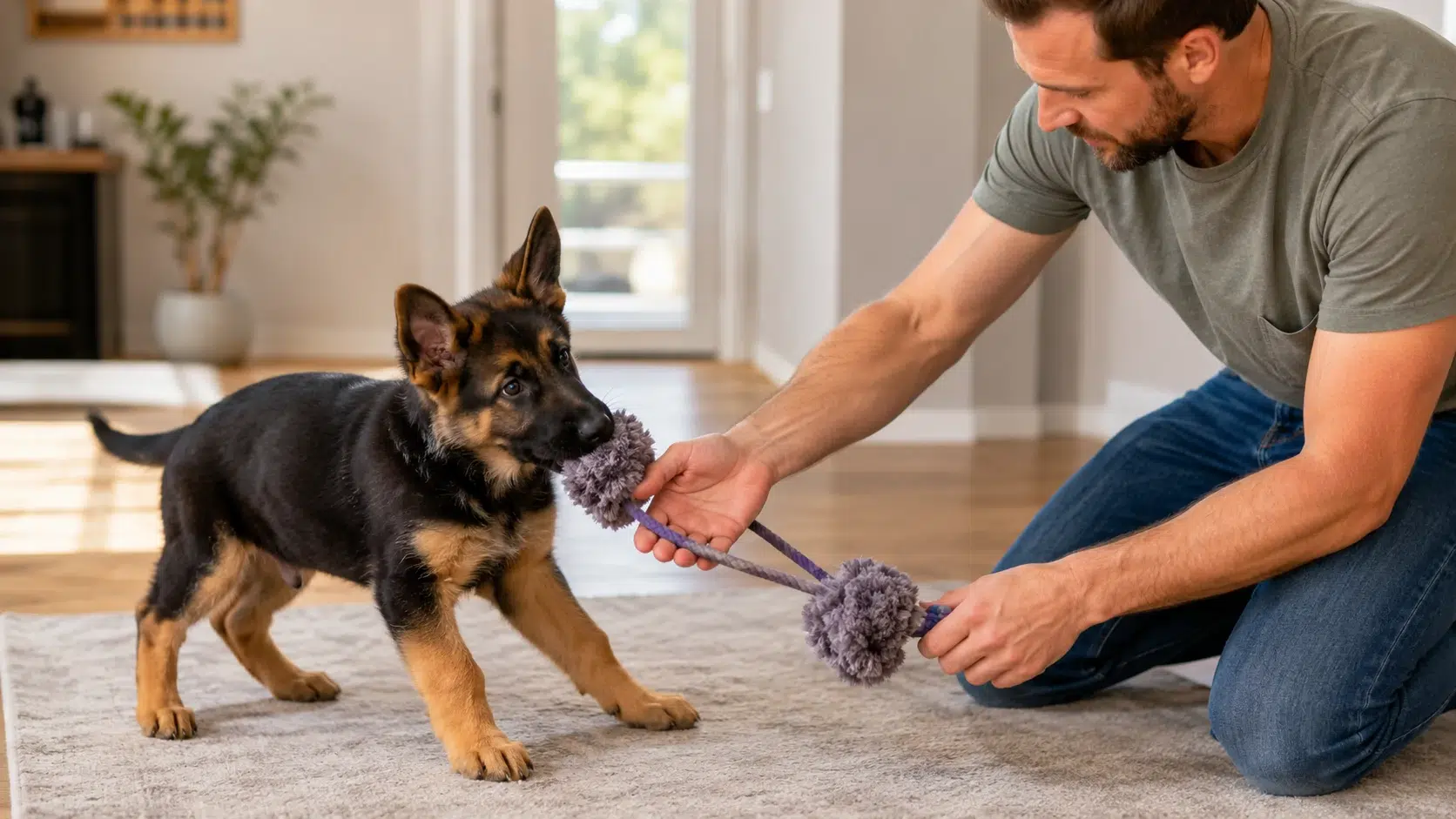
Learning How to Stop a German Shepherd Puppy from Biting and Nipping starts with understanding that most puppy mouthing is normal, but it still needs calm and consistent training. Your goal is not to frighten your puppy or hold its mouth shut. It is to teach that toys make play continue, while teeth on human skin make attention pause.
Quick Answer: How to Stop a German Shepherd Puppy from Biting and Nipping
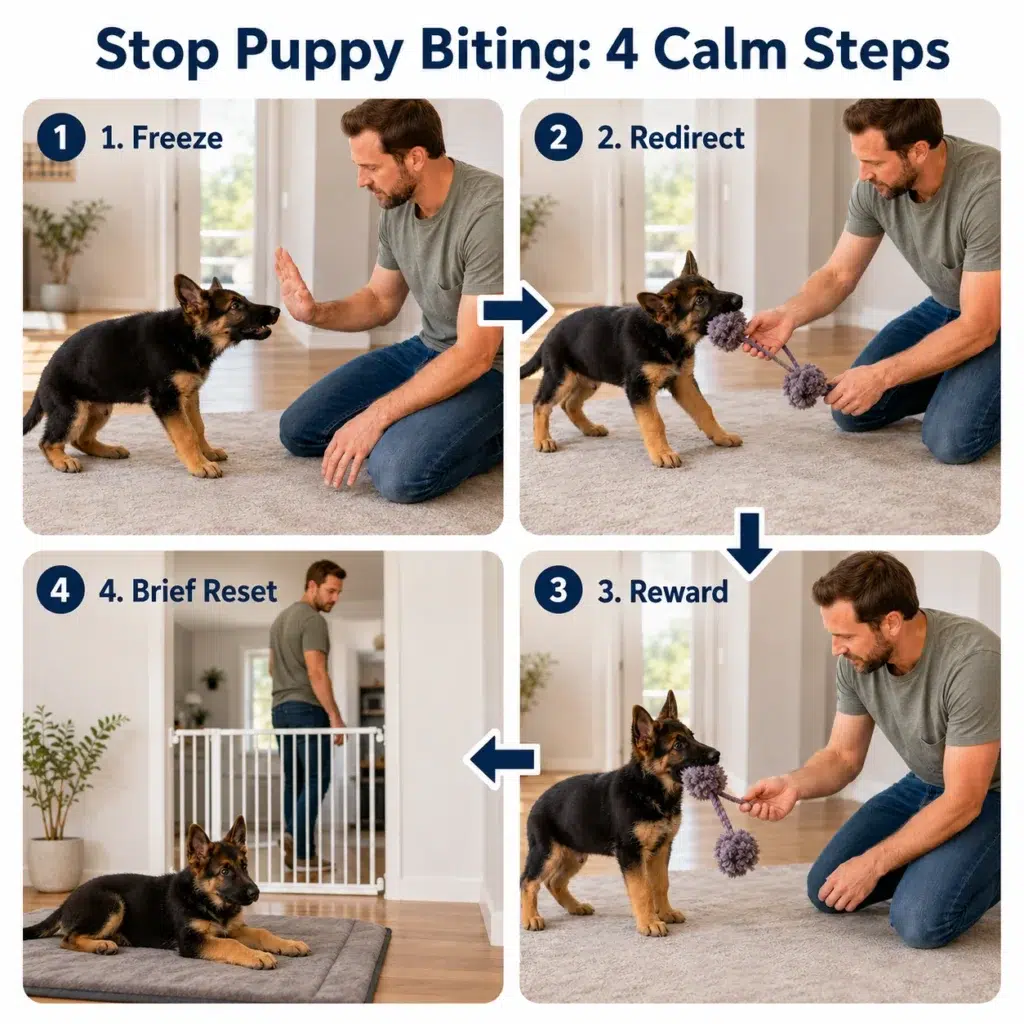
Redirect your puppy to a suitable toy, stop interaction briefly whenever teeth touch skin, reward calm play, and prevent overtired or overexcited biting with naps and structured routines. Keep everyone in the home consistent. Avoid hitting, yelling, muzzle-grabbing, or dominance-based corrections, and seek professional help for stiff, fearful, or damaging bites.
Why German Shepherd Puppies Bite and Nip
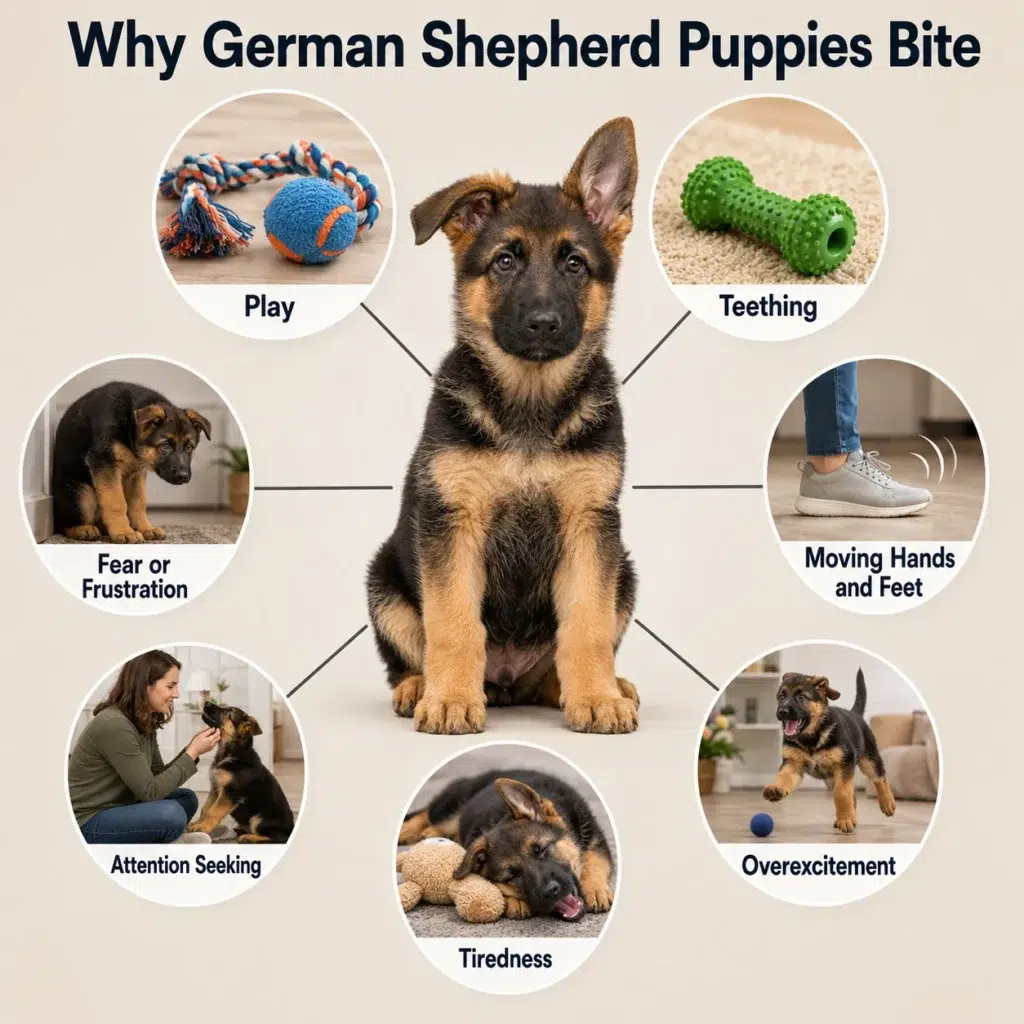
German Shepherd puppies use their mouths to explore, play, communicate, and relieve teething discomfort. The behavior often becomes stronger when a puppy is excited, tired, frustrated, hungry, under-stimulated, or attracted by moving hands, feet, trousers, and shoelaces.
Common reasons include:
- Play: Puppies naturally wrestle and mouth during social play.
- Teething: Sore gums increase the urge to chew.
- Movement: Fast-moving feet, loose sleeves, and waving hands can trigger chasing and grabbing.
- Overarousal: Intense play can push a puppy beyond the point where it can control its mouth.
- Fatigue: Overtired puppies often become wilder rather than visibly sleepy.
- Attention: If biting makes people squeal, push, chase, or talk, the puppy may repeat it.
- Frustration or fear: Some biting happens because a puppy feels trapped, worried, or unable to cope.
Puppy mouthing is common, but “normal” does not mean it should be ignored. A growing German Shepherd needs clear rules before sharp puppy teeth become a strong adult mouth. The AKC describes play biting as a normal puppy behavior while emphasizing bite inhibition, redirection, attention withdrawal, and reinforcement of appropriate behavior. (American Kennel Club)
For broader foundation skills, read Furbivo’s German Shepherd training guide. Its reward-based approach should remain the main pillar supporting this focused article.
Normal Play Biting vs. Biting That Needs Help
| More consistent with normal puppy play | More concerning and worth professional assessment |
| Loose, bouncy body | Stiff, frozen, or tense body |
| Biting mainly during play or excitement | Biting during handling, restraint, guarding, or fear |
| Easily redirected to a toy | Repeatedly ignores redirection and escalates |
| Pressure improves with training | Bites are becoming harder or more frequent |
| Puppy quickly returns to relaxed behavior | Prolonged growling, hiding, lunging, or inability to settle |
| No injury or minor accidental scratches | Repeated skin-breaking bites or targeted attacks |
Body language matters more than one isolated sound. A playful puppy may growl during tug, while a frightened puppy may become silent and rigid. Look at the whole pattern: trigger, posture, bite pressure, recovery, and whether the puppy can disengage.
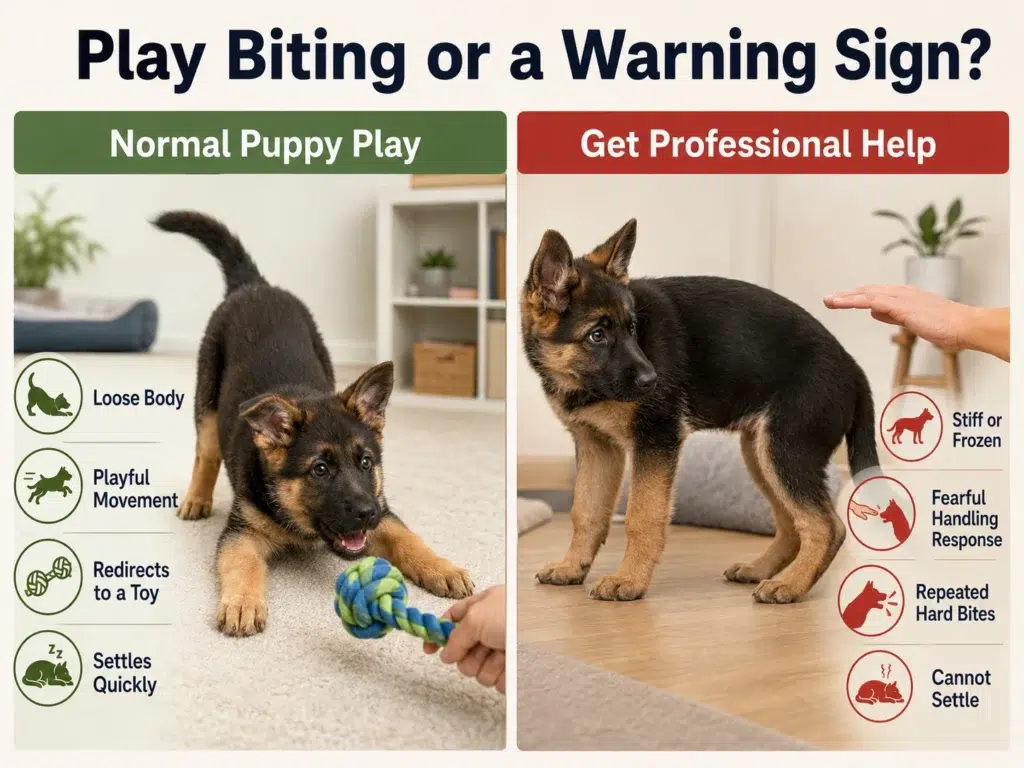
The ASPCA advises seeking professional assessment when biting is associated with a stiff body, fear, frustration, painful pressure, handling difficulties, or repeated escalation. (ASPCA)
How to Stop a German Shepherd Puppy from Biting and Nipping Step by Step
1. Keep an Appropriate Toy Within Reach
Place soft tug toys, durable puppy-safe chews, and rubber toys in the rooms where biting usually happens. Redirection works best before the puppy becomes fully worked up.
Choose toys large enough to keep your hands away from the teeth. Check toys regularly and remove anything that is splitting, shedding fibers, or breaking into swallowable pieces.
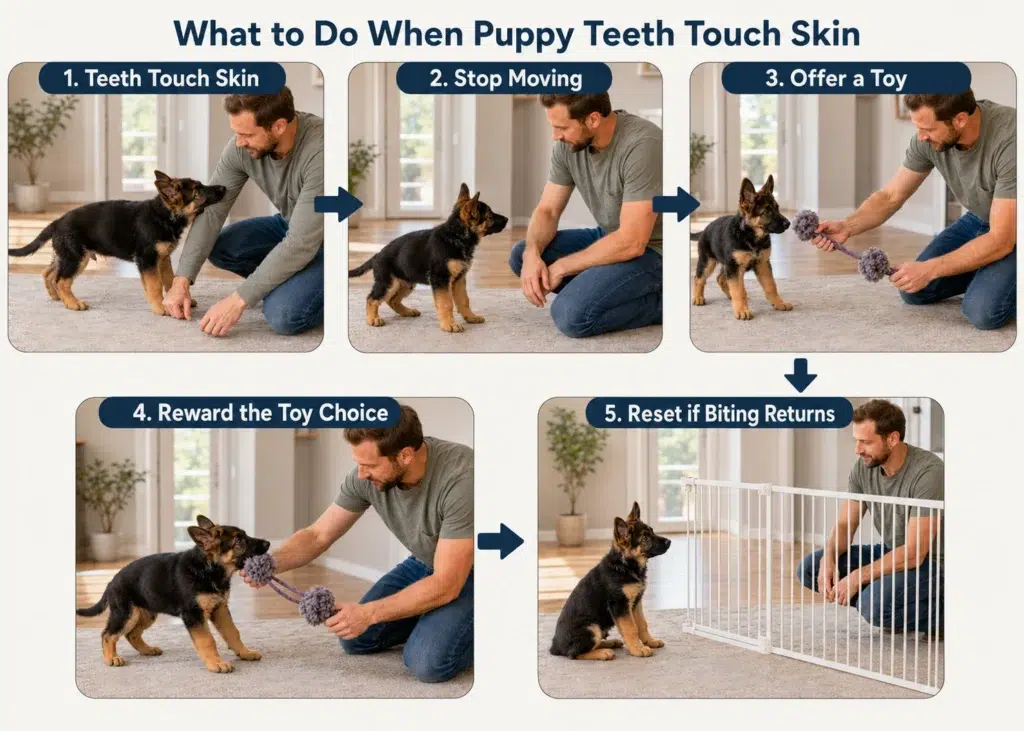
2. Freeze Instead of Pulling Away
When your puppy grabs your hand, sleeve, or trouser leg, sudden pulling can turn you into a moving game. Stop moving for a moment. Keep your body quiet and avoid wrestling the item away.
For ankle attacks, stop your feet. Movement restarting can become the reward after your puppy releases and chooses a toy.
3. Redirect to the Toy
Present the toy close to your puppy’s mouth and make it more interesting than your hand or clothing. Move it along the floor or away from the puppy rather than pushing it into the puppy’s face.
The instant your puppy takes the toy, praise calmly and continue playing. This teaches a clear replacement behavior: bite this, not people.
4. End Play When Teeth Return to Skin
If your puppy immediately leaves the toy and bites you again, calmly end the interaction. Stand up, turn away, tuck your hands safely, or step behind a baby gate for a brief reset.
The break should be short and unemotional. You are not trying to scare your puppy. You are teaching that rough teeth make access to play disappear.
5. Return and Give Another Chance
Resume the interaction once your puppy is calmer. Offer the toy again or ask for an easy behavior such as “sit,” then reward success.
This repeatable pattern is the core of How to Stop a German Shepherd Puppy from Biting and Nipping:
- Teeth touch skin.
- Movement and attention stop.
- A suitable toy becomes available.
- Calm behavior earns play or food.
- Rough biting ends the interaction again.
6. Reward Good Behavior Before Biting Starts
Do not wait only for mistakes. Reward your puppy for:
- Approaching without grabbing
- Sitting for attention
- Taking a toy
- Walking beside moving feet
- Settling on a mat
- Accepting gentle handling
- Releasing clothing
- Choosing calm play
Your puppy will learn faster when the correct choice regularly produces a useful outcome.
7. Prevent Repeated Practice
Training becomes harder when a puppy practices biting people dozens of times each day. Use baby gates, an exercise pen, toy stations, supervised indoor-leash management, and planned quiet periods.
Management is not a substitute for training. It creates situations in which your puppy is more likely to succeed.
Teach Bite Inhibition Before Expecting Perfect Self-Control
Bite inhibition is the ability to control bite pressure. Puppies begin learning it through play when another puppy stops interacting after a bite becomes too hard.
With people, the lesson should remain simple: gentle behavior keeps access to play; painful pressure ends it.
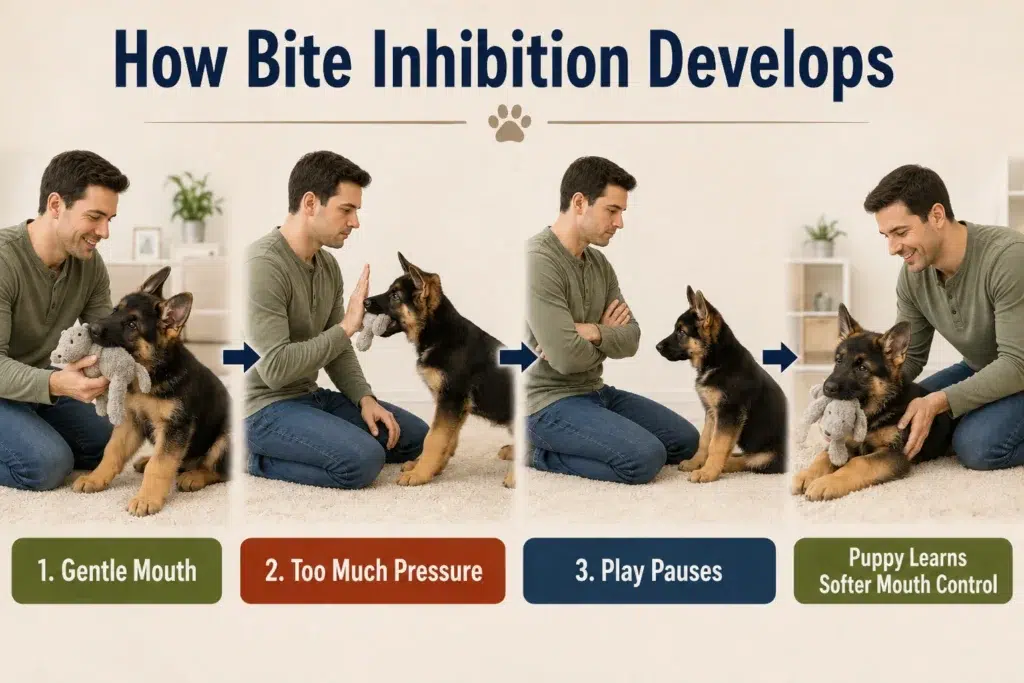
Some puppies pause after a brief “ouch,” but others become more excited by high-pitched sounds. If your puppy gets wilder when you yelp, skip the noise and quietly withdraw attention.
The ASPCA’s guidance on puppy mouthing emphasizes teaching gentle mouth control, redirecting to toys, and using brief interruptions rather than physical punishment. The American Kennel Club’s bite-inhibition guide similarly recommends ending play, redirecting chewing, reinforcing desired behavior, and getting help when the problem persists. (ASPCA)
Teething Can Make Nipping Worse
Puppies usually begin losing their baby teeth at around three to four months. Most should have their adult teeth by approximately six months. During this period, sore gums can increase chewing and mouthing. (American Kennel Club)
Helpful options include:
- Puppy-safe rubber chews
- Chilled or freezer-safe teething toys used according to instructions
- Soft tug toys
- Food-stuffed toys suited to the puppy’s size
- Veterinarian-approved edible chews
- Supervised chewing sessions
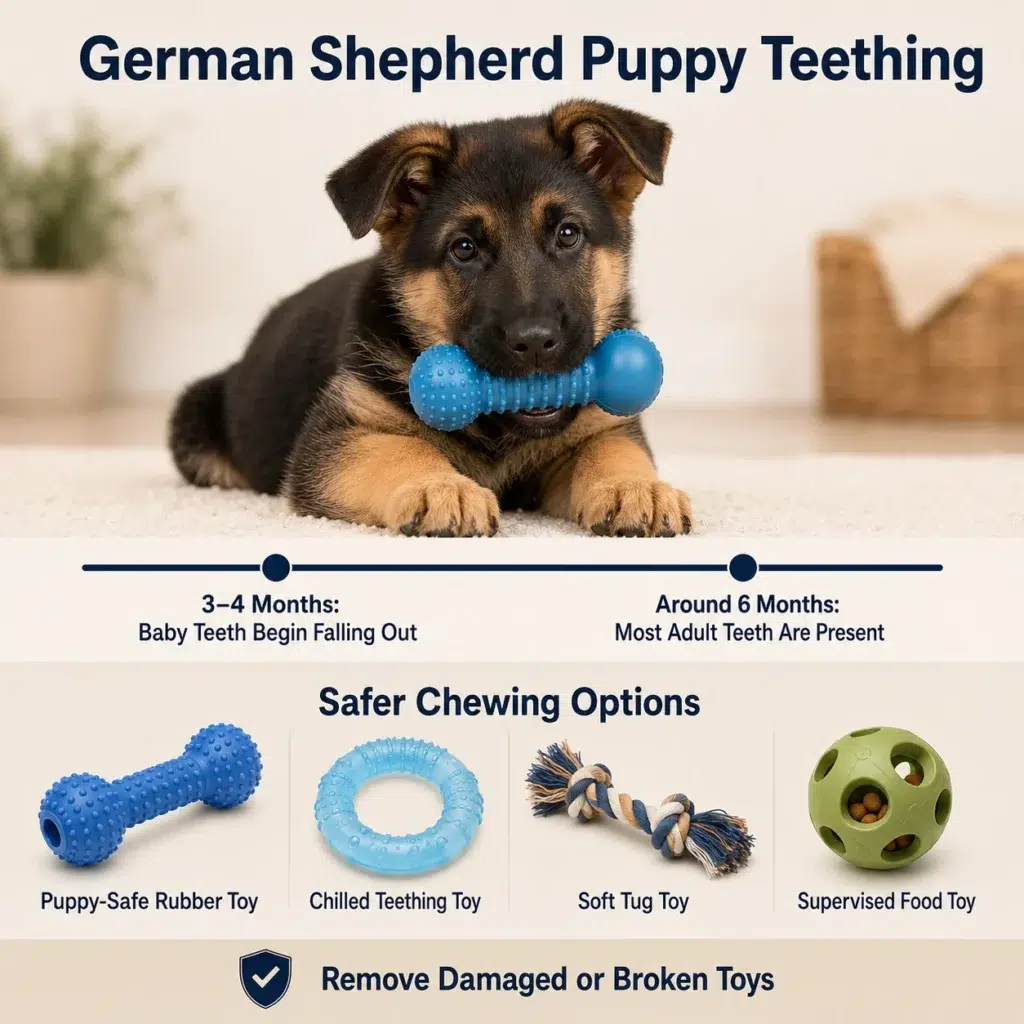
The AKC puppy teething guide advises supervising chewing and checking toys regularly so puppies cannot swallow broken pieces.
Contact your veterinarian if you notice unusual bleeding, marked pain, refusal to eat, facial swelling, a broken tooth, foul odor, or baby teeth remaining after the adult teeth appear.
Teething explains some biting, but it does not replace training. Your puppy still needs to learn where teeth are allowed.
Build a Daily Routine That Reduces Biting
Owners often search for How to Stop a German Shepherd Puppy from Biting and Nipping during the evening, when the underlying trigger may be an overstimulated or overtired puppy.
A practical daily rhythm can include:
- Potty trip after waking
- Short reward-based training before meals
- Age-appropriate play and sniffing
- Calm chewing after activity
- Frequent rest in a safe area
- Brief handling practice
- Predictable meal times
- Quiet wind-down before bed
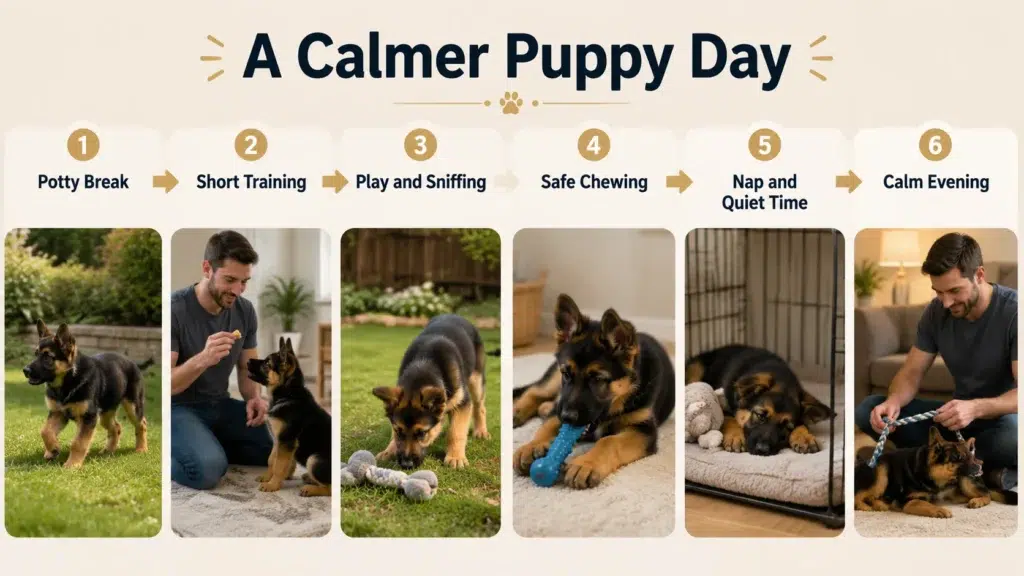
Avoid trying to exhaust your puppy with endless high-intensity exercise. Too much excitement can create a fitter but more frantic biter. Mix physical movement with sniffing, food puzzles, simple training, and sleep.
Blue Cross notes that fatigue, hunger, boredom, insufficient mental activity, and excessive excitement can all contribute to puppy mouthing. (Blue Cross)
Furbivo’s German Shepherd puppy feeding chart can help you build consistent meal routines.
For calm rest and safe confinement, follow the German Shepherd puppy crate-training guide without turning the crate into a punishment area.
What to Do in Common Biting Situations
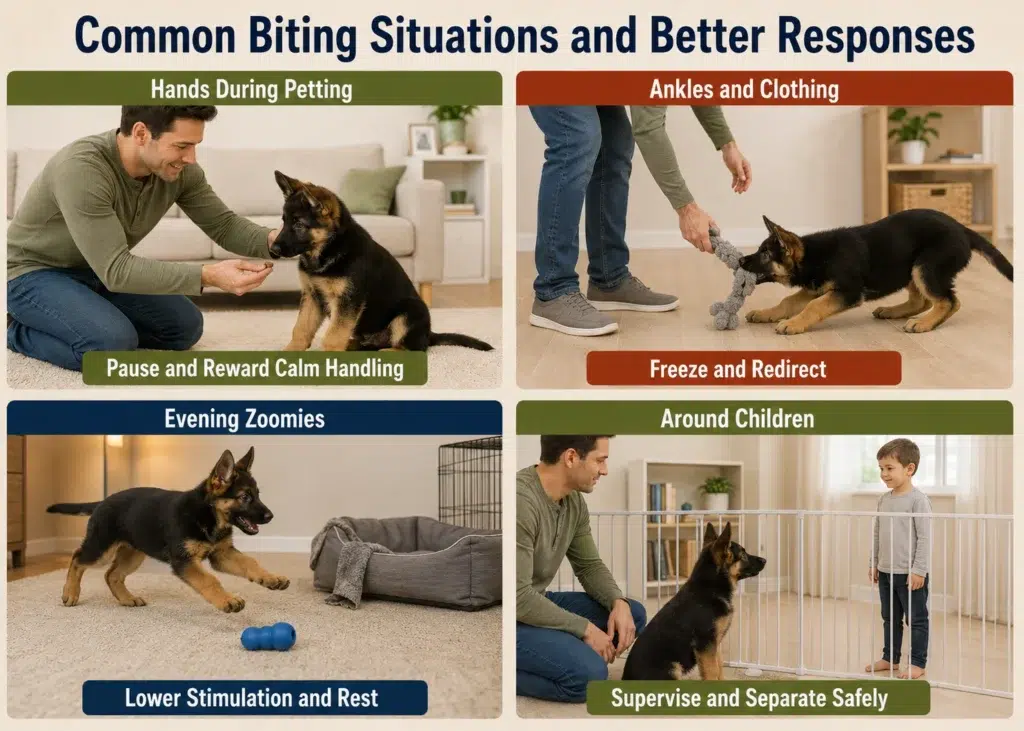
When Your Puppy Bites Hands During Petting
Stop petting before your puppy becomes too excited. Offer a small treat with one hand while briefly touching the shoulder, chest, paw, ear, or collar with the other.
Keep sessions short and finish while your puppy is successful. If your puppy bites, remove your hands calmly, pause, and restart at an easier level.
When Your Puppy Bites Ankles and Trousers
Freeze your feet. Do not kick, hop, or run. Present a tug toy away from your legs. Reward your puppy for following the toy or walking beside you without grabbing.
Temporarily avoid loose dressing-gown ties, flapping trousers, and slippers that turn normal walking into a chase game.
When Your Puppy Bites During Evening “Zoomies”
Check whether your puppy needs:
- A potty break
- Water
- A scheduled meal
- Less stimulation
- A nap
- A calm chewing activity
Lower the activity level and offer a safe chew in a puppy-proofed resting area.
When Your Puppy Bites Children
Adults must manage the situation. Children should not be expected to handle painful biting on their own, and running, screaming, or pushing may intensify chase behavior.
Use gates, pens, leashes, and direct adult supervision. Give the puppy and child separate safe zones. Teach children to stand still, fold their arms, and call an adult rather than hitting or pushing the puppy.
The Blue Cross puppy-biting guide recommends active supervision and temporary separation when adults cannot closely manage puppy-child interaction. (Blue Cross)
When Biting Happens Around New People or Dogs
Do not force greetings. Excitement, fear, and frustration can all lead to mouthing.
Create distance, reward calm observation, and keep interactions short. Use Furbivo’s German Shepherd puppy socialization guide to build confidence without overwhelming your puppy.
Training Mistakes That Commonly Make Biting Worse
Avoid:
- Hitting, tapping, or grabbing the muzzle
- Holding the mouth shut
- Scruff shaking
- Alpha rolls or dominance pinning
- Shouting into your puppy’s face
- Jerking hands and feet away like prey
- Rough wrestling with bare hands
- Allowing finger biting sometimes but punishing it later
- Using the crate as an angry time-out
- Punishing growling instead of investigating the cause
- Expecting a teething puppy to show adult self-control
- Using shock, prong, or pain-based corrections
The American Veterinary Society of Animal Behavior supports reward-based methods and advises against training that relies on force, pain, fear, or physical and emotional discomfort.
Harsh corrections may interrupt behavior temporarily without teaching your puppy what to do instead. They can also make handling, trust, and warning signals harder to interpret.
What Most Articles Miss: Track the Pattern, Not Just the Bite
A simple biting log can reveal the solution faster than repeating the same correction.
| What to track | Example |
| Time | 7:30 p.m. |
| Trigger | Child ran past |
| Puppy state | Awake for two hours and highly excited |
| Target | Trouser leg |
| Response | Adult froze and offered tug toy |
| Result | Puppy released and settled after a potty break |
After several days, patterns may become clear. You might discover that biting clusters:
- Before naps
- After rough play
- Near meal times
- During clothing movement
- When visitors arrive
- When your puppy needs more distance
- During frustrating handling
- At the end of long activity periods
Progress should not be judged only by “zero bites.” Better early signs include:
- Softer mouth pressure
- Faster release
- More frequent toy choices
- Shorter biting episodes
- Easier recovery
- Fewer ankle ambushes
- Better response to “sit,” “leave it,” or “drop”
- Calmer behavior around children and movement
That turns the advice into a measurable training plan rather than a daily argument.
When to Contact a Veterinarian or Behavior Professional
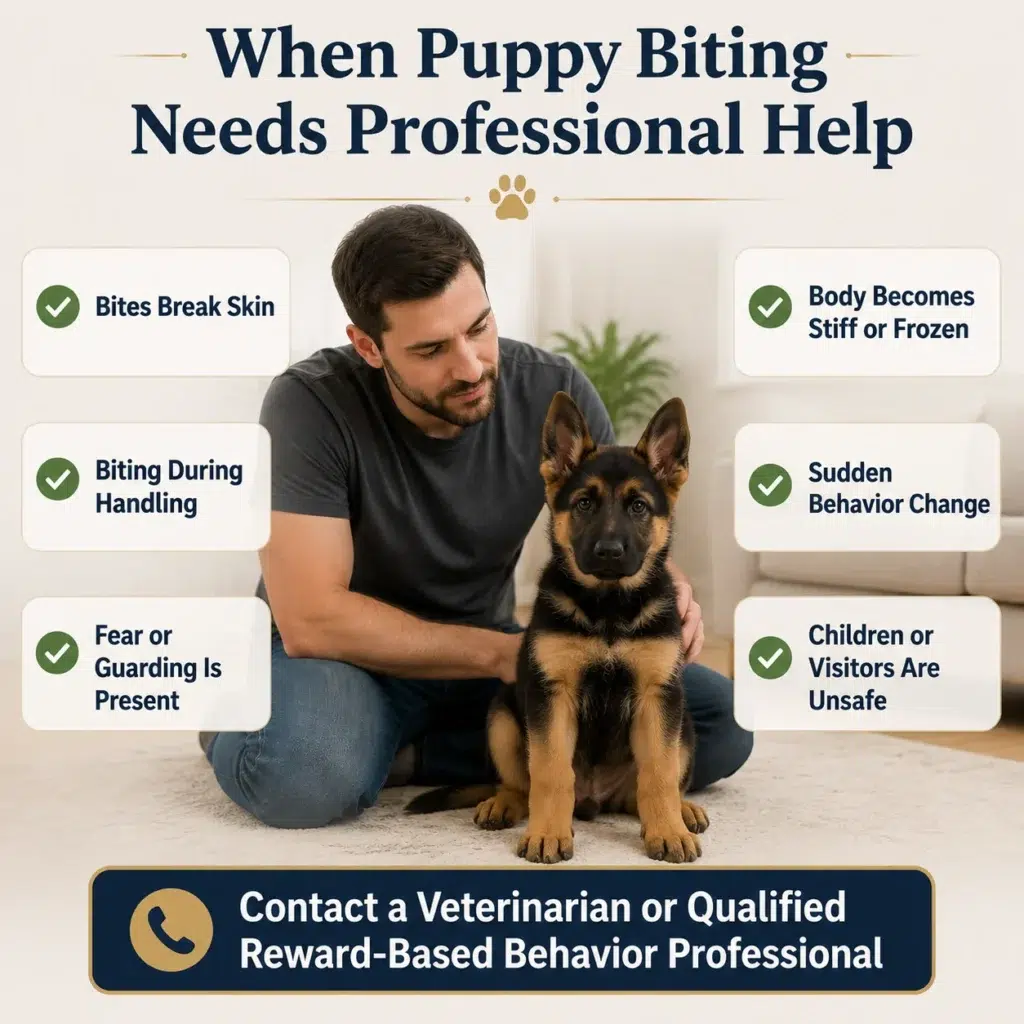
Arrange professional help when:
- Bites repeatedly break skin
- Your puppy becomes stiff, frozen, or intensely focused before biting
- Biting occurs around food, toys, resting places, or handling
- Your puppy growls, snaps, or bites when touched
- Behavior changes suddenly
- Your puppy appears painful, unwell, or unusually sensitive
- Fear, hiding, lunging, or panic accompanies the biting
- Behavior worsens despite consistent management
- You cannot safely protect children, visitors, or other animals
- Mouthiness remains difficult to moderate as the puppy approaches six months
Start with your veterinarian when pain, dental problems, illness, or sudden behavioral change may be involved.
For behavior concerns, look for a qualified reward-based trainer with puppy experience. More serious fear or aggression may require a veterinary behaviorist or certified applied animal behavior professional. The ASPCA recommends qualified professional support when biting appears fearful, aggressive, stiff, painful, or resistant to normal puppy-mouthing training. (ASPCA)
Frequently Asked Questions
Is German Shepherd puppy biting normal?
Yes. Play biting, chewing, and mouthing are common in young puppies, especially during teething and excitement. The behavior still needs consistent redirection and boundaries so your puppy learns that human skin and clothing are not toys.
At what age do German Shepherd puppies stop biting?
Many puppies improve as teething ends and training becomes consistent, often around five to six months. Some mouthiness may continue into adolescence when it has been repeatedly rewarded or the dog has not learned impulse control.
How do I stop my German Shepherd puppy from biting my feet?
Freeze your feet, redirect your puppy to a tug toy, and reward movement beside you without grabbing. Keep toys nearby and temporarily remove loose clothing or slippers that encourage chasing.
Should I yelp when my German Shepherd puppy bites?
Only when it calmly interrupts your puppy. Some puppies become more excited when people squeal. If biting intensifies, remain quiet, stop moving, and withdraw attention briefly.
Should I hold my puppy’s mouth closed?
No. Holding the mouth shut can create fear, struggling, or defensive behavior and does not teach an acceptable alternative. Redirect your puppy to a toy and reinforce calm, gentle interaction.
Can teething toys stop puppy biting completely?
No. Teething toys can help satisfy chewing needs, but your puppy still requires training. Combine safe chews with redirection, short play breaks, appropriate rest, and rewards for calm behavior.
What is the fastest way to learn How to Stop a German Shepherd Puppy from Biting and Nipping?
Use the same response every time: freeze, redirect to a toy, reward the correct choice, and briefly end interaction if teeth return to skin. Prevent overtiredness and make sure every family member follows the same rules.
Final Thoughts on How to Stop a German Shepherd Puppy from Biting and Nipping
The best plan is calm, predictable, and easy to repeat. Keep suitable toys nearby, stop attention when teeth touch skin, reward gentle choices, schedule enough rest, and manage high-risk situations before your puppy loses control.
Do not measure success by one perfect day. Look for softer bites, quicker recovery, better toy choices, and fewer repeated attacks on hands, feet, and clothing. Seek help early when bites are hard, fearful, sudden, or unsafe.
Learning How to Stop a German Shepherd Puppy from Biting and Nipping takes patience, but consistent reward-based training can turn chaotic mouthing into safer play and better self-control.
Have questions about your dog’s health, nutrition, grooming, or daily care? Visit our Contact Us page to reach the Furbivo team. For any medical symptoms, diagnosis, or treatment advice, always consult a qualified veterinarian.