
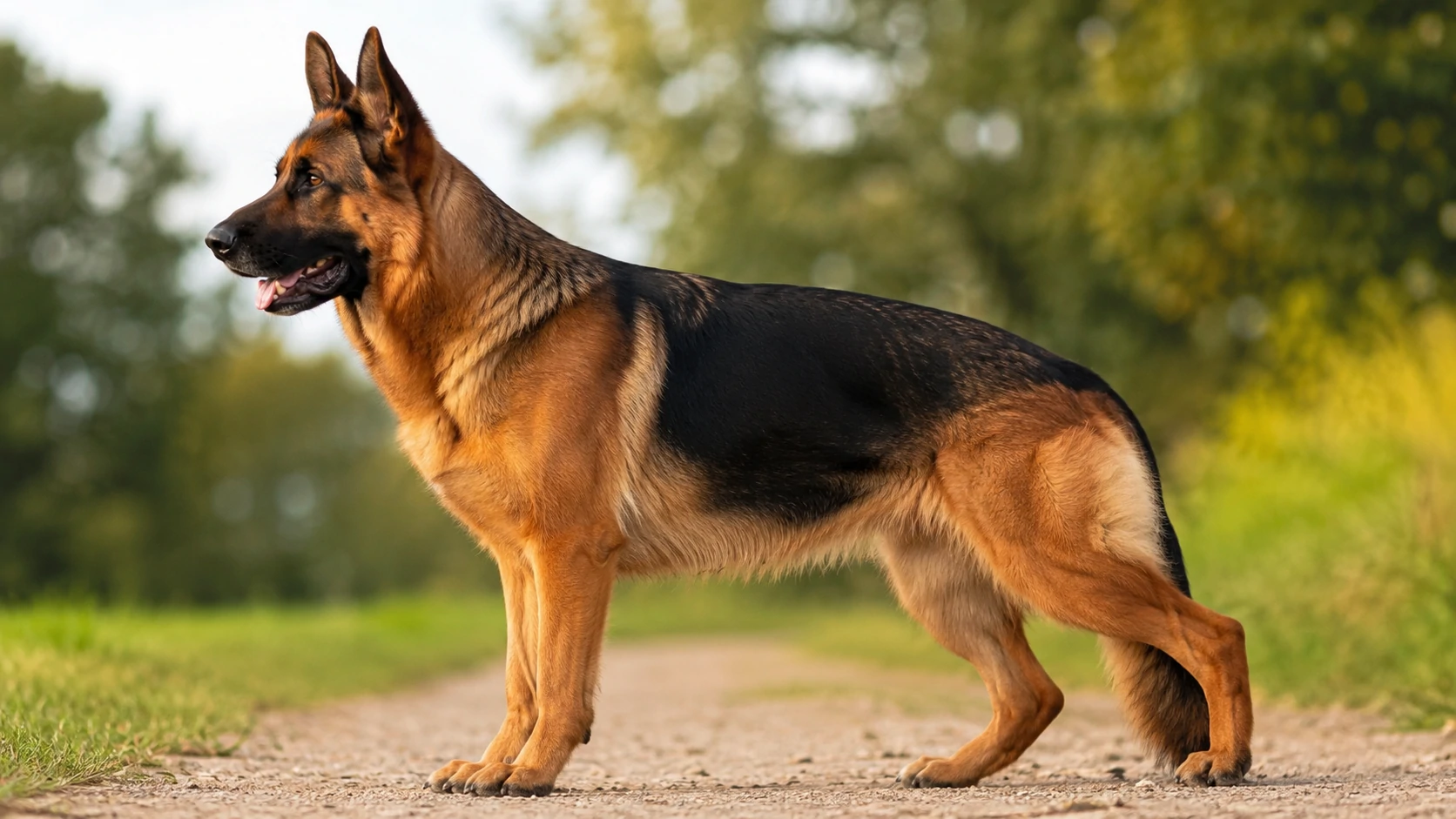
German Shepherd height and weight can tell you a lot about your dog’s growth, but the numbers are only part of the picture. Most adult male German Shepherds are about 24 to 26 inches tall at the shoulder. Most adult females are about 22 to 24 inches tall. Weight can vary more because muscle, frame size, age, activity level, and body condition all matter.
A healthy German Shepherd should look strong, lean, and balanced. You should be able to feel the ribs without pressing hard, see a waist from above, and notice smooth movement during walks and play.
This guide will help you understand normal German Shepherd size, puppy growth stages, adult weight ranges, body condition signs, feeding habits, and when it is time to ask your veterinarian for help.
German Shepherd Height and Weight: What Is Normal?
German Shepherd height and weight depends on sex, age, genetics, bloodline, nutrition, activity level, and overall health. Adult males are usually taller and heavier than females. Puppies grow quickly during the first year, but many German Shepherds keep filling out until 18 to 24 months of age.
The AKC German Shepherd Dog breed standard lists the desired adult height as 24 to 26 inches for males and 22 to 24 inches for females, measured at the highest point of the shoulder blade. The German Shepherd Dog Club of America breed standard gives the same height range.
Quick answer: German Shepherd height and weight varies by age and sex. Adult males are usually 24 to 26 inches tall and often weigh about 65 to 90 pounds. Adult females are usually 22 to 24 inches tall and often weigh about 50 to 70 pounds. Body condition matters more than the scale alone.
Adult German Shepherd Size Chart
| German Shepherd Type | Typical Height | Common Weight Range | What to Watch |
|---|---|---|---|
| Adult male | 24 to 26 inches | 65 to 90 pounds | Should look muscular, not bulky |
| Adult female | 22 to 24 inches | 50 to 70 pounds | Should look athletic, not underfed |
| Young adult | Near adult height | Still filling out | May look lean until maturity |
| Senior dog | Same adult height | May gain or lose weight | Needs regular weight checks |
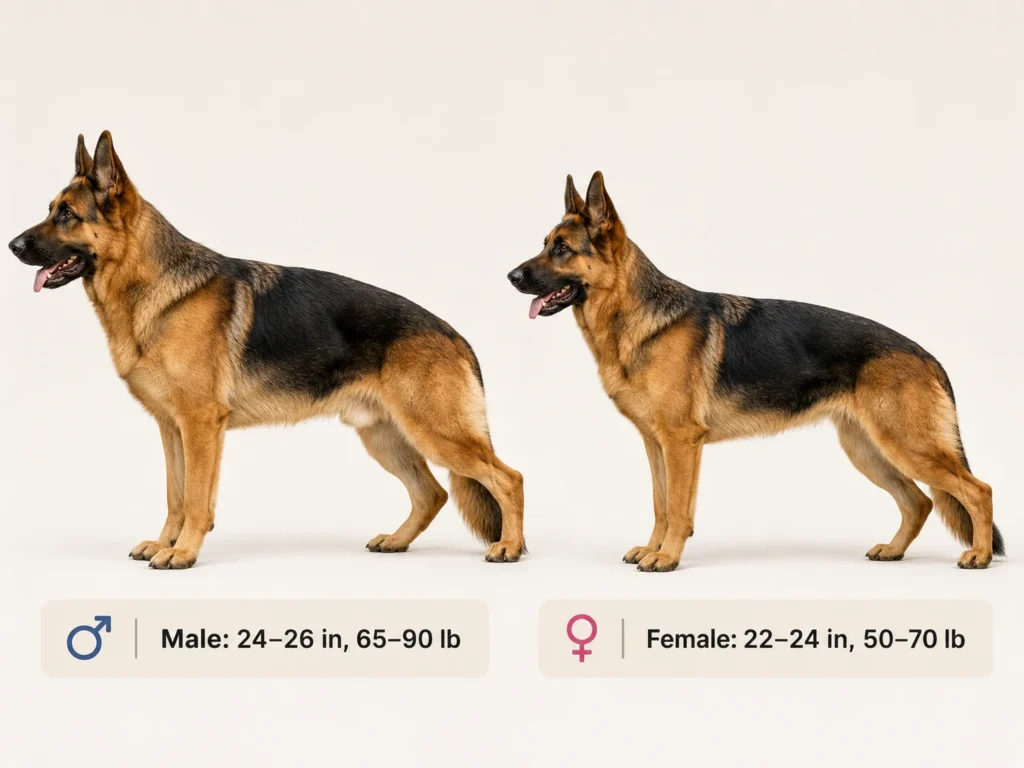
These ranges are useful for comparison, but they should not replace a body condition check. A dog can be inside the range and still be overweight. Another dog can be slightly outside the range and still be healthy.
For long-term health context, you can also read Furbivo’s guide on how long German Shepherds live, which explains aging, senior care, and health factors that can affect quality of life.
How to Measure Your German Shepherd Correctly
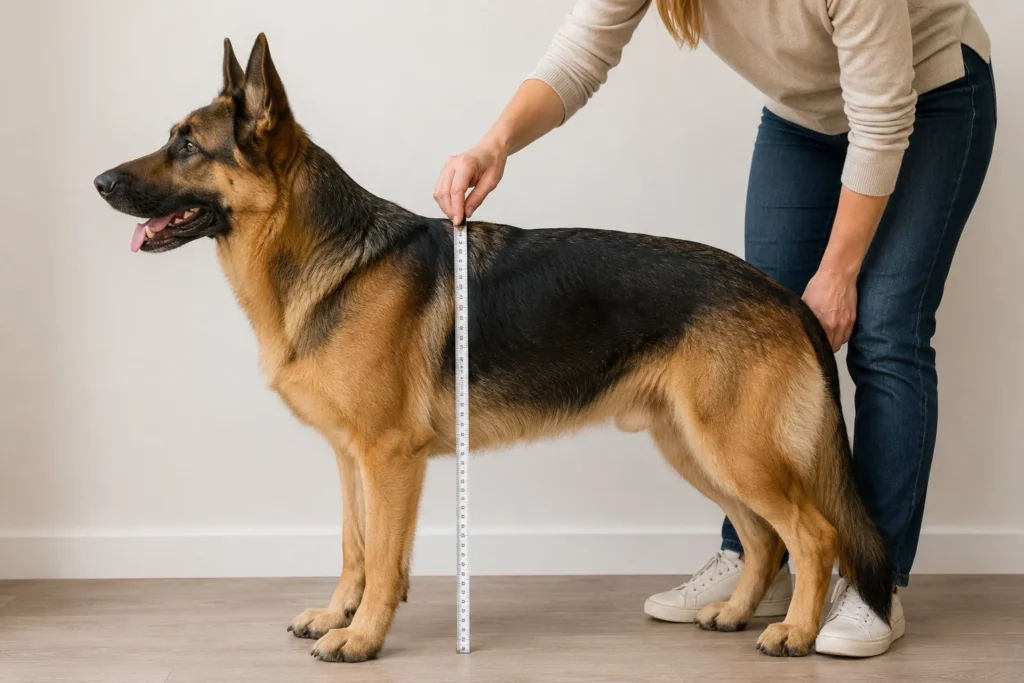
Dog height is measured at the shoulder, not at the head, ears, or neck. The correct point is called the withers. This is the highest area of the shoulder blades when your dog is standing naturally.
To measure your German Shepherd:
- Place your dog on a flat surface.
- Ask your dog to stand squarely with all four paws under the body.
- Keep the head and neck in a natural position.
- Measure from the floor to the top of the shoulders.
- Repeat once or twice for a more accurate reading.
Do not stretch your dog upward or push the back down. A relaxed, natural stance gives the most useful measurement.
If your dog is still a puppy, do not worry if the measurement changes quickly. Large-breed puppies often grow in uneven stages.
Male German Shepherd Height and Weight
Male German Shepherds are usually larger than females. A mature male often stands 24 to 26 inches tall at the shoulder and commonly weighs 65 to 90 pounds.
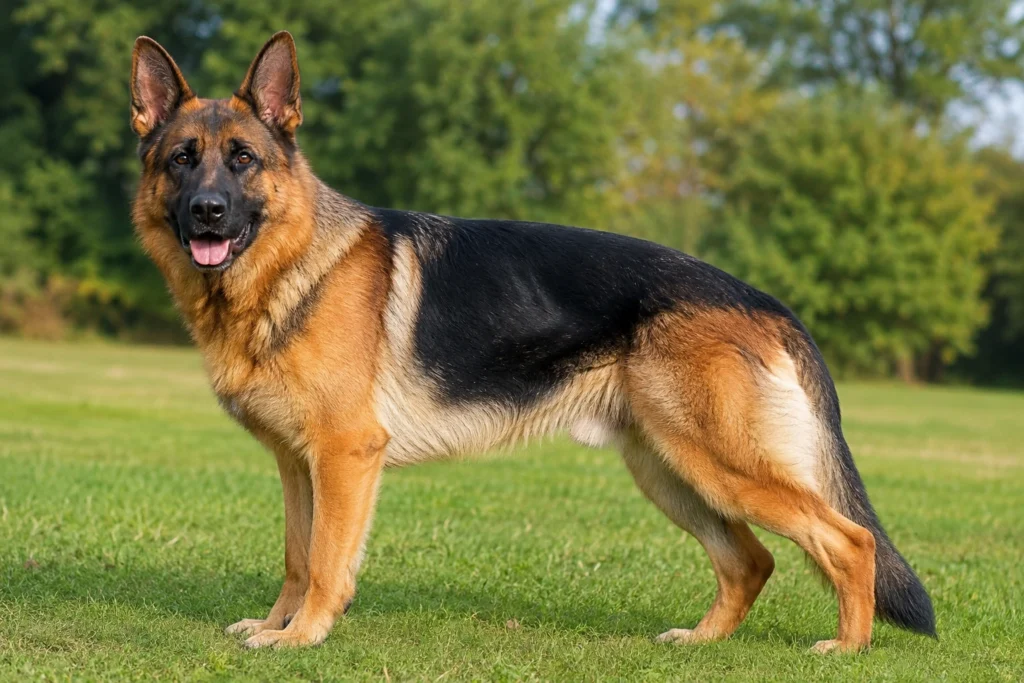
Some males may weigh more than 90 pounds and still be healthy if they are tall, lean, and muscular. But extra size is not always a good thing. A heavy German Shepherd with no waist and hard-to-feel ribs may be carrying too much fat.
A healthy male German Shepherd usually has:
- A strong chest
- Firm muscle
- A visible waist from above
- A slight tuck behind the ribs
- Smooth movement
- Good stamina during normal activity
He should not look round through the middle or struggle with regular walks, stairs, or play.
Female German Shepherd Height and Weight
Female German Shepherds are usually a little smaller and lighter than males. Most adult females stand 22 to 24 inches tall at the shoulder and commonly weigh 50 to 70 pounds.
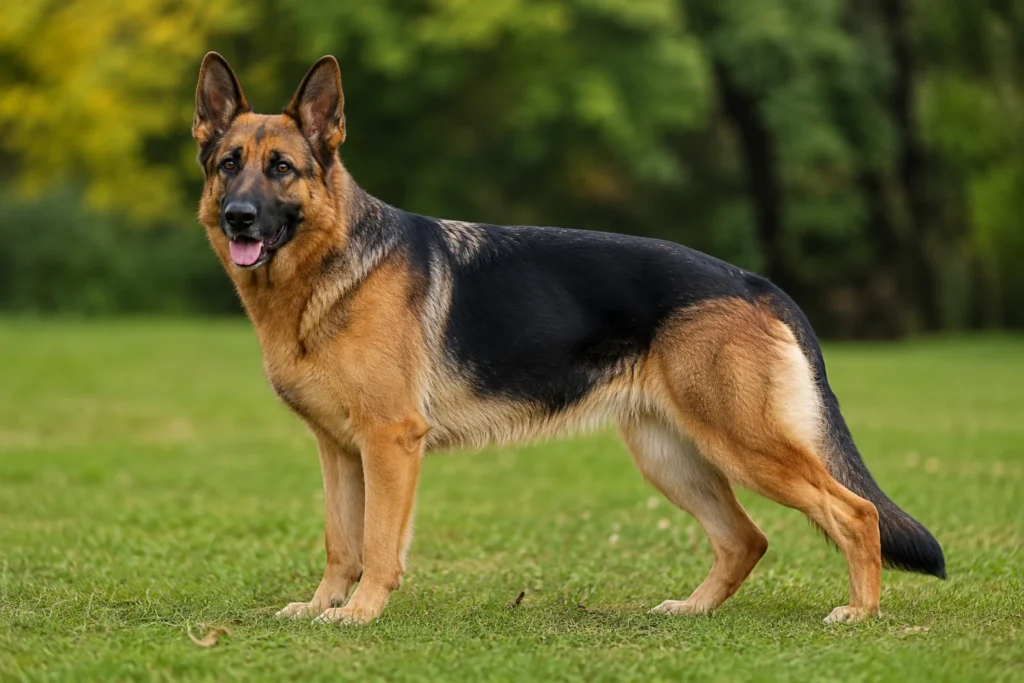
A healthy female should still look powerful and athletic. She should not look fragile, but she also should not look thick around the waist.
Some females gain weight after spaying if food portions are not adjusted. This does not happen to every dog, but it is a good reason to check weight and body shape often as your dog matures.
If your female German Shepherd is slightly outside the common range but has good energy, a healthy body shape, and normal vet exams, her size may simply reflect her genetics and frame.
German Shepherd Puppy Growth by Age
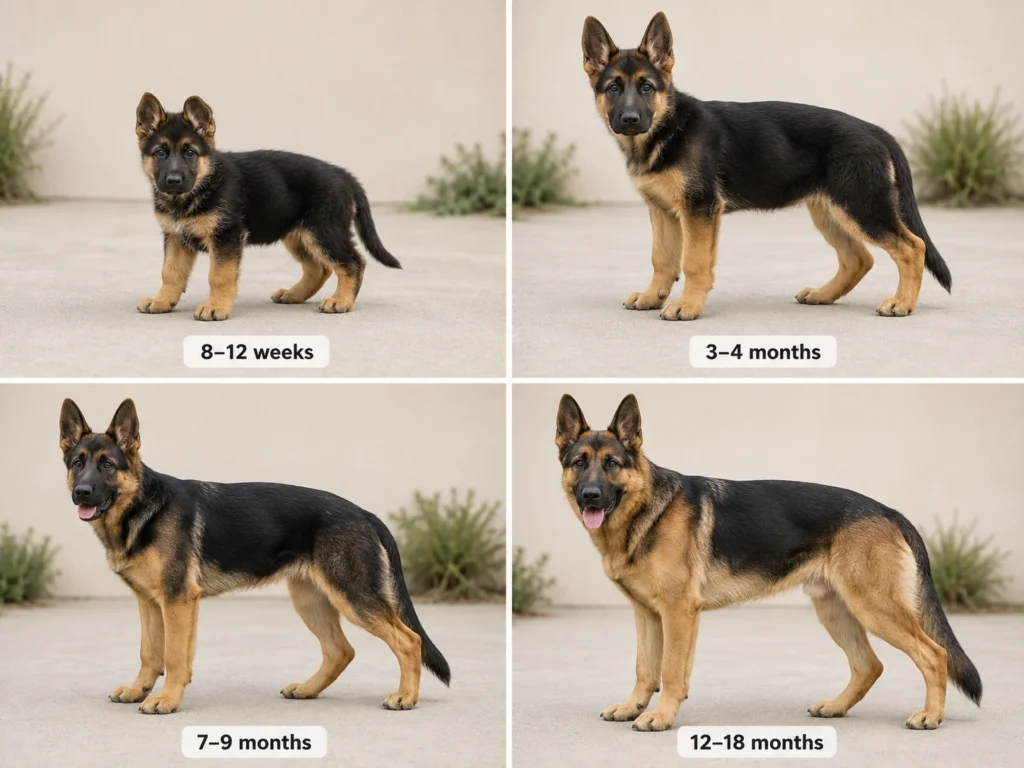
German Shepherd puppies grow fast, especially during the first several months. They often go through awkward stages where their legs look long, their body looks narrow, or their ears seem too large for their head.
This is often normal. Large-breed puppies do not always grow evenly from week to week.
| Age | Common Growth Stage | Owner Focus |
|---|---|---|
| 8 to 12 weeks | Small, active, and growing fast | Start a steady feeding routine |
| 3 to 4 months | Legs get longer | Keep exercise gentle |
| 5 to 6 months | Fast height changes | Avoid overfeeding |
| 7 to 9 months | Lean teenage stage | Keep training consistent |
| 10 to 12 months | Near adult height | Watch body condition |
| 12 to 18 months | More muscle develops | Adjust food as growth slows |
| 18 to 24 months | Adult shape becomes clearer | Maintain healthy weight |
Some German Shepherds reach most of their adult height around one year old. Many still need more time to build mature muscle and body depth.
German Shepherd height and weight can change quickly during puppyhood, so look for steady growth instead of trying to force your puppy to reach a chart number.
If your puppy is also learning about new people, sounds, handling, and safe environments, use Furbivo’s German Shepherd puppy socialization guide alongside gentle growth-safe activity.
Why German Shepherd Weight Charts Are Not Perfect
A German Shepherd height and weight chart is helpful, but it cannot judge your dog’s health by itself. Every dog has a different frame, metabolism, activity level, growth pattern, and muscle level.
Two German Shepherds can be the same height but need different ideal weights. One may have more muscle, while the other may carry more fat. The scale cannot tell the difference.
Charts also do not account for:
- Working lines
- Show lines
- Mixed-breed background
- Sex differences
- Neuter or spay status
- Activity level
- Medical conditions
- Muscle loss in senior dogs
That is why owners should use charts as a guide, not a final answer.
How to Know If Your German Shepherd Is a Healthy Weight
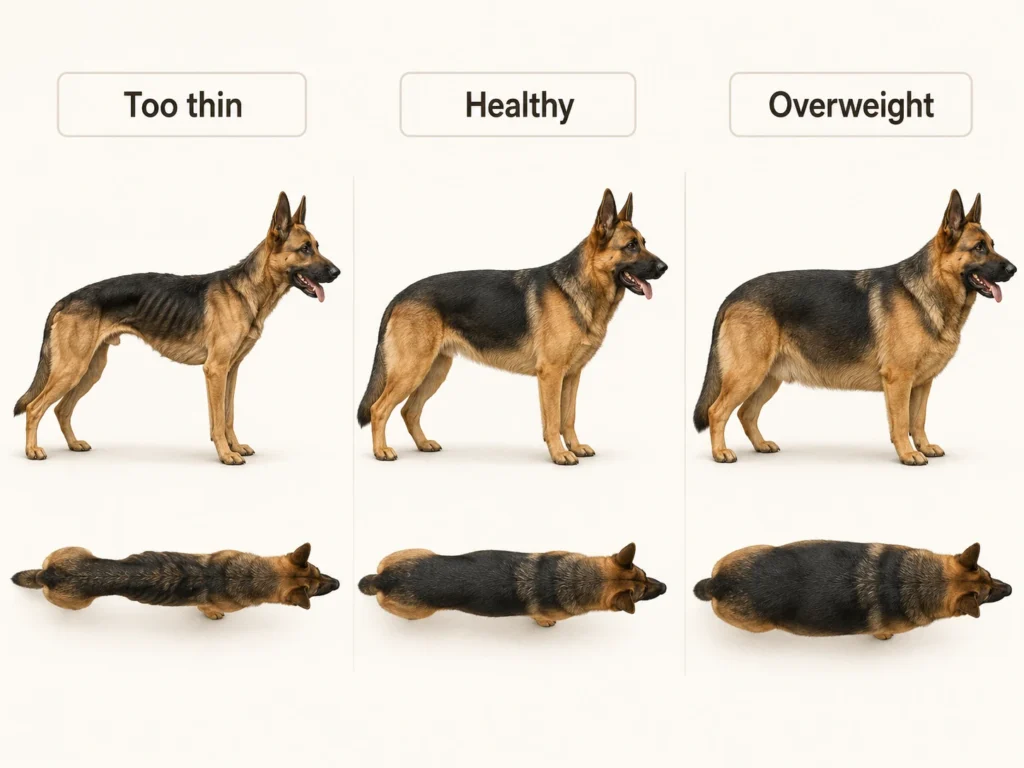
German Shepherd height and weight numbers are only useful when you also check body condition. The best way to judge healthy weight is to look at your dog and feel the body gently.
Your dog should have a visible waist when viewed from above. The belly should tuck upward when viewed from the side. You should be able to feel the ribs with light pressure, but the ribs should not stick out sharply.
The WSAVA dog body condition score chart uses visual and hands-on checks such as rib feel, waist shape, and abdominal tuck. The AAHA canine life stage guidelines also reference body and muscle condition scoring as part of canine health evaluation.
A healthy German Shepherd often has:
- Good energy during walks
- Smooth movement
- Clear waistline
- Firm muscles
- Healthy appetite
- Steady weight over time
- Ribs you can feel with light pressure
If your dog’s shape changes quickly, schedule a vet visit. Sudden weight gain or weight loss should not be ignored.
Signs Your German Shepherd May Be Underweight
Some German Shepherds look naturally lean, especially during puppy growth stages. But there is a difference between lean and too thin.
Your dog may be underweight if you can easily see the ribs, spine, or hip bones from a distance. Other warning signs include:
- Low energy
- Dull coat
- Poor appetite
- Vomiting
- Diarrhea
- Weight loss even while eating
- Weakness
- Loss of muscle
Do not simply increase food without checking the reason. Weight loss can be caused by parasites, digestive problems, dental pain, stress, pain, or other health issues. Your veterinarian can help find the cause and suggest a safe plan.
Signs Your German Shepherd May Be Overweight
Extra weight can sneak up slowly. Many owners do not notice it until their dog has trouble running, jumping, or getting up.
Your German Shepherd may be overweight if:
- The waist is hard to see
- The ribs are hard to feel
- The body looks round from above
- The belly hangs lower than usual
- Your dog tires quickly
- Your dog pants heavily during light activity
- Movement looks stiff or uncomfortable
German Shepherds are active dogs with large frames, so extra pounds can put more strain on the hips, elbows, and back. Weight loss should be gradual. Ask your vet before starting a strict diet or major exercise change.
Feeding for Healthy German Shepherd Growth
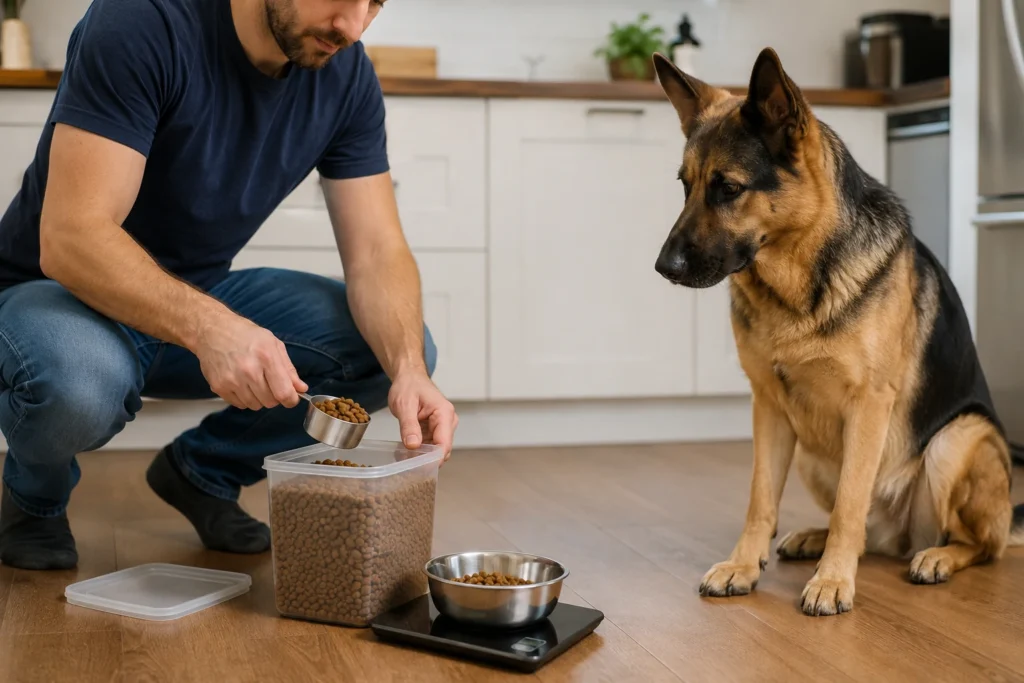
German Shepherd height and weight are easier to manage when feeding habits are steady. This is especially important for puppies because growing too fast can add stress to developing joints.
Choose a complete and balanced food made for your dog’s life stage. German Shepherd puppies often do best on large-breed puppy food, but your vet can help you choose the right option for your dog.
Measure every meal. Guessing portions can lead to overfeeding. Treats should also count as part of the daily calories.
Helpful feeding tips include:
- Feed measured portions
- Use a consistent meal schedule
- Limit table scraps
- Keep treats small
- Track body condition
- Adjust food as activity changes
- Ask your vet before changing diets
For more detail on age-based feeding, large-breed growth, calories, and label reading, see Furbivo’s guide to German Shepherd dog food.
Adult German Shepherds need food based on their lifestyle. A working dog or sport dog may need more calories than a relaxed family pet. A senior dog may need fewer calories, more protein support, or a diet that fits a medical condition.
Exercise and Body Size
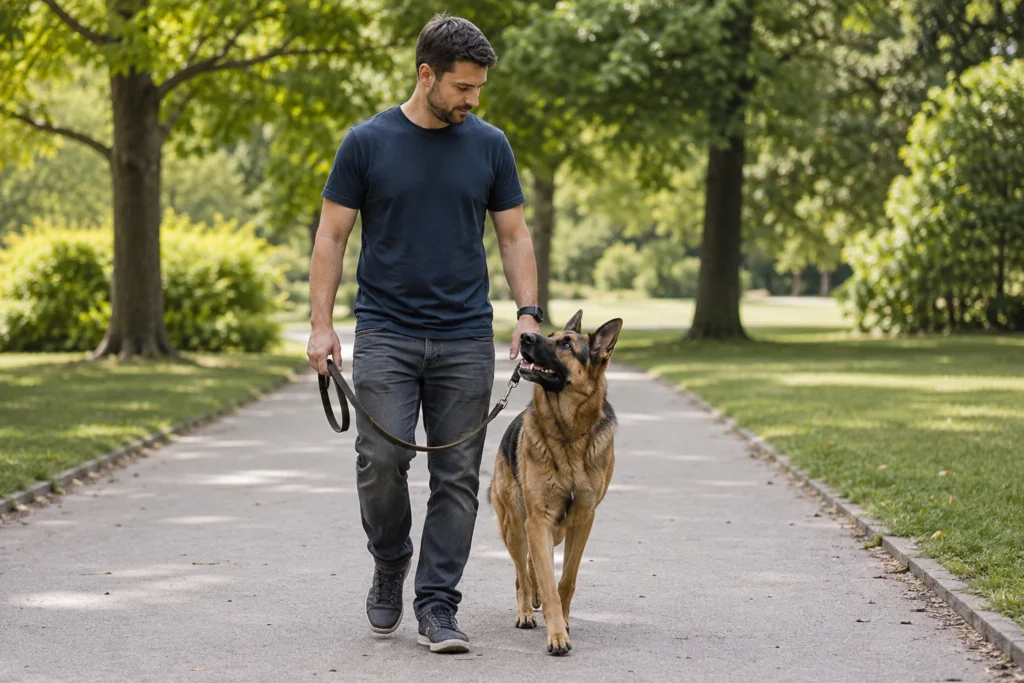
Exercise does not change adult height, but it can affect German Shepherd height and weight by helping build muscle and control body fat. A fit German Shepherd often looks leaner than people expect.
Adult German Shepherds usually need daily walks, training, and mental activity. They enjoy having a job, even if that job is basic obedience, scent games, fetch, puzzle toys, or structured play.
Puppies need a softer approach. Avoid long forced runs, high jumps, and intense repetitive exercise while their bodies are still developing. Short play sessions, gentle walks, sniffing, and simple training games are better for young puppies.
If your dog is already overweight, start slowly. Low-impact walks are safer than sudden hard workouts.
What Most Articles Miss
Many articles give a German Shepherd growth chart but skip the most useful part: how the dog actually looks and feels.
A number on a chart cannot tell you if your dog has enough muscle, too much fat, or a health issue. It also cannot tell you whether your puppy is simply going through a normal lanky stage.
Here are a few things many basic guides miss.
Bigger Does Not Mean Healthier
Some people think a giant German Shepherd is better. That is not true. Oversized dogs may have more stress on their joints and may not match the athletic build the breed is known for.
A large German Shepherd can be healthy. But size by itself is not proof of health.
Lean Is Often Normal
German Shepherds are working dogs, not round couch dogs. A healthy dog may look lean, especially when young or very active.
Lean does not mean starving. It means the dog has a waist, muscle, and comfortable movement without extra fat.
Growth Should Be Steady
Fast growth is not the goal. Puppies should gain size at a healthy, controlled pace. Overfeeding a puppy to make them bigger can create weight gain without healthy development.
Mixed Dogs May Vary
A German Shepherd mix may not match the standard height or weight range. The other breed in the mix can affect size, shape, growth rate, coat, and muscle.
Body Condition Matters More Than Online Charts
A chart can guide you, but your vet and your dog’s body shape give better answers.
Common Owner Mistakes
One common mistake is feeding more because a puppy looks thin during a growth spurt. Many German Shepherd puppies look narrow or leggy before they fill out. Overfeeding can add fat instead of healthy muscle.
Another mistake is comparing your dog to oversized German Shepherds online. Some dogs are bred or marketed for extra-large size, but that does not mean the size is healthier.
Owners may also forget to adjust food after growth slows. A 14-month-old dog may not need the same calories as a fast-growing 6-month-old puppy.
Treats can also become a problem. Training treats, chews, scraps, and leftovers can add up quickly. Use small treats and reduce meal portions when needed.
German Shepherd height and weight should be checked alongside body condition, not used as a reason to overfeed, restrict food too harshly, or compare your dog to every photo online.
When to Ask Your Vet
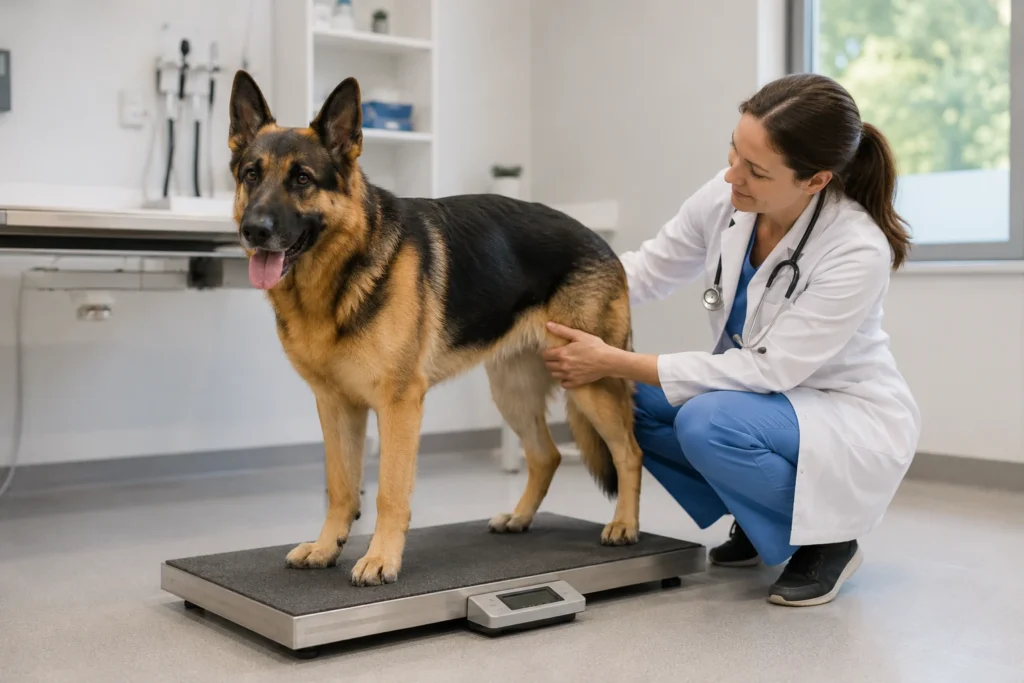
Ask your veterinarian if your German Shepherd is losing weight, gaining weight quickly, refusing food, vomiting, having diarrhea, limping, or acting weak.
You should also get guidance if your puppy is far smaller or larger than expected. A vet can check growth, joints, digestion, body condition, and overall health.
For adult dogs, a vet can help you find a realistic target weight. This is helpful if your dog is outside the common range or if you are unsure whether your dog is muscular or overweight.
A vet visit is especially important if size concerns come with:
- Low energy
- Poor appetite
- Pain
- Limping
- Sudden weight change
- Chronic diarrhea
- Vomiting
- Trouble standing
- Heavy panting during light activity
This article can help you understand general size ranges, but it cannot diagnose a medical issue. When your dog’s growth or weight feels concerning, your vet is the safest person to ask.
FAQs About German Shepherd Height and Weight
What is the average height of a German Shepherd?
Most adult males are 24 to 26 inches tall at the shoulder, and most adult females are 22 to 24 inches tall.
What is a healthy weight for a German Shepherd?
Adult males often weigh 65 to 90 pounds, while adult females often weigh 50 to 70 pounds, depending on body condition.
When does a German Shepherd stop growing?
Many reach close to adult height by 12 months, but they may keep filling out until 18 to 24 months.
Why is my German Shepherd smaller than other German Shepherds?
Genetics, sex, bloodline, age, health, and mixed-breed background can all affect size.
Is a 100-pound German Shepherd overweight?
Not always, but many are. Check waist, rib feel, movement, and ask your vet for a body condition score.
How can I help my German Shepherd maintain a healthy weight?
Measure meals, limit treats, provide daily exercise, and check body condition regularly.
Should I feed my puppy more to make them bigger?
No. Puppies need steady growth, not forced fast growth. Ask your vet before increasing food heavily.
Final Thoughts
German Shepherd height and weight can help you understand your dog’s growth, but they should not be the only things you check. Most adult males are 24 to 26 inches tall, and most adult females are 22 to 24 inches tall. Weight depends on frame, muscle, sex, age, activity level, and body condition.
The healthiest German Shepherd is not always the biggest one. Aim for steady growth, a lean body, good muscle, and comfortable movement. Measure meals, keep exercise age-appropriate, and check your dog’s shape often.
When you are unsure, your veterinarian can help you decide whether your dog’s size is right for their body.
Have questions about your dog’s health, nutrition, grooming, or daily care? Visit our Contact Us page to reach the Furbivo team. For any medical symptoms, diagnosis, or treatment advice, always consult a qualified veterinarian.