
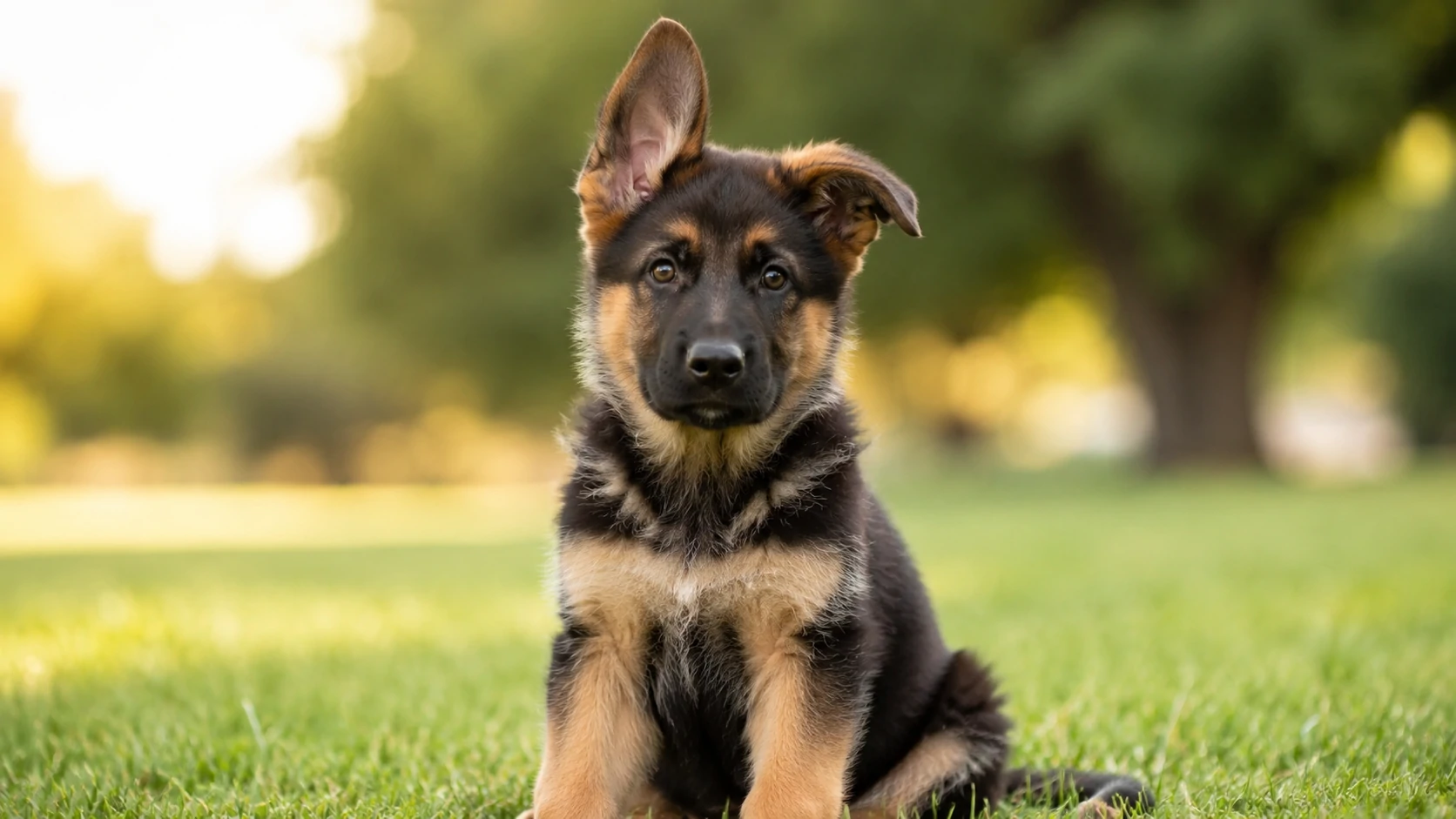
When do German Shepherds ears stand up? Most German Shepherd puppies begin lifting one or both ears between about 8 and 16 weeks, and many develop consistently upright ears around 4 to 6 months. Some healthy puppies take until 7 or 8 months. During growth, the ears may rise, fall, tilt, or alternate sides.
Adult German Shepherds are known for moderately pointed ears carried upright when the dog is alert. However, the official breed standard describes adult appearance; it does not establish a medical deadline for puppy ear development.
When Do German Shepherds Ears Stand Up?
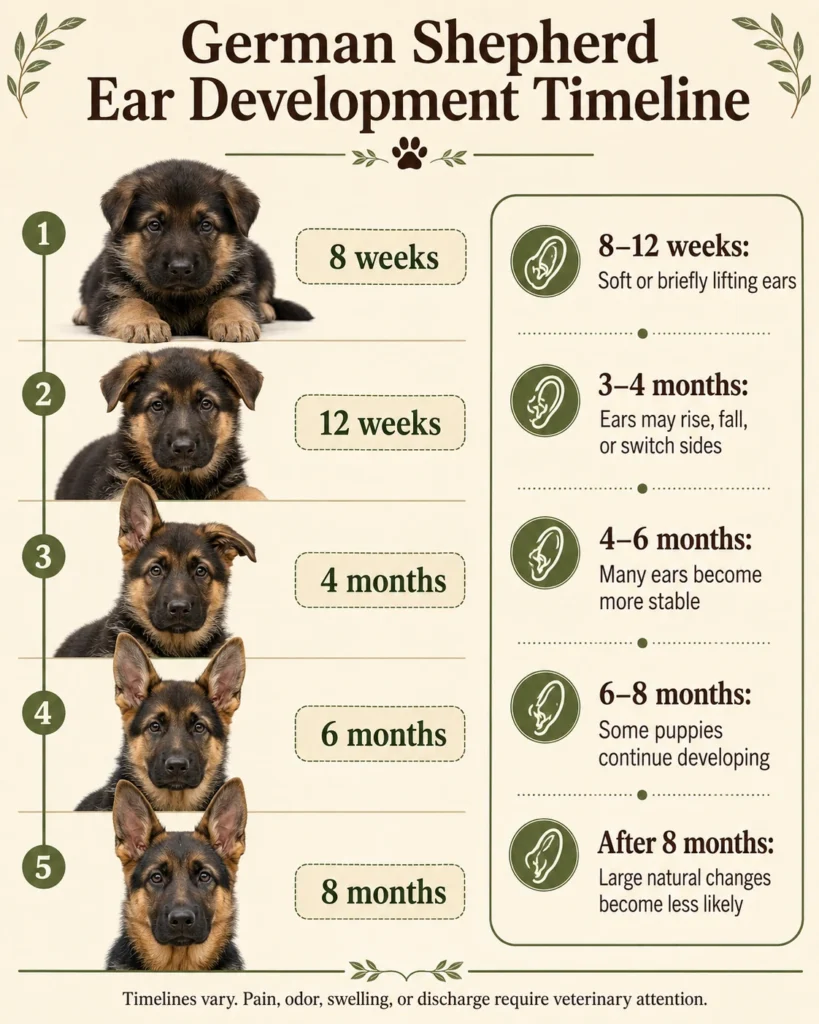
Most German Shepherd ears begin showing some lift between 8 and 16 weeks. Many become reliably upright by 4 to 6 months, although some puppies need 7 to 8 months. One ear may stand before the other, and temporary changes during teething are common. A healthy puppy may simply develop later than its littermates.
This timeline is a practical owner guideline rather than an official veterinary cutoff. Puppy development is uneven, and one photo or one week of floppy ears cannot predict the final result.
| Puppy age | What you may notice | What you should do |
| Birth to 7 weeks | Soft, folded ears with limited control | Leave the ears alone and focus on normal puppy care |
| 8 to 12 weeks | One or both ears may lift briefly | Take weekly photos and avoid rough handling |
| 3 to 4 months | Ears may stand, tilt, switch sides, or fall again | Continue feeding a complete puppy diet |
| 4 to 6 months | Many puppies develop more stable ear carriage | Mention concerns during routine veterinary visits |
| 6 to 8 months | Late-developing ears may continue strengthening | Ask your veterinarian to examine the ears |
| After 8 months | Major natural changes become less likely | Discuss realistic options; floppy ears are usually cosmetic |
Why German Shepherd Puppy Ears Change So Much
A German Shepherd puppy’s ears are supported by cartilage, connective tissue, skin, and muscles around the ear base. These structures strengthen as the puppy’s head and body develop.
Growth does not happen at the same speed every week. An ear may look firm for several days and then soften during another growth stage.
Many owners notice the most variation between 3 and 6 months. This overlaps with the normal teething period. Puppies generally begin losing baby teeth at around 12 to 16 weeks, and most adult teeth are present by approximately 6 months.
This overlap does not mean that calcium is being removed from the ears and sent to the teeth. It also does not mean that a puppy needs calcium supplements.
Your puppy may hold its ears differently depending on:
- Attention
- Fatigue
- Sleep
- Excitement
- Stress
- Play
- Nearby sounds
An ear that folds while a puppy is relaxed but becomes upright when the puppy hears a sound is different from an ear that never shows any lift.
Why Are My German Shepherd Puppy Ears Not Standing?
German Shepherd puppy ears not standing can be normal when the puppy is still young. Age is the first factor to consider, but it is not the only possible influence.
Genetics and Family Ear Type
Ear carriage has a strong inherited component. Puppies with large, wide, thin, heavy, or softly based ears may take longer to develop stable upright carriage.
The ears of the parents, siblings, and close relatives may offer useful context. However, they cannot guarantee what one puppy’s ears will eventually look like.
A German Shepherd can be healthy and purebred while retaining one or two soft ears. Hanging ears are a conformation fault under the American Kennel Club standard, but a cosmetic fault is not automatically a health condition. The standard states that adult ears should be moderately pointed and carried erect when the dog is attentive.
Normal Age and Uneven Development
When do German Shepherds ears stand up compared with their littermates? Not necessarily at the same time.
One puppy may have two upright ears at 10 weeks, while another puppy from the same litter may still have soft ears at 5 months. Even littermates can inherit different ear size, cartilage quality, and rates of physical development.
Large-breed puppies also pass through uneven-looking growth stages. Their legs, paws, head, and ears may appear out of proportion for several months.
You can use Furbivo’s German Shepherd growth chart to view ear development as one part of your puppy’s overall growth pattern. German Shepherd puppies commonly grow fastest during their first six months, and their proportions may change noticeably during that period.
Teething and Chewing
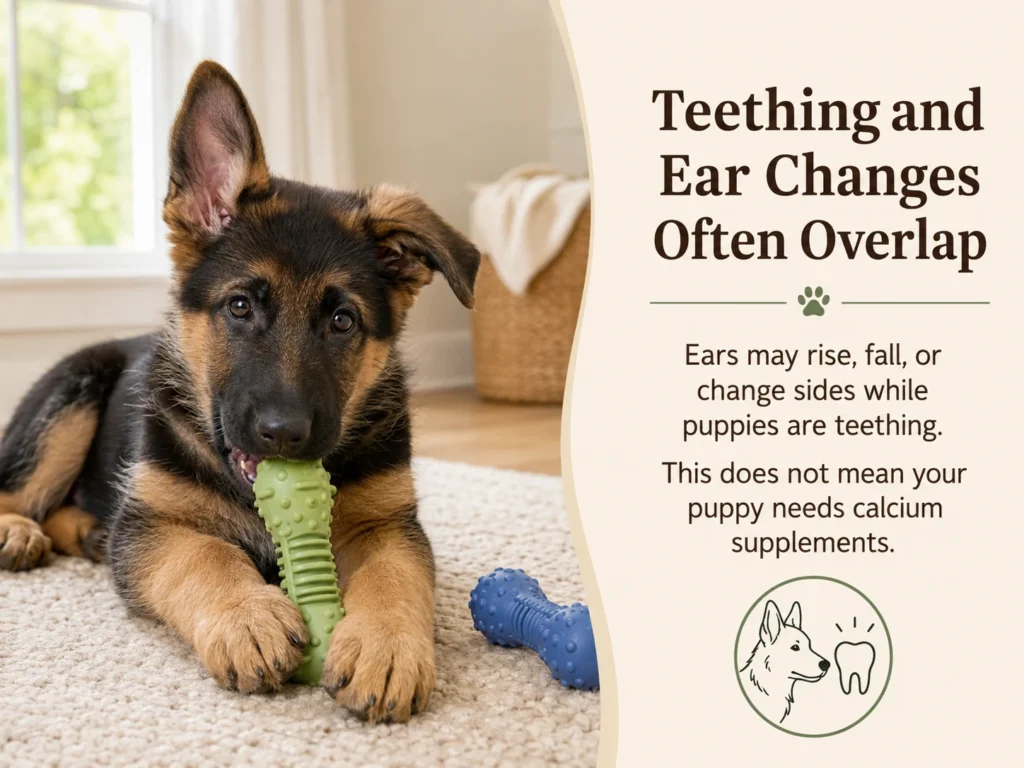
Teething can make the entire puppy stage look unpredictable. The ears may change position during the same months in which adult teeth erupt, chewing increases, and the head grows rapidly.
Do not respond by adding:
- Calcium powder
- Bone meal
- Human multivitamins
- Mineral tablets
- Supplements marketed specifically for upright ears
A complete and balanced puppy diet should already supply appropriate mineral levels. Merck Veterinary Manual guidance explains that nutrient requirements depend on life stage and that properly formulated complete diets are designed to provide those nutrients in controlled amounts.
For meal frequency, age-based portions, and feeding guidance, read Furbivo’s German Shepherd puppy feeding chart.
Trying to “feed the ears up” with extra minerals can unbalance a diet that was already suitable for large-breed growth.
Ear Infection, Irritation, or Injury
A puppy with an uncomfortable ear may carry it lower than usual. The puppy may also scratch the ear, shake its head, rub its face, or resist being touched.
Watch for:
- Redness
- Swelling
- Strong odor
- Dark or yellow discharge
- Scabs
- Bleeding
- Pain
- Persistent scratching
- Repeated head shaking
- A sudden change in one ear
The Merck Veterinary Manual’s guide to canine ear infections lists head shaking, odor, redness, swelling, scratching, discharge, pain, and itching among common signs of otitis externa.
A veterinarian may examine the canal with an otoscope and collect a sample to check for yeast, bacteria, parasites, inflammation, debris, or a foreign object.
Rough play can also injure the ear flap. Repeated biting or pulling by another dog may damage sensitive tissue. Supervise puppy play and interrupt persistent ear grabbing.
Poor Nutrition or General Illness
A puppy eating an appropriate complete diet does not normally need an ear-specific supplement.
However, overall development may be affected when a puppy has:
- Poor appetite
- Chronic vomiting or diarrhea
- Intestinal parasites
- Significant weight loss
- An unbalanced homemade diet
- Ongoing infection
- Another untreated illness
If floppy ears appear alongside low energy, poor growth, digestive trouble, skin disease, or an unhealthy body condition, the priority should be a full health assessment.
Furbivo’s guide to common diseases in German Shepherds can help you recognize broader warning signs, although online information cannot diagnose your puppy.
Mixed Ancestry
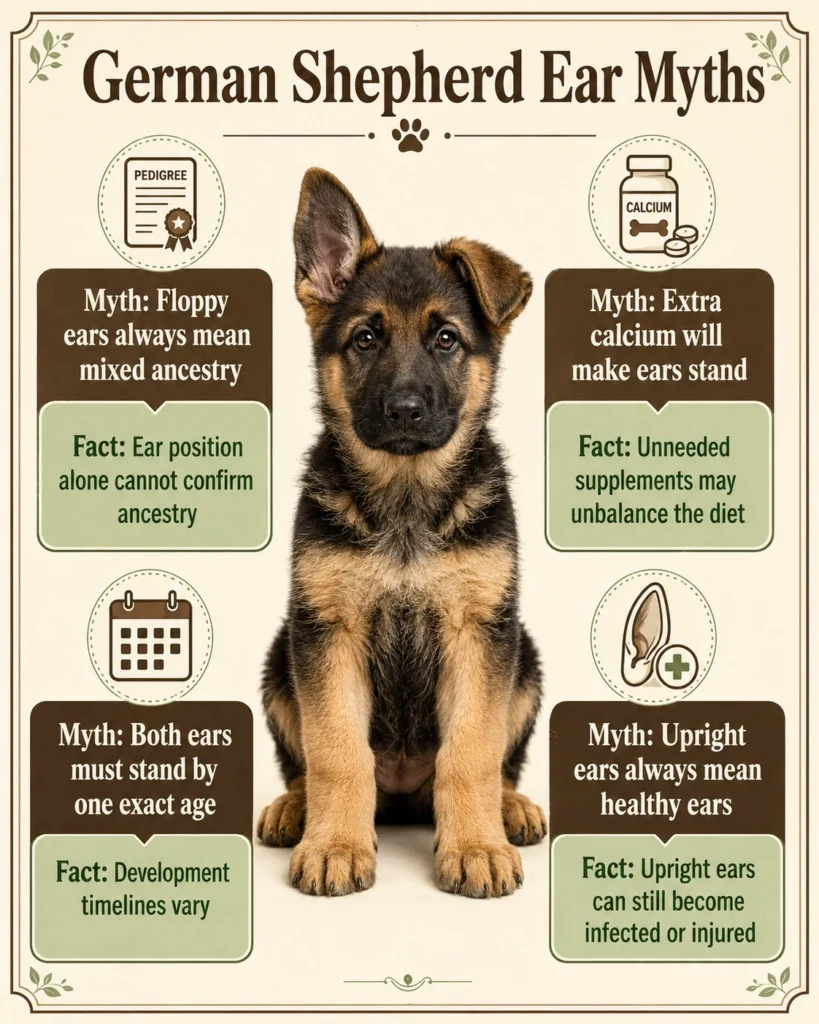
Floppy ears do not prove that a German Shepherd is mixed.
Some purebred German Shepherds keep one or both ears soft. Some German Shepherd mixes develop fully upright ears.
Reliable pedigree documentation or a reputable canine DNA test provides more meaningful ancestry information than ear position alone.
Is One Ear Up and One Ear Down Normal?
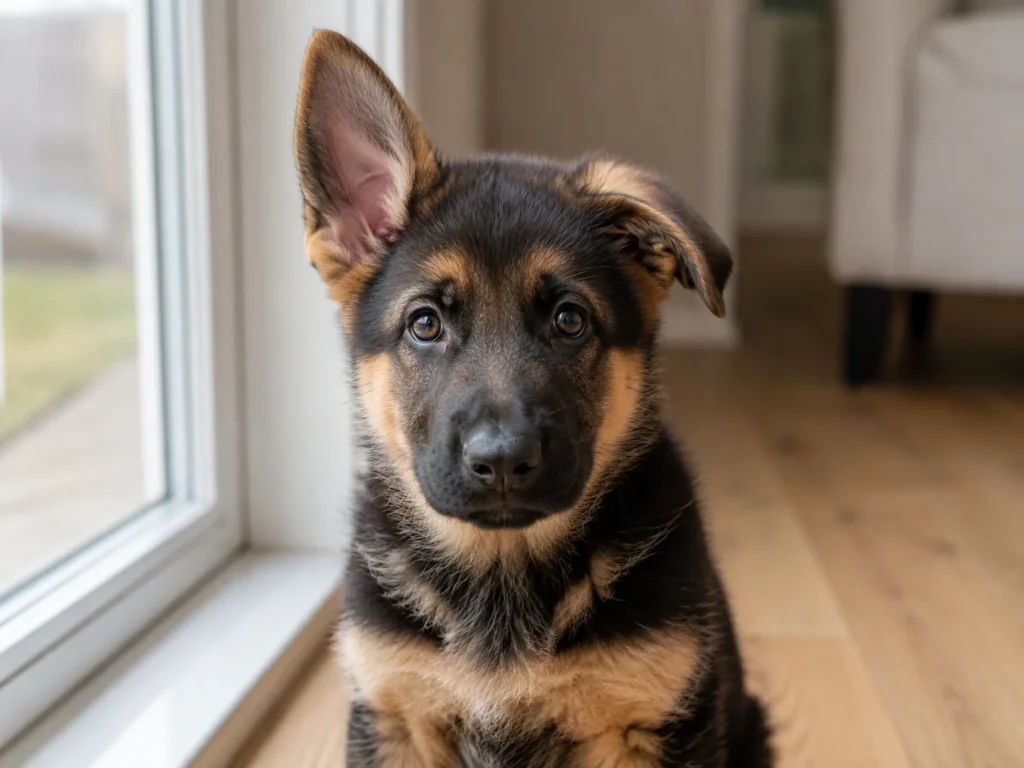
Yes. One ear standing before the other is a common German Shepherd puppy pattern.
The stronger ear may rise first while the other catches up several days or weeks later. The standing side may even switch.
You might see:
- The right ear standing on Monday
- Both ears leaning sideways on Wednesday
- The left ear standing by the weekend
- Both ears upright when alert but folded during sleep
This pattern is usually less concerning when the puppy is young, comfortable, eating normally, gaining weight, and showing no signs of ear disease.
Take one front-facing photo each week from approximately the same distance. Weekly photos make the overall trend easier to see than checking the ears several times every day.
What Can You Safely Do to Support Normal Ear Development?
When do German Shepherds ears stand up without special treatment? In many puppies, the ears stand naturally with time, suitable nutrition, normal growth, and protection from injury.
Feed a Complete Large-Breed Puppy Diet

Choose a food labeled complete and balanced for growth. For a German Shepherd, a formula intended for large-size puppy growth may be appropriate.
Measure meals, monitor body condition, and avoid repeatedly changing food because of ear position.
Extra calcium cannot improve inherited ear structure. Unnecessary supplementation may interfere with the controlled nutritional balance needed during puppy growth.
Provide Safe Chewing Outlets
Offer puppy-appropriate rubber toys and other chews that are not hard enough to damage growing teeth.
Replace damaged toys and supervise items that might break into pieces small enough to swallow.
Chewing is normal during teething, but chewing alone cannot guarantee upright ears.
Protect the Ears From Repeated Trauma
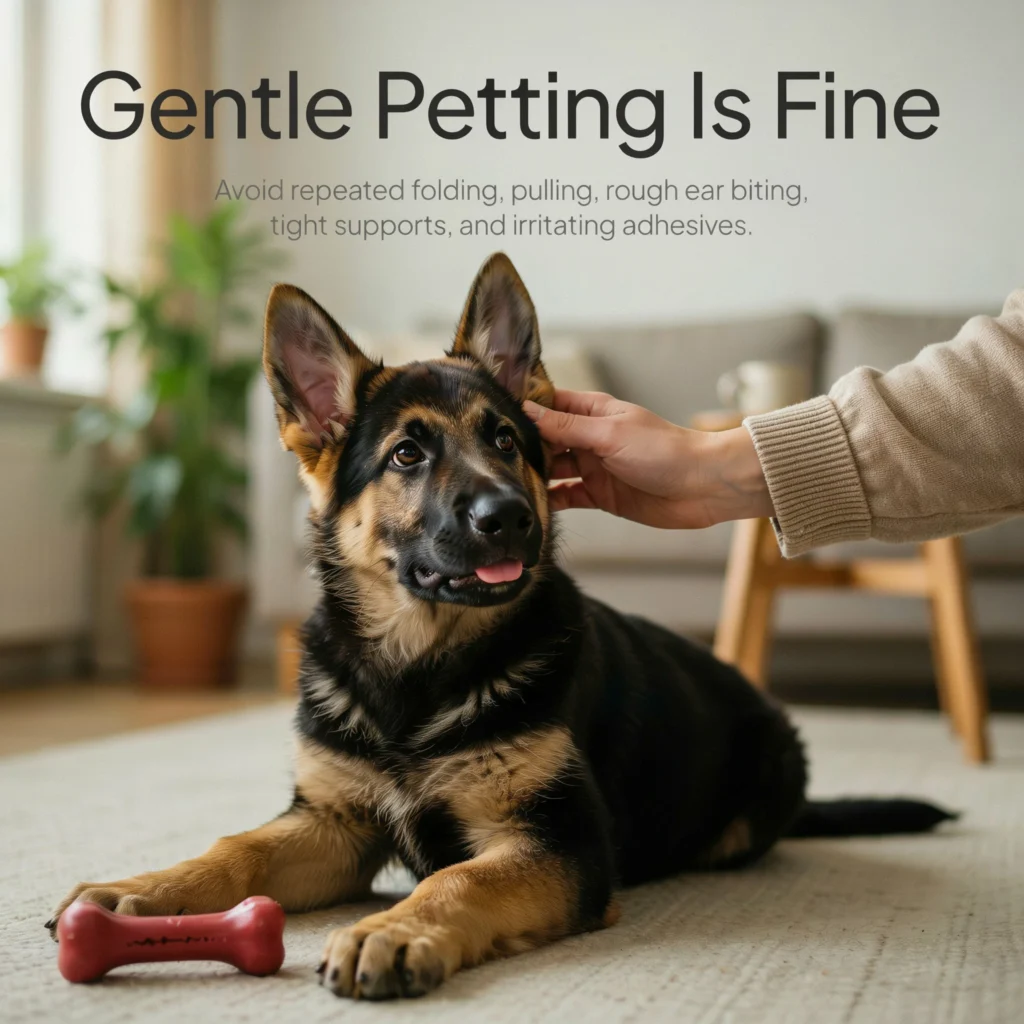
Do not let children fold, squeeze, pull, or play roughly with the ears.
Interrupt dogs that repeatedly bite your puppy’s ear flaps during play. Use gentle handling during grooming, cleaning, and veterinary preparation.
Ordinary petting does not ruin healthy ears. The concern is repeated force, injury, tight devices, irritating adhesives, or rough manipulation.
Track the Pattern Instead of the Daily Position
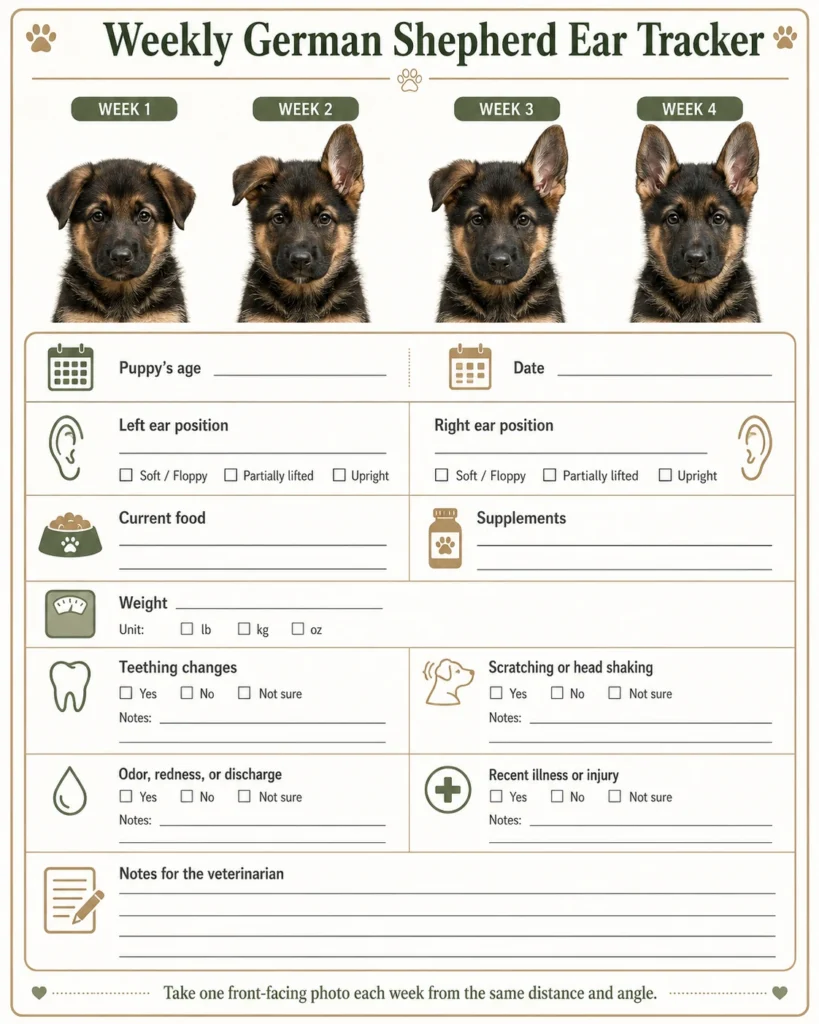
Keep a simple record containing:
- Your puppy’s exact age
- Weekly ear photos
- Current food
- Supplements
- Weight changes
- Recent illness
- Teething changes
- Ear scratching or head shaking
- Any injury involving the ear
This information can help your veterinarian distinguish normal fluctuation from a sudden change caused by discomfort or illness.
Attend Routine Veterinary Visits
Mention ear development during scheduled puppy examinations, especially when your puppy is approaching 6 months and neither ear has shown any lift.
A veterinarian can assess the ear flaps, ear canals, teeth, mouth, diet, body condition, and general development.
Should You Tape German Shepherd Puppy Ears?
Some breeders and owners use taping or physical support methods. However, ear taping should not be treated as harmless do-it-yourself grooming.
Possible problems include:
- Skin irritation
- Pressure sores
- Trapped moisture
- Infection
- Restricted circulation
- Chewing or swallowing materials
- Incorrect ear positioning
- Delayed treatment of an existing ear problem
Safety warning: Never tape, glue, brace, massage forcefully, or insert anything into your puppy’s ears without first having both ears examined and receiving hands-on instructions from a veterinarian.
There is no guarantee that taping will overcome inherited ear size or cartilage structure. An online demonstration cannot check your puppy for infection, pain, injured skin, or an abnormal ear canal.
When conformation showing is important, discuss the situation early with your veterinarian and an experienced, ethical German Shepherd breeder.
For a family companion, permanently soft ears are usually a cosmetic difference rather than a condition requiring intervention.
German Shepherd ears are naturally upright. They are not normally cropped to create the erect shape. The AKC standard disqualifies cropped ears as well as hanging ears in conformation.
When to Monitor and When to Call a Veterinarian
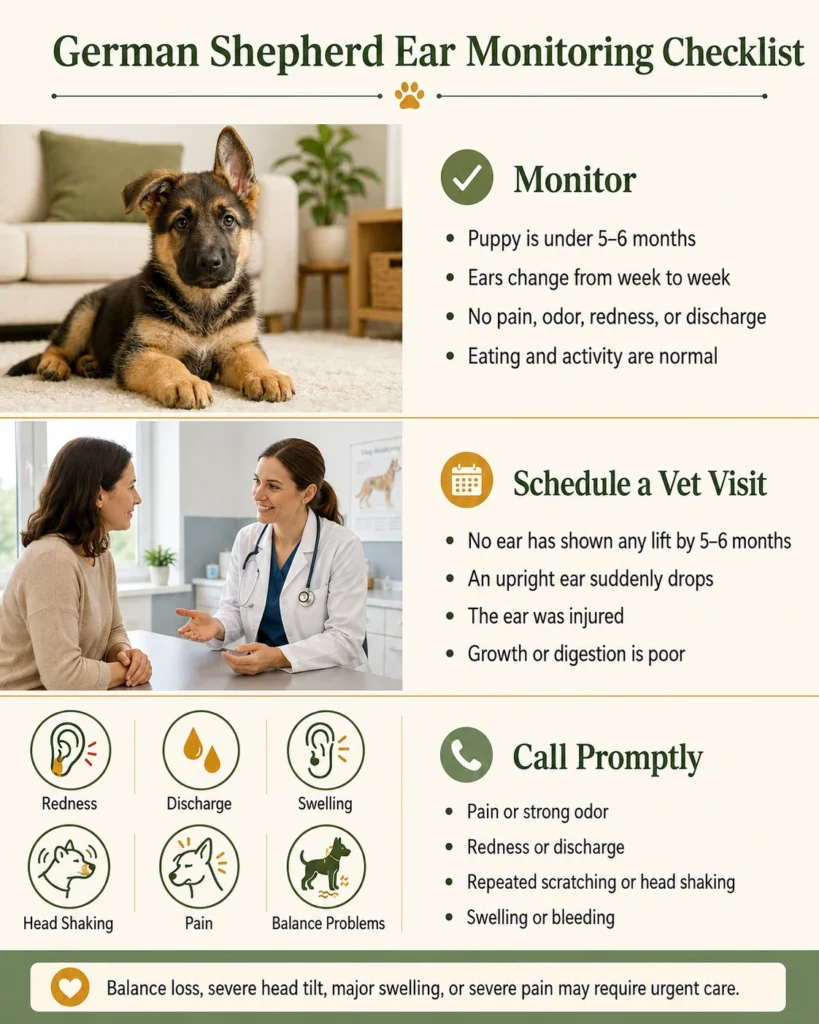
You can usually continue monitoring when:
- Your puppy is under 5 to 6 months
- The position changes from week to week
- Both ears appear clean
- There is no odor or discharge
- Your puppy does not appear painful
- Eating, energy, and growth remain normal
Arrange a routine veterinary appointment when:
- Neither ear has shown any lift by about 5 to 6 months
- One ear suddenly falls after being consistently upright
- Your puppy has experienced ear trauma
- The ear flap looks thick, swollen, or misshapen
- Your puppy has poor growth or chronic digestive problems
- You are considering taping or another support method
Call a veterinarian promptly for:
- Redness
- Pain
- Odor
- Discharge
- Repeated head shaking
- Intense scratching
- Bleeding
- Swelling
- Sensitivity around the ear
These signs may result from inflammation, infection, mites, a foreign object, or injury. Waiting for the ear to stand is not an appropriate response to a painful or abnormal ear. Merck advises prompt veterinary attention when ear changes appear.
Seek urgent veterinary care if your puppy develops:
- Severe head tilt
- Loss of balance
- Rapid involuntary eye movements
- Facial weakness
- Significant bleeding
- Sudden major swelling
- Severe or rapidly worsening pain
What a Veterinarian May Check
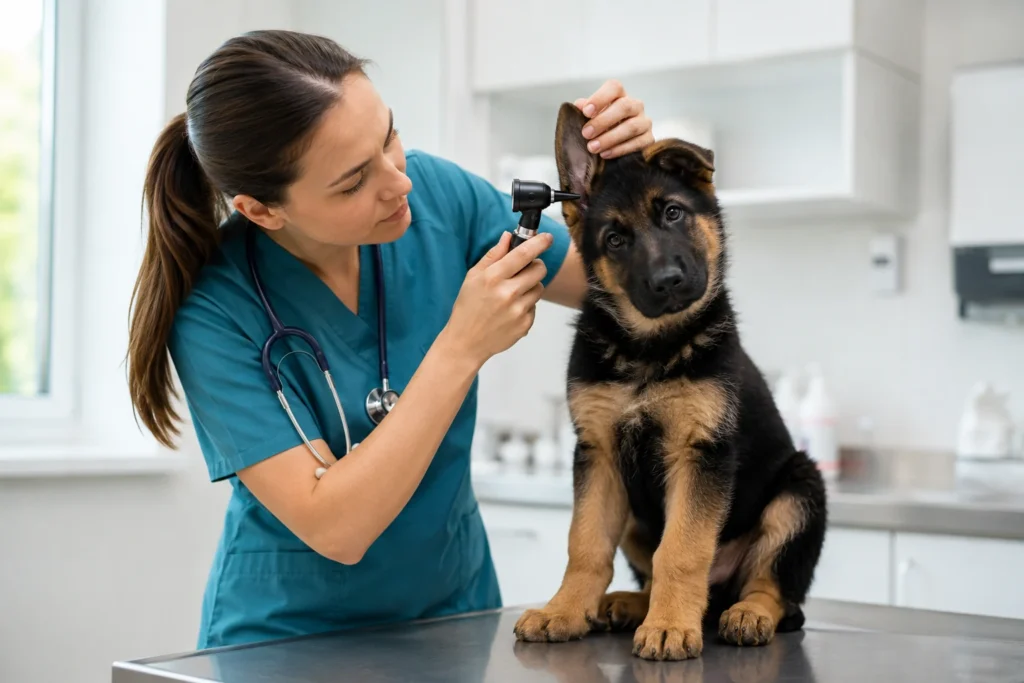
The appointment is usually focused on ruling out a health problem rather than diagnosing a cosmetic ear difference.
Your veterinarian may:
- Examine both ear flaps
- Inspect the surrounding skin
- Look inside the canals with an otoscope
- Check for mites, discharge, debris, yeast, or bacteria
- Inspect the eardrum when visible
- Examine the mouth and teething progress
- Look for retained baby teeth
- Review diet and supplements
- Assess body condition and growth
- Ask about rough play or previous injuries
- Perform ear cytology when discharge is present
- Recommend culture, imaging, or further testing when medically justified
Merck notes that painful or obstructed ears may sometimes require sedation for a full examination and cleaning.
Veterinary costs vary by region and clinic. A healthy-ear assessment may require only a standard examination fee. Cytology, medication, sedation, imaging, or treatment will increase the total.
Ask for a written estimate before non-emergency tests or procedures.
What Most Articles Miss
There Is No Official “Must Stand by This Date” Rule
The adult breed standard describes ideal upright ears. It does not create a medical deadline for puppies.
Age ranges found online are practical estimates, not diagnostic rules.
Ear Position Is Not an Ear-Health Score
A floppy ear may be completely comfortable and healthy.
An upright ear can still be infected, inflamed, injured, or painful. Ear health should be judged through comfort, odor, skin condition, discharge, scratching, and veterinary findings rather than vertical position alone.
Calcium Is Not an Ear Treatment
The claim that a puppy needs extra calcium because the ears softened during teething is misleading.
The safer approach is a complete diet formulated for puppy growth with no unnecessary mineral products. Properly balanced commercial diets rarely produce nutritional disease when fed appropriately, while unbalanced diets can create deficiencies or excesses.
Social Media Comparisons Are Unreliable
Photos usually do not reveal:
- Exact age
- Genetics
- Family ear type
- Medical history
- Recent illness
- Diet
- Ear injury
- Whether the puppy was alert
- Whether the image was selected from dozens of attempts
Compare your puppy with its own weekly pattern instead of comparing it with another dog’s best photograph.
Waiting Is Appropriate Only When the Ear Looks Healthy
Patience is reasonable for clean, comfortable ears in a growing puppy.
Waiting is not appropriate when there is pain, odor, discharge, swelling, injury, bleeding, or a sudden lasting change.
Frequently Asked Questions
1. At what age should both German Shepherd ears stand up?
Many German Shepherds have both ears standing consistently by about 4 to 6 months, but some take until 7 or 8 months. Earlier or later development can occur, so the overall trend and the puppy’s health matter more than one exact birthday.
2. Can German Shepherd ears stand up after 6 months?
Yes. Some ears continue strengthening after 6 months, especially when they have already shown partial lift. The possibility of a major natural change generally becomes lower as the puppy moves beyond 7 or 8 months, but there is no guaranteed cutoff.
3. Why does my German Shepherd have one ear up and one ear down?
The ears can develop at different speeds. One-up, one-down carriage is often temporary in young puppies when both ears are clean, comfortable, and free from injury or infection.
4. Should I give calcium when my German Shepherd puppy ears are not standing?
No. Do not add calcium, bone meal, human vitamins, or mineral supplements unless your veterinarian has identified a specific medical need. A complete puppy diet should already contain controlled mineral nutrition for growth.
5. Do floppy ears mean my German Shepherd is not purebred?
No. Ear position alone cannot prove or disprove ancestry. Some purebred German Shepherds retain soft ears, while some mixed-breed dogs develop erect ears. Pedigree documentation or DNA testing provides more useful ancestry information.
Final Thoughts
When do German Shepherds ears stand up? Most begin lifting their ears during early puppyhood and develop steadier upright carriage around 4 to 6 months, although some take longer.
Watch the overall pattern instead of one bad ear day. Feed a complete puppy diet, avoid unnecessary calcium, protect the ears from injury, and have pain, odor, discharge, swelling, or sudden changes examined by a veterinarian.
Have questions about your dog’s health, nutrition, grooming, or daily care? Visit our Contact Us page to reach the Furbivo team. For any medical symptoms, diagnosis, or treatment advice, always consult a qualified veterinarian.