
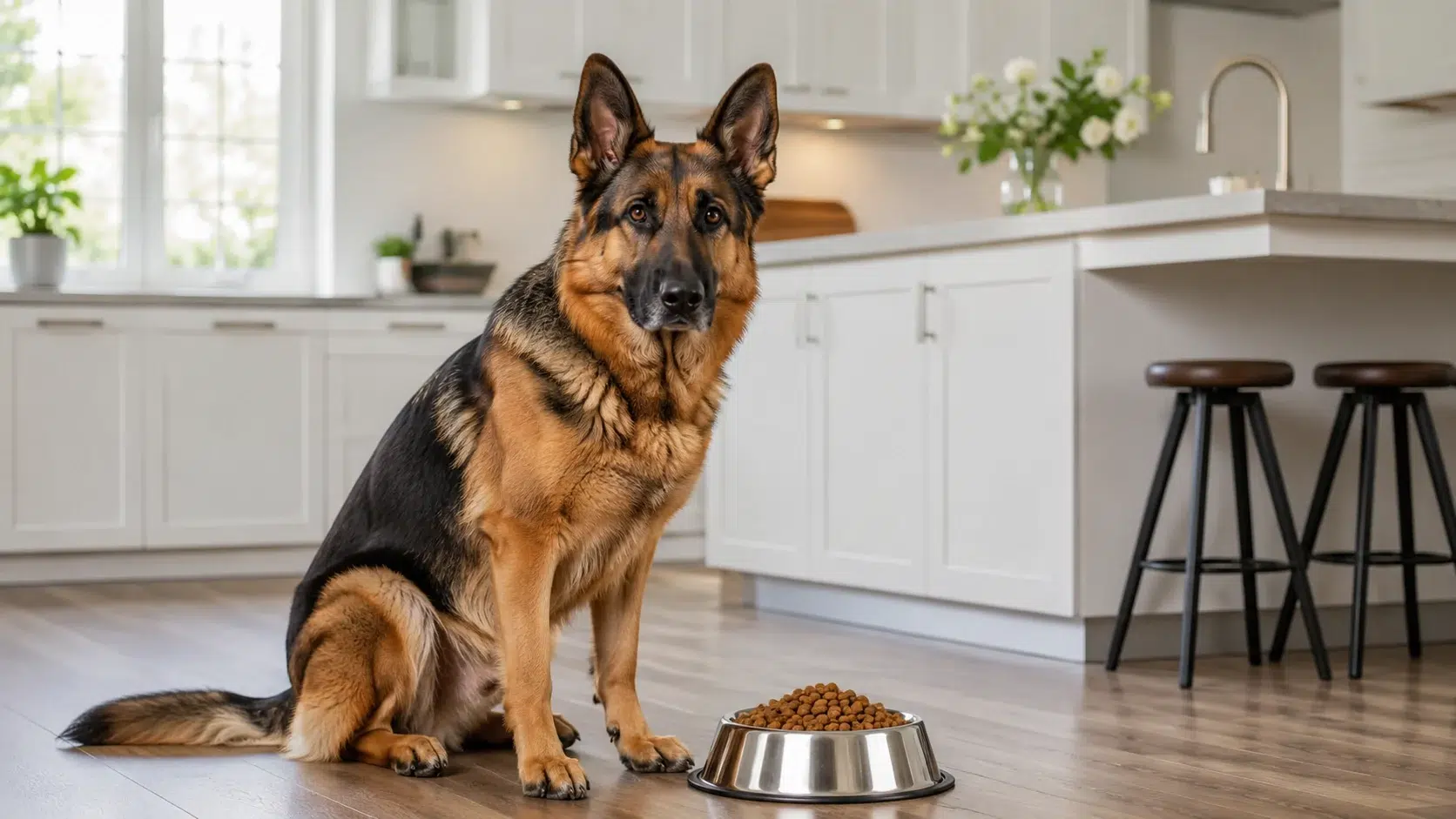
The best german shepherd dog food is complete and balanced for your dog’s life stage, made for large breeds when needed, easy for your dog to digest, and suited to your dog’s weight, activity level, and health needs. Puppies need controlled growth support, while adults need steady nutrition without extra calories.
German Shepherds are large, active, muscular dogs. They need food that supports lean muscle, healthy joints, steady energy, and digestion.
But there is no single perfect food for every German Shepherd. A young working dog, a couch-loving adult, a sensitive-stomach dog, and a senior with stiff joints may all need different feeding plans.
This guide will help you compare food types, read labels, avoid common buying mistakes, and choose a safer diet category without relying on fake “best overall” claims.
What Makes Good German Shepherd Dog Food?
Good German Shepherd dog food should match your dog’s age, size, weight, activity level, and health needs. Look for a complete and balanced label, quality protein, controlled calories, and a formula your dog digests well. Puppies need large-breed growth support, while adults need nutrition that helps maintain lean weight.
For more background on controlled growth, the AKC large-breed puppy nutrition guide explains why large-breed puppies need careful calorie and mineral balance.
The first thing to check is whether the food is made for your dog’s life stage. Puppy, adult, senior, and all-life-stages foods are not always the same.
Next, think about body size. German Shepherd puppies grow into large dogs, so puppy food should support steady growth instead of fast weight gain.
For adult dogs, the goal is not the richest food on the shelf. The goal is a diet your dog can digest well while staying lean, active, and comfortable.
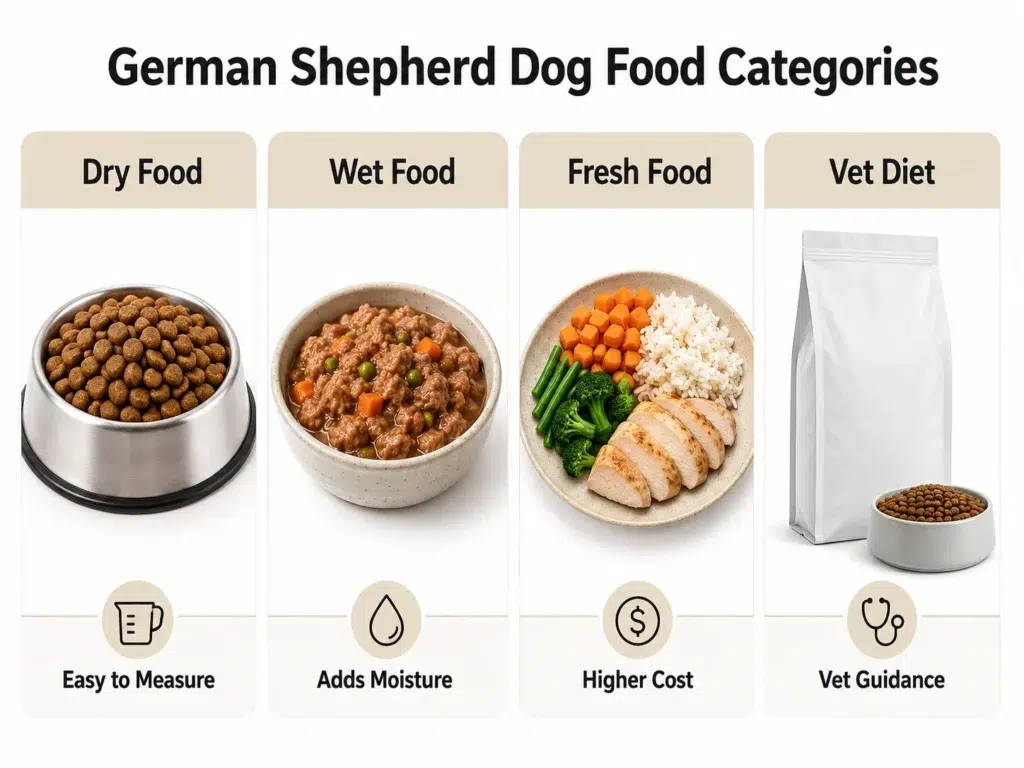
Quick Comparison: German Shepherd Dog Food Categories
| Food Category | Best For | Pros | Watch Outs |
| Large-breed puppy food | German Shepherd puppies | Supports controlled growth and bone development | Avoid overfeeding |
| Adult large-breed dry food | Healthy adult dogs | Easy to measure, usually budget-friendly | Some dogs need slower transitions |
| Wet food | Picky eaters or added moisture | Often smells and tastes appealing | Can cost more per meal |
| Fresh or gently cooked food | Owners wanting less processed options | May be easy to portion with subscriptions | Can be expensive |
| Sensitive stomach food | Dogs with mild digestive issues | May use simpler recipes or digestible ingredients | Chronic symptoms need a vet |
| Weight management food | Overweight adults | Helps reduce calories while keeping volume | Needs careful measuring |
| Veterinary diet | Medical needs | Designed for specific health conditions | Use only with vet guidance |
This table is a starting point, not a prescription. Your dog’s stool quality, weight, coat, energy, and vet exam matter more than marketing words.
German Shepherd Puppy Food
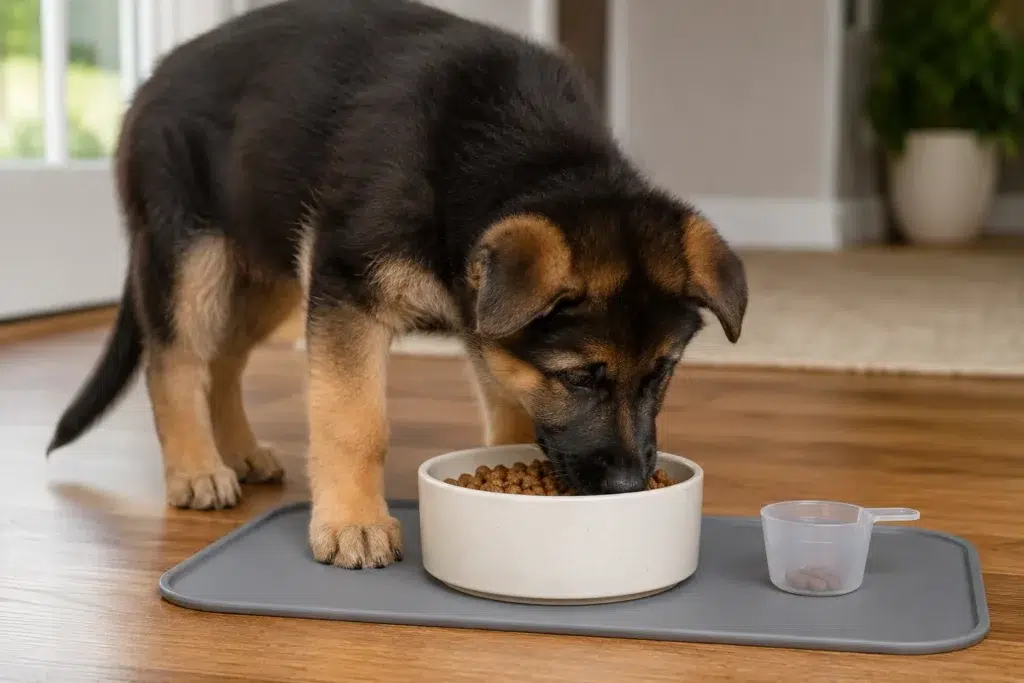
German Shepherd puppies need careful nutrition because they grow fast. Too many calories or poorly balanced minerals can put stress on developing bones and joints.
Choose a puppy food labeled for large-breed growth or one that clearly fits the growth of large-size dogs. This matters because large-breed puppies need controlled levels of calcium and phosphorus.
A puppy should grow steadily, not as fast as possible. A chunky puppy may look cute, but extra weight can add stress to young joints.
Feed measured meals instead of free-feeding all day. Most German Shepherd puppies do better with several meals per day when young, then fewer meals as they mature.
Ask your vet when to switch from puppy food to adult food. Many German Shepherds switch after most growth is complete, but timing can vary by dog.
Adult German Shepherd Dog Food
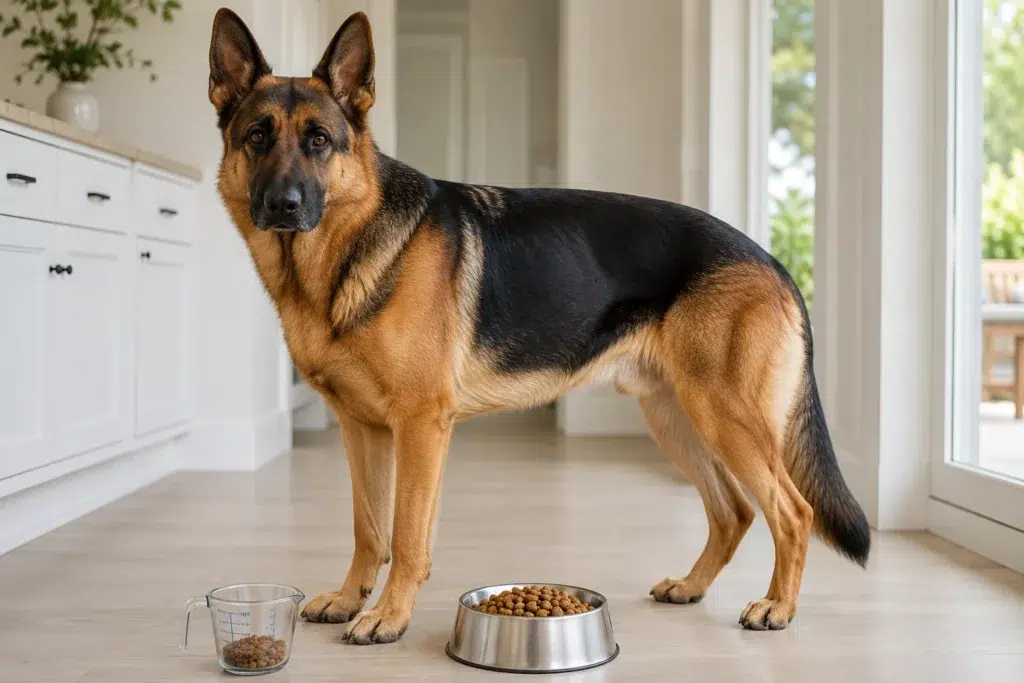
Adult German Shepherds need food that supports lean muscle and steady energy without causing weight gain.
Look for a complete and balanced adult formula from a company that provides clear feeding directions and nutrition details. A large-breed adult food can be a good fit for many German Shepherds, but it is not required for every dog.
Protein matters, but more is not always better. Your dog needs enough quality protein to maintain muscle, but the full recipe matters too.
Fat provides energy and helps the food taste good. Very active dogs may need more calories, while less active dogs may gain weight on calorie-dense foods.
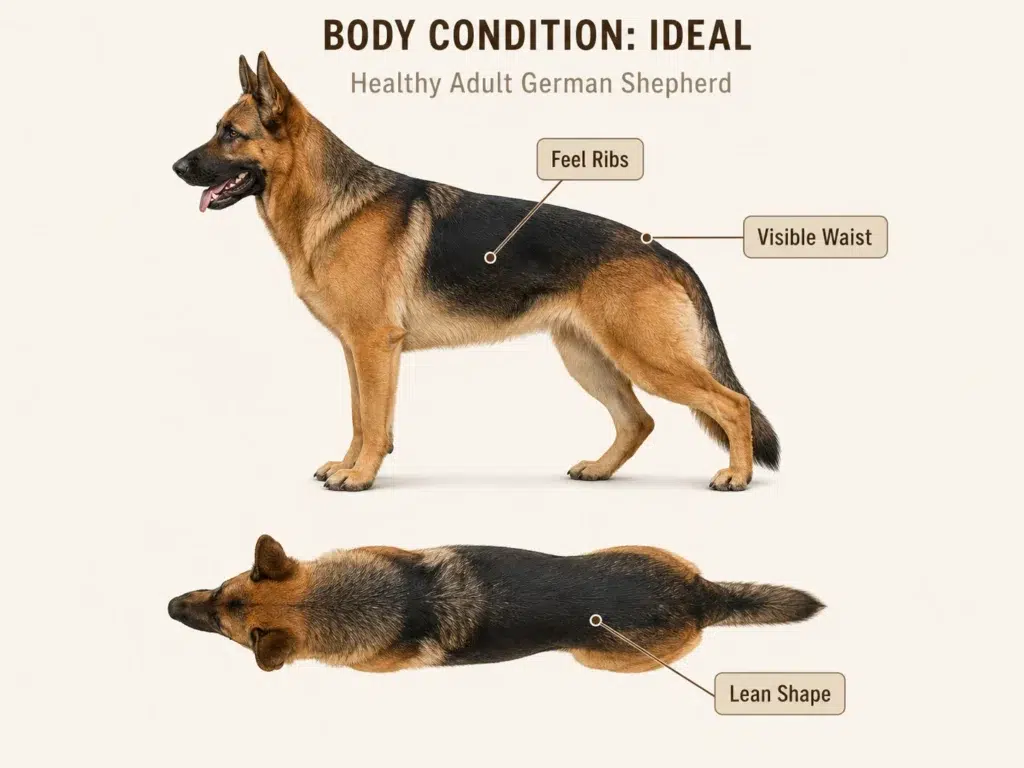
Watch your dog’s body condition. You should be able to feel the ribs with light pressure, and your dog should have a waist when viewed from above.
If your German Shepherd is gaining weight, do not just switch foods randomly. Measure the current food first, reduce treats, and ask your vet what calorie range makes sense.
Senior German Shepherd Food
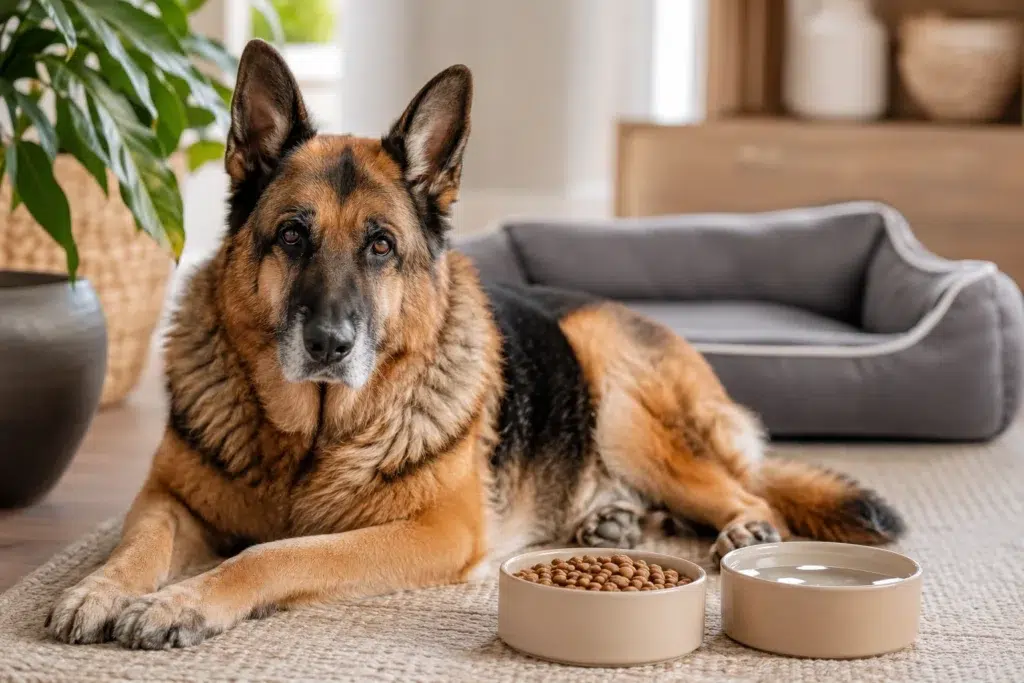
Senior German Shepherds may need fewer calories, more joint support, easier digestion, or a diet that fits a medical condition.
Many older dogs lose muscle but gain fat. That can make feeding tricky. Cutting calories too much may reduce important nutrients, while feeding too much may worsen joint stress.
A senior diet may help some dogs, but not every senior dog needs one. Some healthy older German Shepherds do well on their adult food with adjusted portions.
Talk with your vet if your dog is losing weight, gaining weight, drinking more water, having accidents, refusing food, or struggling to chew.
Senior dogs may also need dental care. If your dog avoids kibble or drops food from the mouth, pain may be part of the problem.
If you are also wondering how long do German Shepherds live, our lifespan guide explains aging, senior care, and long-term health factors.
Dry Food, Wet Food, or Fresh Food?
German Shepherd owners often wonder which food type is best. The answer depends on your budget, your dog’s needs, and how well the food works long term.
Dry Food
Dry food is popular because it is easy to store, easy to measure, and usually more affordable per meal.
It can work well for German Shepherds when the formula is complete and balanced, the calories fit your dog, and the kibble agrees with your dog’s stomach.
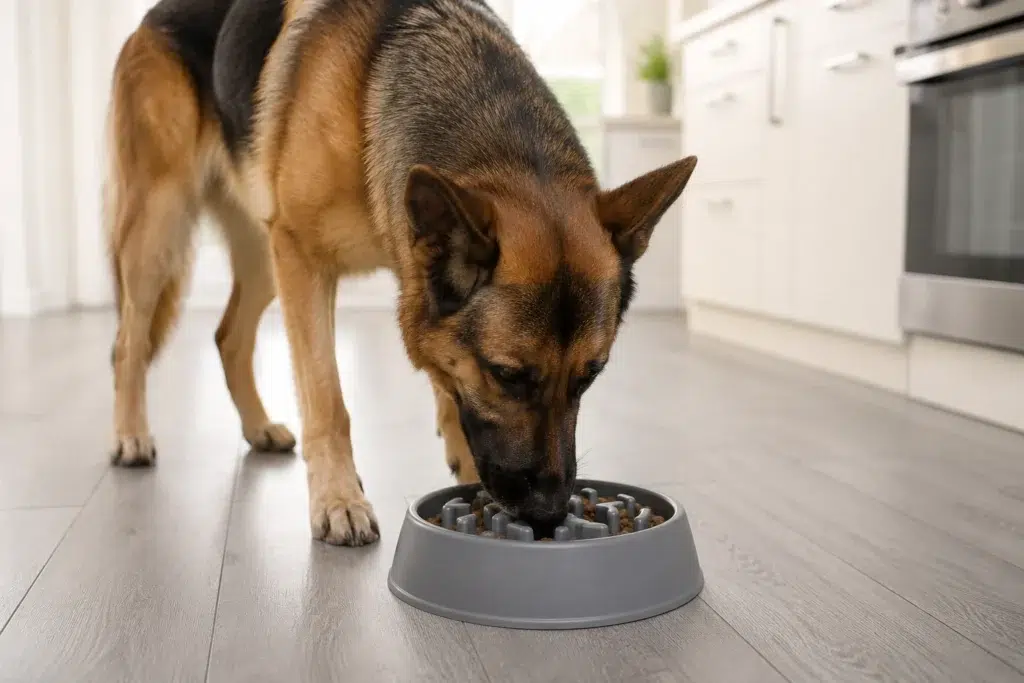
Some dogs eat dry food too fast. A slow feeder bowl or puzzle feeder can help slow meals down.
Wet Food
Wet food can be useful for picky eaters, older dogs, or dogs that need extra moisture in the diet.
It often costs more than dry food and may be less convenient for large dogs. Since German Shepherds eat larger portions than small dogs, budget can become a real issue.
Wet food can also be used as a topper. If you do this, count those calories.
Fresh or Gently Cooked Food
Fresh-style diets can be appealing because they look closer to human food. Some owners like the pre-portioned packaging and simple feeding instructions.
The downside is cost. A full fresh diet for a large German Shepherd can be expensive.
If you choose this route, make sure the food is complete and balanced for your dog’s life stage. Do not assume fresh automatically means better.
Raw Food
Raw diets are sometimes promoted online, but they come with safety concerns. Raw meat can carry bacteria that may affect dogs and people in the home.
Before choosing raw or minimally processed diets, review the FDA pet food safety information and speak with your veterinarian about household risk and safe handling.
Puppies, seniors, pregnant people, young children, older adults, and anyone with a weakened immune system may face higher risk from unsafe food handling.
If you are considering raw feeding, talk with your vet first. You need to understand food safety, nutrition balance, and household risk.
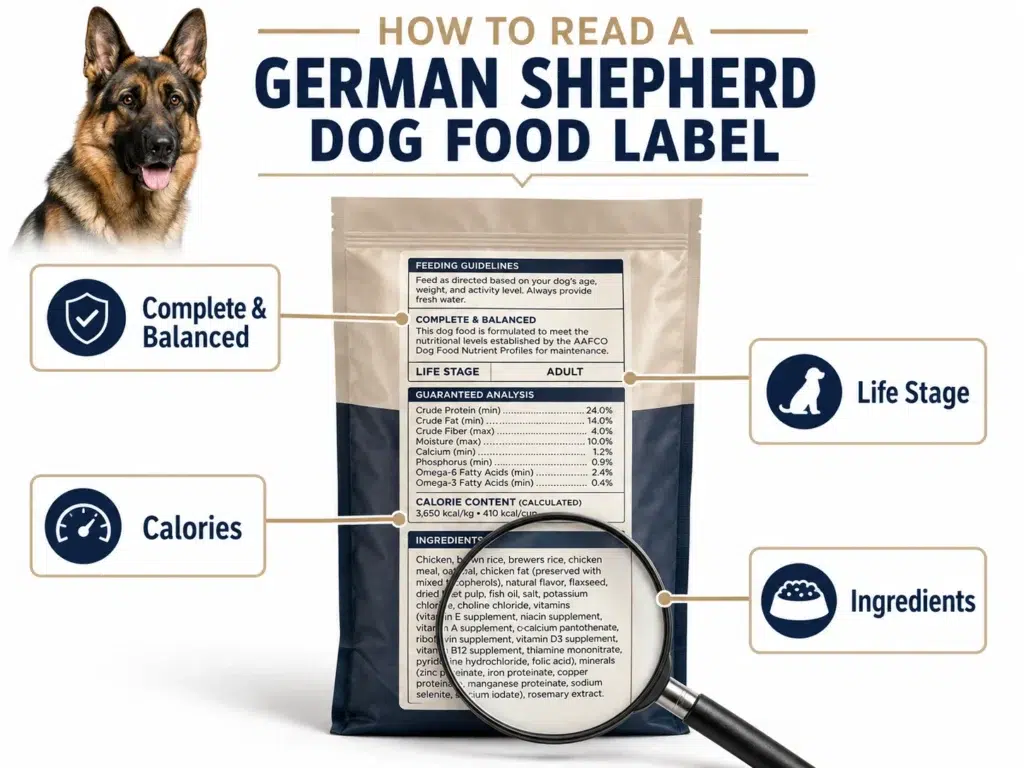
What to Look for on a Dog Food Label
For official label guidance, you can also review the FDA pet food label guidance before comparing dog food claims.
A dog food bag can look impressive, but the most useful details are often small.
Nutritional Adequacy Statement
Look for a statement that says the food is complete and balanced for a specific life stage. This helps you know whether the food is meant to be a full diet or only a treat, topper, or supplement.
The AAFCO complete and balanced guidance explains how life stage and nutritional adequacy statements help owners understand whether a food is meant as a full diet.
For German Shepherd puppies, the label should match growth needs for large-size dogs if possible.
For adult dogs, choose a food meant for adult maintenance or all life stages, depending on your dog’s needs.
Life Stage
The life stage should fit your dog. Puppy food is not the same as adult food. Senior food may not be right for every older dog.
If the label says “intermittent or supplemental feeding only,” it is not meant to be your dog’s main food.
Calories
Calories matter a lot for German Shepherds. Two foods can look similar but have very different calorie levels per cup or can.
A high-calorie food may be useful for a very active dog. It may cause weight gain in a less active dog.
Check calories and measure meals. Guessing portions is one of the easiest ways to overfeed.
Ingredients
Ingredients are listed by weight before cooking. The first ingredient is not the whole story.
Look for a clear protein source, digestible carbohydrates or fiber sources your dog tolerates, and a formula that supports your dog’s stool quality and energy.
Avoid judging food by trendy words alone. “Premium,” “natural,” and “holistic” do not always tell you whether the food fits your dog.
Special Diet Needs for German Shepherds
German Shepherds can have different nutrition needs based on age, activity, and health.
Sensitive Stomach
Some German Shepherds have loose stool, gas, or picky eating. A sensitive stomach formula may help mild issues, especially during food changes.
Still, chronic diarrhea, weight loss, vomiting, or poor appetite should not be treated with guesswork. These signs can point to parasites, infection, food intolerance, pancreatic issues, or other medical problems.
Call your vet if digestive symptoms continue or keep coming back.
Skin and Coat Support
Itchy skin, paw licking, ear issues, and dull coat may lead owners to change food. Sometimes diet helps, but allergies and skin infections can have many causes.
A food with omega fatty acids may support skin and coat health. But if your dog is scratching constantly, has sores, smells bad, or loses hair, schedule a vet visit.
Do not switch foods every few days. That can make it harder to find the real trigger.
Joint Support
German Shepherds are known for joint and mobility concerns. Food cannot fix hip dysplasia or arthritis, but healthy weight can reduce stress on joints.
Some diets include joint-support nutrients, but the most important step is keeping your dog lean.
If your dog limps, struggles to rise, or avoids stairs, ask your vet about pain control, safe exercise, and whether supplements or special diets make sense.
Weight Control
An overweight German Shepherd may need a lower-calorie diet or a measured feeding plan.
Do not simply cut the food in half. That can reduce key nutrients.
A weight management food may help your dog feel fuller while eating fewer calories. Your vet can help set a safe goal weight and feeding amount.
How Much Should a German Shepherd Eat?
There is no single cup amount that works for every German Shepherd. Feeding depends on age, weight, body condition, activity level, metabolism, health, and the calorie level of the food.
Start with the feeding guide on the package, then adjust based on your dog’s body condition.
Use a real measuring cup or kitchen scale. Scooping with a random cup can lead to overfeeding.
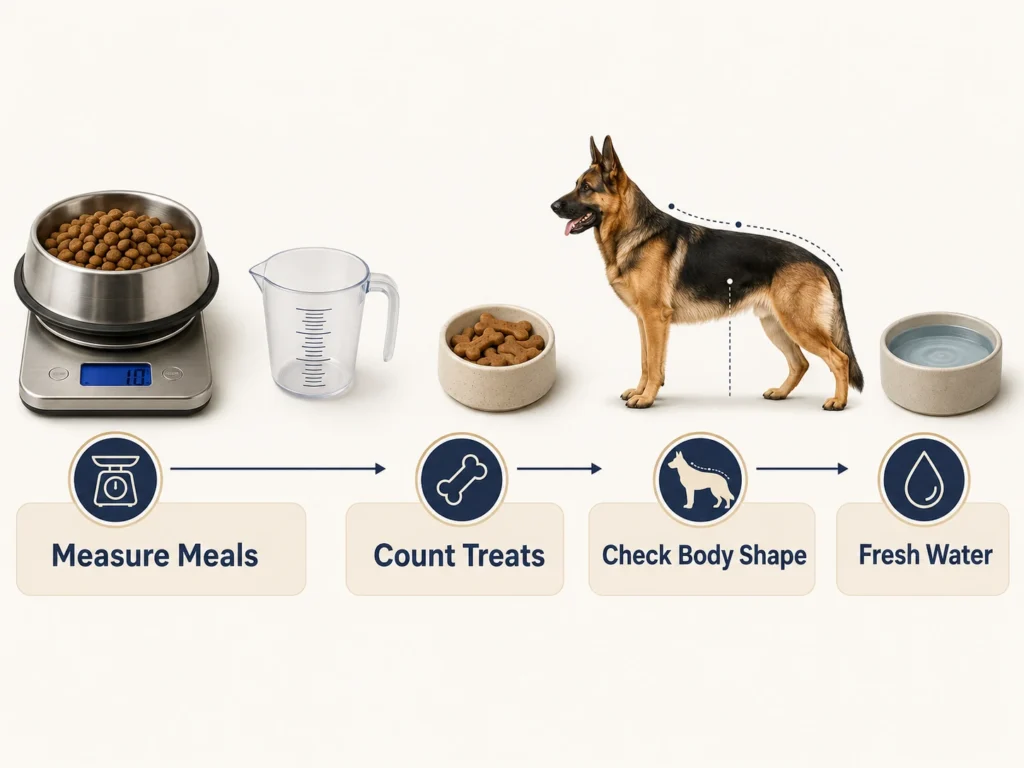
Check your dog’s weight and body shape every few weeks. If your dog is gaining or losing too much, adjust slowly and ask your vet for help.
Treats should make up only a small part of daily calories. Training treats, dental chews, peanut butter, table scraps, and toppers all count.
Food Transition Tips
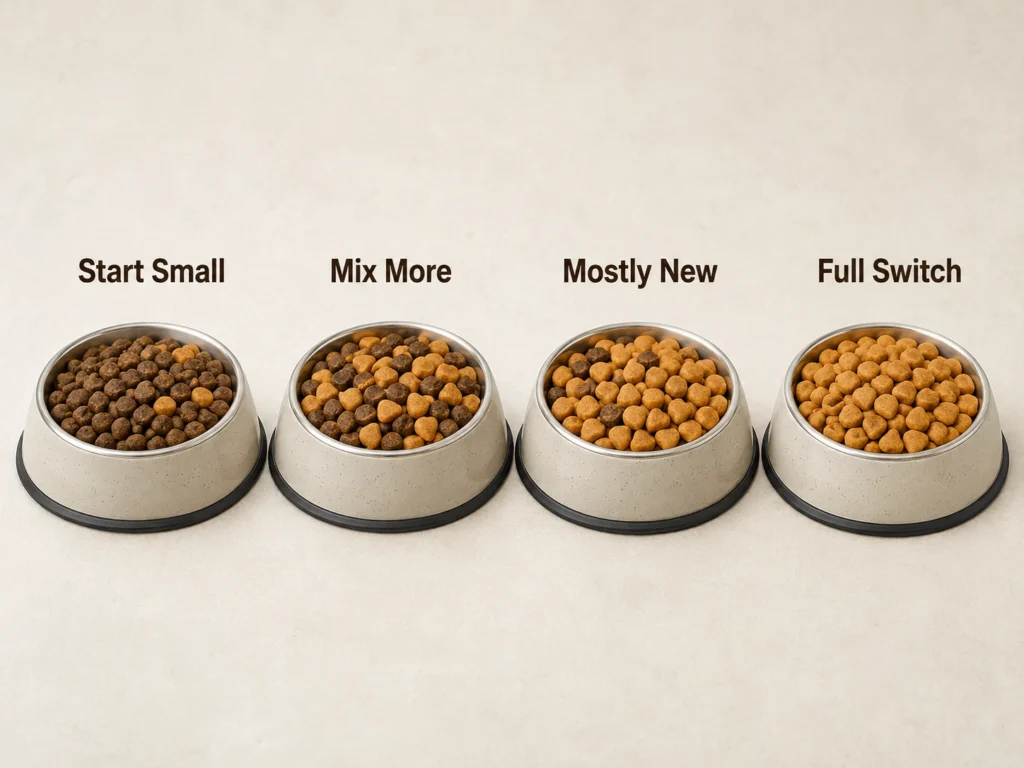
Switching food too quickly can upset your dog’s stomach. A slow transition is usually easier.
Mix a small amount of the new food with the old food, then gradually increase the new food over several days. Sensitive dogs may need more time.
Watch stool quality, appetite, gas, itching, and energy during the change.
If your dog vomits repeatedly, has bloody stool, becomes weak, refuses food, or has ongoing diarrhea, call your vet.
What to Avoid When Buying German Shepherd Dog Food
Avoid choosing food based only on front-label marketing. Beautiful packaging does not prove a food is right for your dog.
Be careful with “breed miracle” claims. German Shepherds have breed traits, but no food can prevent every disease.
Avoid diets that are not complete and balanced unless they are meant only as toppers or treats.
Avoid frequent food switching without a reason. Constant changes can upset digestion and make it hard to know what works.
Avoid overfeeding because “he still seems hungry.” Some dogs act hungry even when they are getting enough calories.
Avoid using supplements to replace vet care. If your dog is limping, losing weight, vomiting, or scratching badly, a supplement is not the first step.
Budget vs Long-Term Value
The cheapest food is not always the best value, and the most expensive food is not always the best choice.
Think about cost per day, not just bag price. A large bag may look expensive but last longer. A calorie-dense food may require smaller portions.
Also think about results. If a food causes loose stool, itching, picky eating, or weight gain, it may cost more in the long run.
A good value food is one your German Shepherd digests well, maintains healthy weight on, and can eat consistently.
For affiliate content, it is better to compare categories and label features than to push random products. Real recommendations should be based on current product data, label review, price, availability, and your dog’s needs.
What Most Articles Miss
Many articles about german shepherd dog food focus on protein percentages and brand lists. That misses the bigger picture.
Calories Matter More Than Big Claims
Two foods can have similar ingredients but very different calories. If your dog gains weight, joint stress can increase.
Always check calories per cup or can.
Puppy Growth Should Be Controlled
German Shepherd puppies should not be pushed to grow as fast as possible. Steady growth is safer for large-breed bodies.
Choose the right life stage and avoid overfeeding.
Stool Quality Is a Clue
Your dog’s poop can tell you a lot. Very loose stool, greasy stool, large stool volume, or repeated diarrhea may mean the food is not working or there is a health issue.
Do not ignore digestive changes that last.
The Best Food Is the One That Fits Your Dog
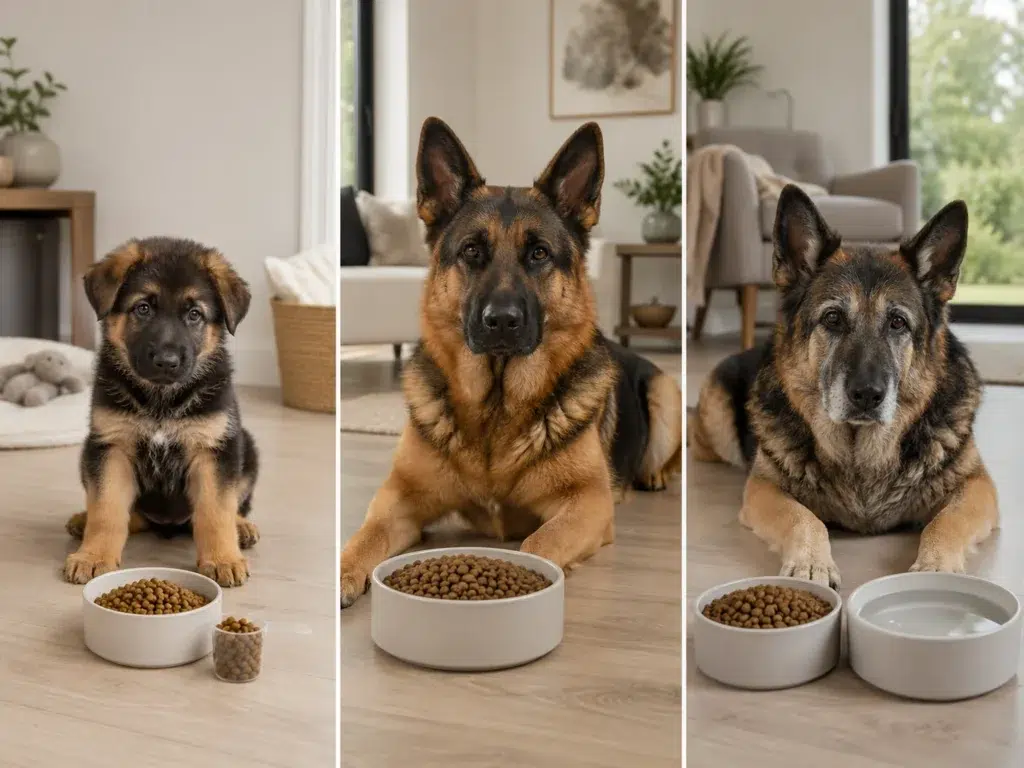
A food can be popular online and still be wrong for your German Shepherd.
The right food should fit your dog’s age, weight, activity, budget, digestion, and vet guidance.
When to Ask Your Vet About Food

Call your vet before changing food if your German Shepherd has a medical condition, is pregnant, is a fast-growing puppy, is a senior with weight changes, or has chronic symptoms.
You should also ask for help if your dog has:
- Repeated vomiting
- Diarrhea that lasts more than 24 to 48 hours
- Blood in stool
- Fast weight loss
- Constant itching
- Ear infections that keep coming back
- Limping or stiffness
- Poor appetite
- Excessive thirst
- Sudden behavior changes
Safety warning: If your German Shepherd has a swollen belly, repeated dry heaving, pacing, drooling, weakness, or collapse, seek emergency veterinary care right away. These can be signs of bloat or GDV, which can be life-threatening.
Diet matters, but it should not delay urgent care.
You can learn more about emergency signs in the AKC guide to bloat in dogs, but urgent symptoms should always be handled by an emergency veterinarian.
FAQs
1. What is the best german shepherd dog food?
The best german shepherd dog food is complete and balanced, fits your dog’s life stage, supports a healthy weight, and agrees with your dog’s digestion. Puppies usually need large-breed puppy food, while adults need a diet that supports lean muscle without excess calories.
2. Should German Shepherds eat grain-free food?
Not every German Shepherd needs grain-free food. Many dogs digest grains well. If you are considering grain-free food because of allergies, stomach issues, or skin problems, talk with your vet first so you do not miss another cause.
3. Is dry or wet food better for German Shepherds?
Dry food is often easier to measure and more budget-friendly for large dogs. Wet food can help picky eaters or add moisture. Either can work if it is complete and balanced for your dog’s life stage and fits your dog’s needs.
4. What should German Shepherd puppies eat?
German Shepherd puppies should usually eat a complete and balanced large-breed puppy food. This supports steady growth and proper mineral balance. Avoid overfeeding, and ask your vet when to switch from puppy food to adult food.
5. How do I know if my German Shepherd’s food is working?
Good signs include steady energy, healthy weight, firm stool, clear skin, a shiny coat, and normal appetite. Warning signs include repeated diarrhea, vomiting, itching, ear infections, weight loss, or poor appetite. If those happen, call your vet.
Final Thoughts on German Shepherd Dog Food
Choosing german shepherd dog food is not about finding one magic brand. It is about matching the food to your dog’s age, size, weight, activity level, digestion, and health needs.
Start with a complete and balanced food. For puppies, choose a diet that supports large-breed growth. For adults, focus on lean body condition and steady energy. For seniors, watch weight, muscle, teeth, and mobility.
Avoid hype, read labels carefully, measure meals, and make changes slowly. If your German Shepherd has ongoing symptoms, ask your vet before trying another random bag of food.
Have questions about your dog’s health, nutrition, grooming, or daily care? Visit our Contact Us page to reach the Furbivo team. For any medical symptoms, diagnosis, or treatment advice, always consult a qualified veterinarian.