
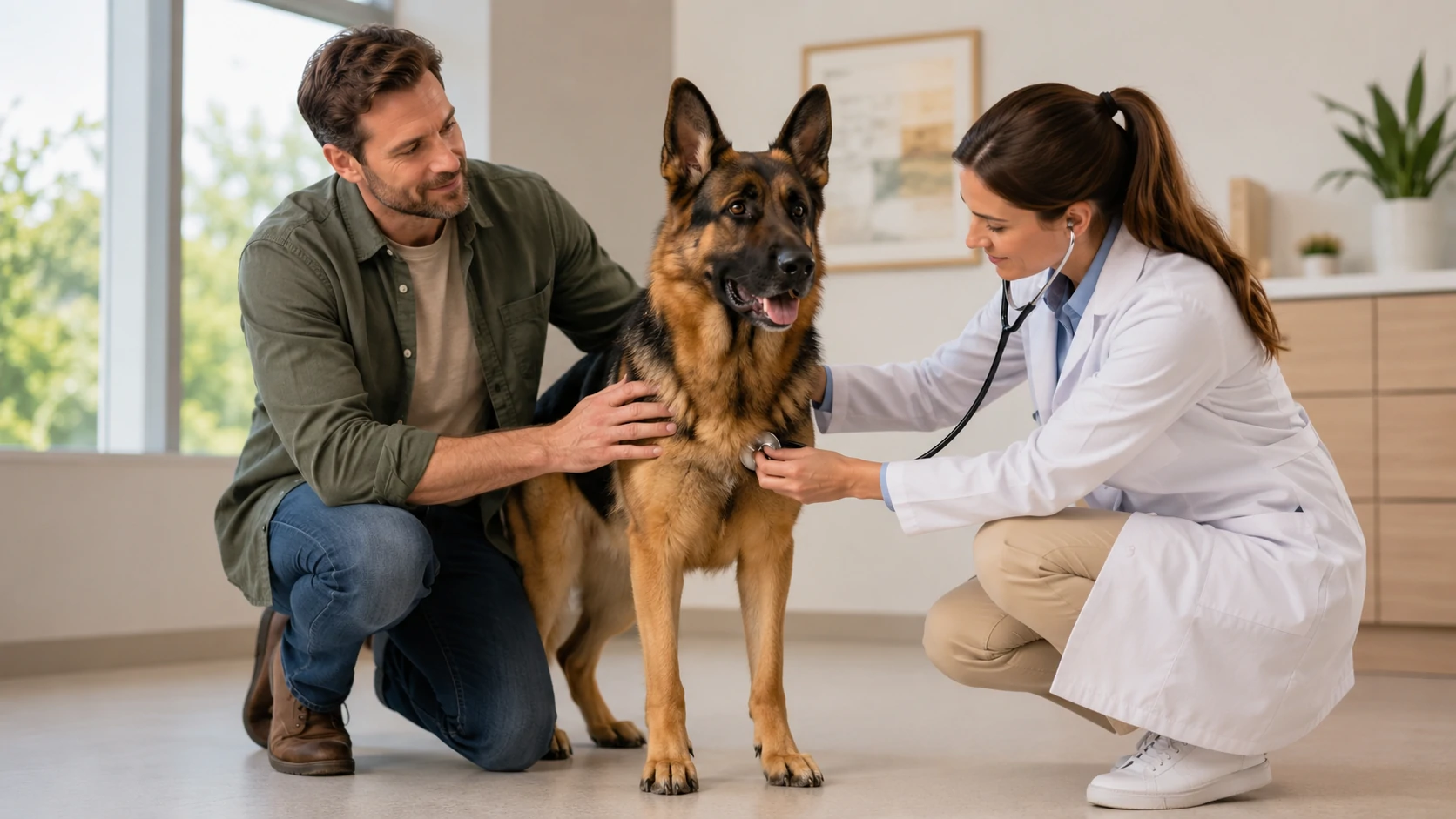
The common diseases in German Shepherds include orthopedic, neurologic, digestive, skin, ear, eye, and anal-area conditions. Hip and elbow dysplasia, osteoarthritis, degenerative myelopathy, gastric dilatation-volvulus, exocrine pancreatic insufficiency, and perianal fistulas are especially important for owners to recognize.
That does not mean every German Shepherd will develop these problems. Genetics, age, body weight, diet, activity, preventive care, and plain chance all affect an individual dog’s risk.
This guide explains what owners may notice, what a veterinarian may investigate, and which symptoms should never be watched at home. It is educational and cannot diagnose your dog.
Quick Answer: What Are the Most Common Diseases in German Shepherds?
The common diseases in German Shepherds most often discussed by veterinarians and breed-health organizations include:
- Hip dysplasia
- Elbow dysplasia
- Osteoarthritis
- Degenerative myelopathy
- Degenerative lumbosacral stenosis
- Gastric dilatation-volvulus, or GDV
- Exocrine pancreatic insufficiency, or EPI
- Perianal fistulas
- Allergic skin disease and recurrent ear inflammation
- Chronic superficial keratitis, often called pannus
German Shepherds can also develop dental disease, obesity, infections, cancer, endocrine disorders, and other illnesses seen across many breeds. A breed association increases risk; it does not confirm a diagnosis.
German Shepherd Health Problems and Warning Signs
Use this table as a triage guide, not as a diagnostic tool.
| Health problem | Signs an owner may notice | Usual next step |
| Hip or elbow dysplasia | Limping, stiffness, difficulty rising, reduced activity, bunny-hopping gait | Arrange a veterinary examination |
| Osteoarthritis | Stiffness after rest, slower walks, reluctance to use stairs or jump | Book a veterinary appointment |
| Degenerative myelopathy | Hind-leg weakness, wobbling, scuffed rear nails, paw dragging | Veterinary neurologic assessment |
| Lumbosacral disease | Lower-back pain, reluctance to jump, hind-leg weakness, tail or toileting changes | Prompt veterinary assessment |
| GDV or bloat | Unproductive retching, swollen abdomen, drooling, restlessness, weakness | Emergency veterinary care now |
| EPI | Weight loss despite appetite, frequent bulky stool, diarrhea, poor coat | Veterinary testing |
| Perianal fistulas | Pain or discharge around the anus, licking under the tail, straining to pass stool | Veterinary appointment |
| Allergic skin or ear disease | Itching, paw licking, redness, odor, repeated ear problems | Veterinary skin and ear examination |
| Pannus | Pink tissue, haze, pigmentation, or irritation on the cornea | Veterinary eye examination |
| Dental disease | Bad breath, red gums, dropping food, chewing on one side | Oral examination by a veterinarian |
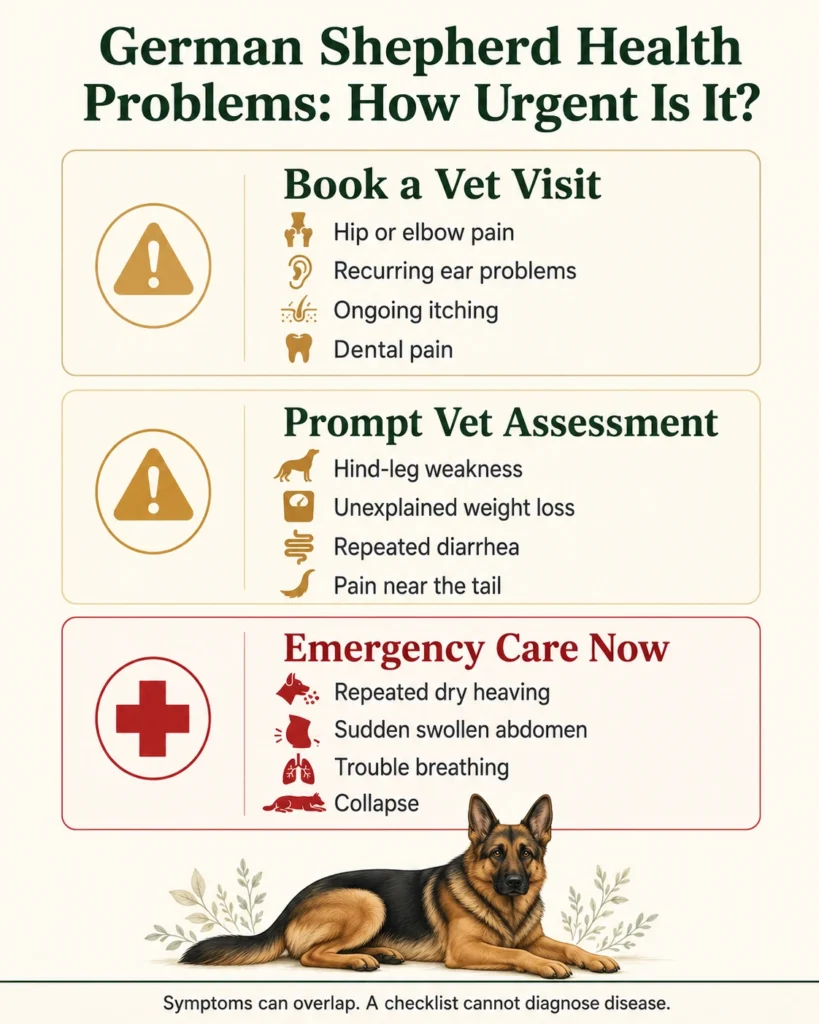
A sudden change from your dog’s normal behavior often matters more than whether the symptom appears on a breed list.
1. Hip Dysplasia
Hip dysplasia develops when the hip joint is loose or formed abnormally during growth. Repeated abnormal movement can damage cartilage and eventually contribute to osteoarthritis.
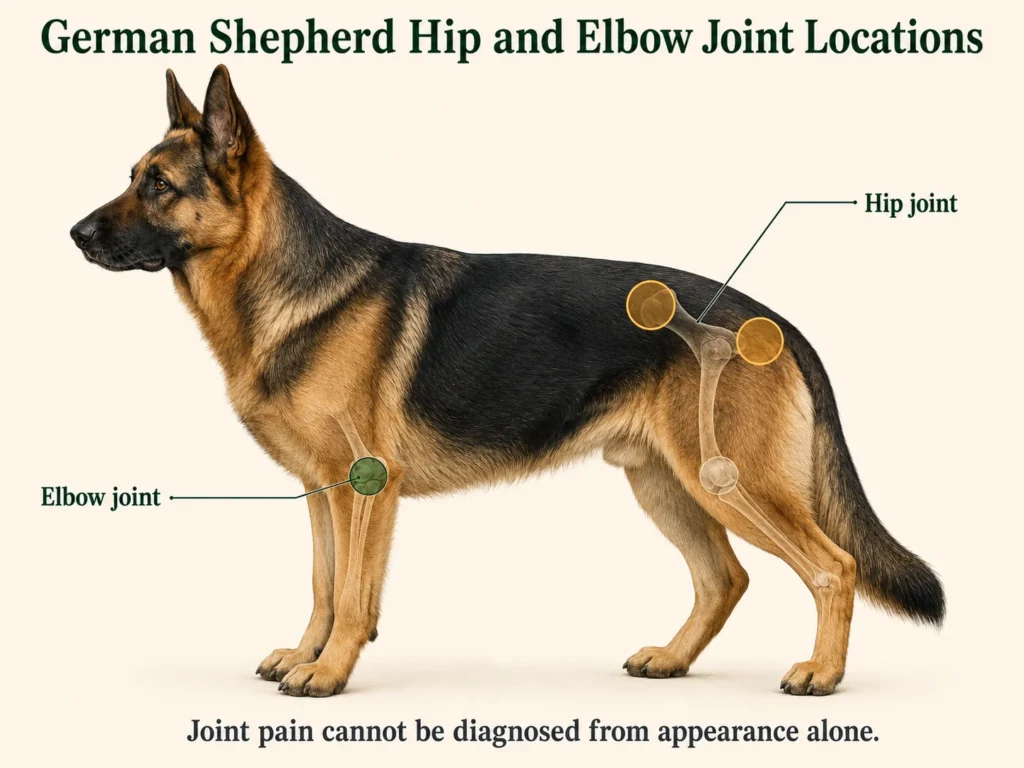
Possible signs include:
- Difficulty getting up
- Hind-leg lameness
- Stiffness after exercise
- Reluctance to run, climb stairs, or jump
- A swaying or bunny-hopping gait
- Reduced thigh muscle
- Irritability when the hips are handled
Some dogs have major changes on X-rays but relatively mild symptoms. Others have pain despite less dramatic imaging. This is why a physical examination, gait assessment, pain response, body condition, and radiographs may all matter.
The Orthopedic Foundation for Animals explains that genetics play an important role, while calorie intake, weight gain, and activity can affect how severely a dog is affected. Its canine hip dysplasia resource also describes radiographic screening used in breeding programs.
If you are buying a puppy, ask for verifiable hip results for both parents rather than accepting phrases such as “the parents have never limped.”
2. Elbow Dysplasia
Elbow dysplasia is an umbrella term for several developmental problems affecting the elbow joint. It can cause foreleg lameness and secondary arthritis.
Watch for:
- Limping on a front leg
- A shortened stride
- Turning a paw outward
- Stiffness after exercise
- Reduced elbow movement
- Reluctance to play or continue walking
The signs can be subtle and may shift between legs. A dog may also compensate, making it difficult to identify which limb hurts.
The OFA notes that elbow dysplasia has inherited components and that lameness may remain subtle for a long time. Radiographs are commonly used for evaluation, although some lesions can require more detailed imaging. Its elbow dysplasia guidance explains the main developmental abnormalities included under this diagnosis.
For growing puppies, controlled nutrition and a lean body condition are more useful than trying to produce the largest possible dog. Furbivo’s German Shepherd growth chart explains how to monitor growth without treating a weight range as a target.
3. Osteoarthritis
Osteoarthritis is a painful, progressive joint condition. It can develop after hip or elbow dysplasia, an old injury, joint instability, or years of wear.
Owners often miss the early signs because the dog may not cry or refuse to walk. Changes may include:
- Rising more slowly after sleep
- Taking longer to settle
- Shorter or slower walks
- Avoiding stairs or slippery floors
- Hesitating before entering the car
- Reduced interest in play
- Licking a painful joint
- Becoming less tolerant of touch
These changes should not automatically be dismissed as normal aging.
A veterinarian may assess joint movement, muscle loss, gait, pain, body weight, and neurologic function. Imaging can help, but treatment decisions are based on the whole dog, not an X-ray alone.
Never give ibuprofen, naproxen, acetaminophen, aspirin, or another human pain medicine unless your veterinarian specifically instructs you to do so. Some human medications can cause severe poisoning in dogs.
Helpful home changes may include non-slip rugs, ramps, trimmed nails, a supportive bed, and shorter controlled walks. These improve comfort but do not replace diagnosis or veterinary pain management.
4. Degenerative Myelopathy
Degenerative myelopathy is a progressive spinal-cord disease that usually affects older dogs. German Shepherd Dogs are among the breeds with recognized susceptibility.
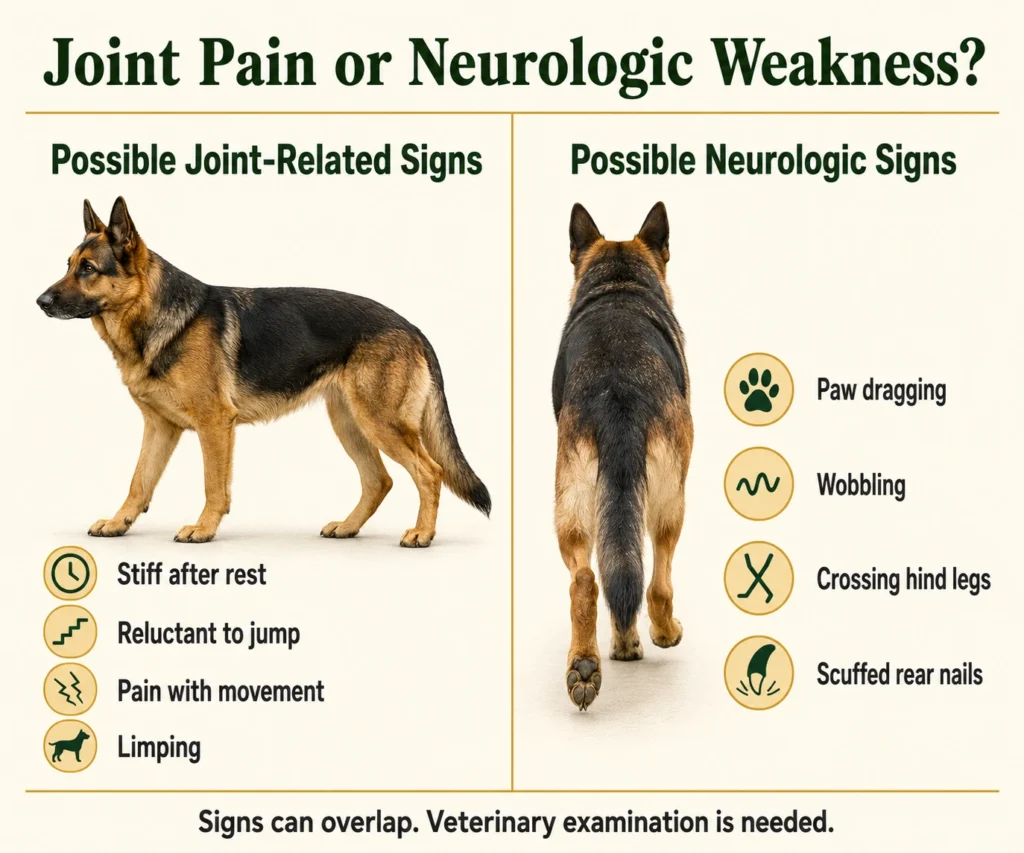
Early signs may look like arthritis or hip disease:
- One rear paw scuffing the ground
- Worn rear toenails
- Wobbling or crossing the hind legs
- Difficulty rising
- Progressive hind-limb weakness
- Reduced coordination
The condition is often not painful in its early stages, but other painful disorders can cause similar weakness.
Cornell University College of Veterinary Medicine explains that there is no single definitive test for degenerative myelopathy in a living dog. Diagnosis involves ruling out other spinal and orthopedic diseases through examination and, when appropriate, bloodwork, imaging, or spinal-fluid testing. A genetic result shows risk status; it does not prove that a dog’s current weakness is caused by DM.
There is no cure. Physical rehabilitation, maintaining a healthy weight, protecting the paws, improving traction, using support harnesses, and addressing concurrent arthritis may help preserve mobility and quality of life.
Because this disorder usually appears later in life, the German Shepherd lifespan and life-stage guide can help owners plan age-appropriate monitoring.
5. Degenerative Lumbosacral Stenosis
Degenerative lumbosacral stenosis, sometimes called cauda equina syndrome, affects the lower spine where nerves travel toward the hind limbs and tail.
Signs may include:
- Lower-back pain
- Reluctance to jump or climb
- Difficulty rising
- Hind-leg weakness
- Reduced tail movement
- Pain when the tail is lifted
- Changes in urination or defecation
- Reduced working or athletic performance
These symptoms can resemble hip dysplasia, arthritis, or degenerative myelopathy. A neurologic and orthopedic examination helps the veterinarian decide whether spinal imaging is needed.
Loss of bladder or bowel control, sudden inability to stand, or rapidly worsening weakness requires urgent veterinary attention.
6. Bloat and Gastric Dilatation-Volvulus
Bloat and GDV are sometimes used as if they mean the same thing, but GDV specifically involves stomach distention with rotation. It is a rapidly progressive emergency.
German Shepherd Dogs are among the deep-chested breeds at risk. Warning signs include:
- Repeated retching without producing vomit
- A suddenly enlarged or tight abdomen
- Heavy drooling
- Pacing or inability to settle
- Looking repeatedly at the abdomen
- Pale gums
- Weakness
- Breathing difficulty
- Collapse
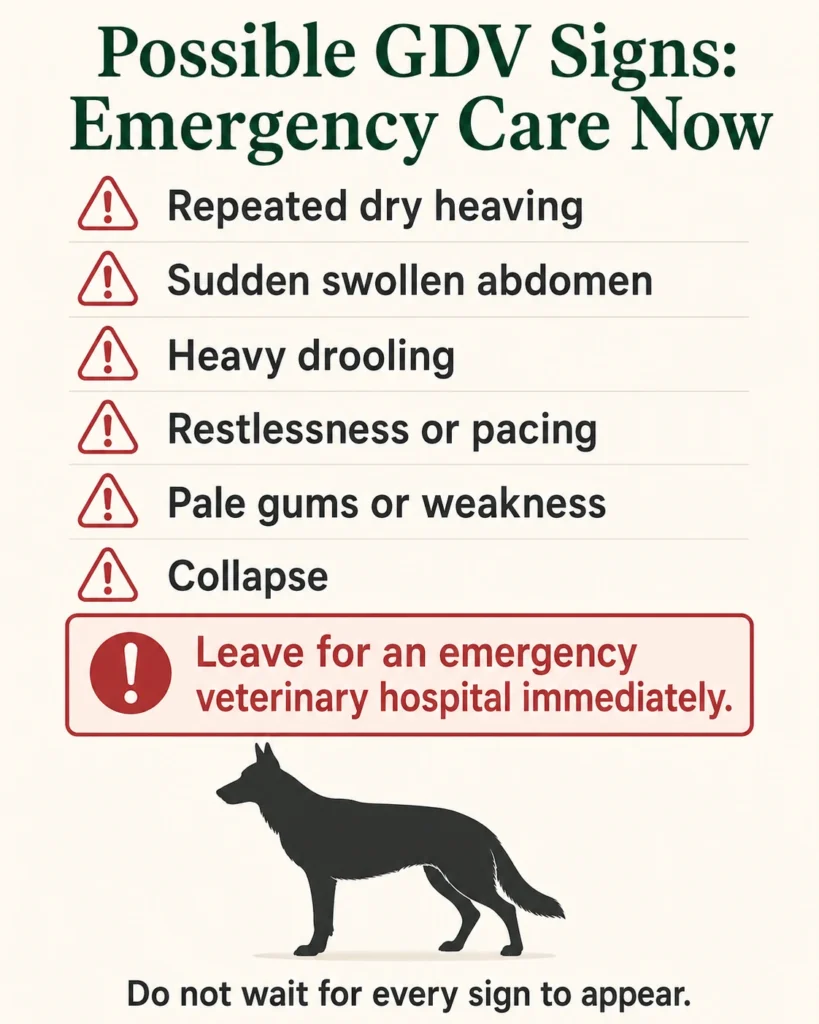
Do not wait to see whether the dog improves. Do not offer food, water, medication, or a home remedy. Leave for an emergency veterinary hospital and call while travelling when possible.
The Merck Veterinary Manual identifies German Shepherd Dogs among breeds at risk and describes nonproductive retching, salivation, restlessness, abdominal enlargement, pale gums, weakness, and breathing difficulty among possible findings. Immediate medical stabilization and surgery may be required.
Risk-reduction discussions may include measured meals, slower eating, avoiding one very large daily meal, calmer mealtimes, exercise timing, family history, and preventive gastropexy. No feeding routine can guarantee prevention.
7. Exocrine Pancreatic Insufficiency
Exocrine pancreatic insufficiency occurs when the pancreas does not produce enough digestive enzymes. Food is eaten but cannot be digested and absorbed normally.
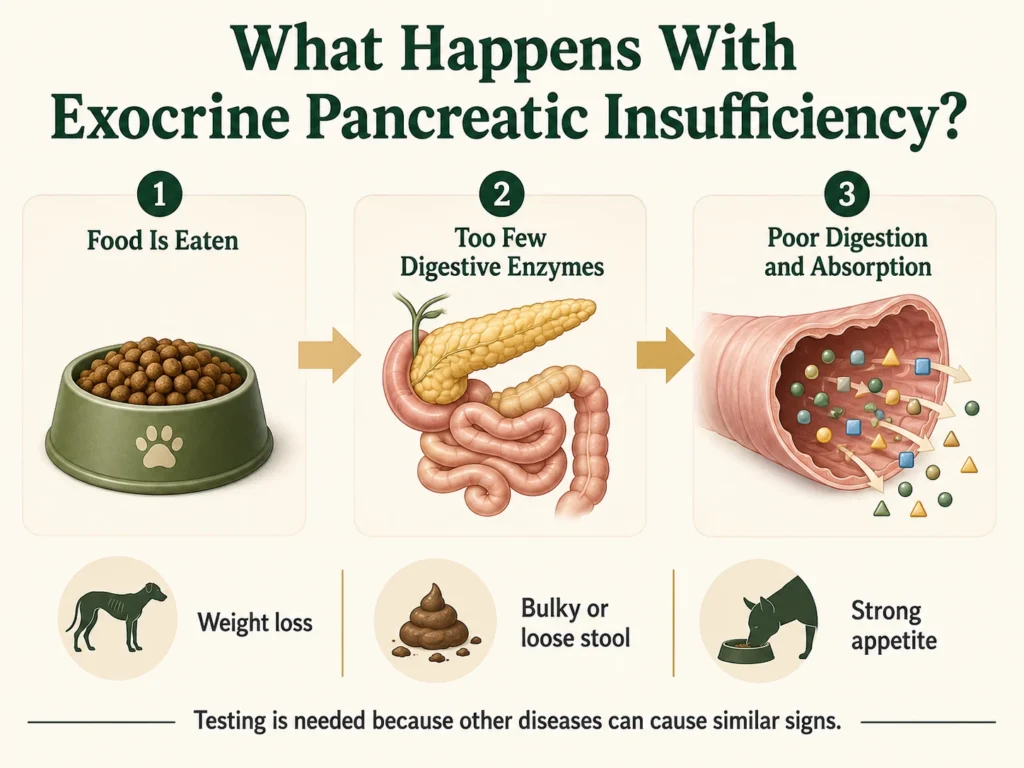
Typical clues include:
- Weight loss despite a normal or increased appetite
- Frequent, bulky, or loose stool
- Gas
- Poor coat condition
- Eating stool or unusual items
- Failure to maintain body condition
These signs can resemble parasites, food intolerance, inflammatory intestinal disease, or other digestive disorders.
A veterinarian may review the diet and weight trend, perform blood tests, check stool, and use a specific pancreatic-function test. Do not attempt to diagnose EPI from stool appearance alone or start random enzyme products without veterinary guidance.
Dogs with confirmed EPI often require long-term management, but many can improve substantially once the diagnosis and treatment plan are correct.
8. Perianal Fistulas
Perianal fistulas are painful, inflamed tracts that form in the skin around the anus. German Shepherd Dogs are strongly represented among affected dogs.
Possible signs include:
- Repeated licking or biting under the tail
- A foul odor
- Discharge or blood
- Pain while passing stool
- Straining
- Scooting
- Constipation-like behavior
- Irritability when the rear area is touched
Owners may assume the problem is only impacted anal glands. A veterinary examination is needed because infections, masses, anal-sac disease, wounds, and other causes can look similar.
Do not apply human hemorrhoid creams, antiseptics, essential oils, or steroid products to the area unless a veterinarian prescribes them. Licking can increase exposure to ingredients that are unsafe for dogs.
9. Skin Allergies, Hot Spots, and Recurrent Ear Disease
Itchy skin and ear inflammation can result from fleas, environmental allergies, food reactions, bacterial infection, yeast, mites, moisture, or more than one problem at once.
Signs include:
- Paw licking
- Scratching
- Face rubbing
- Recurrent ear odor
- Head shaking
- Red skin
- Hair loss
- Scabs
- Moist painful patches
- Dark ear debris
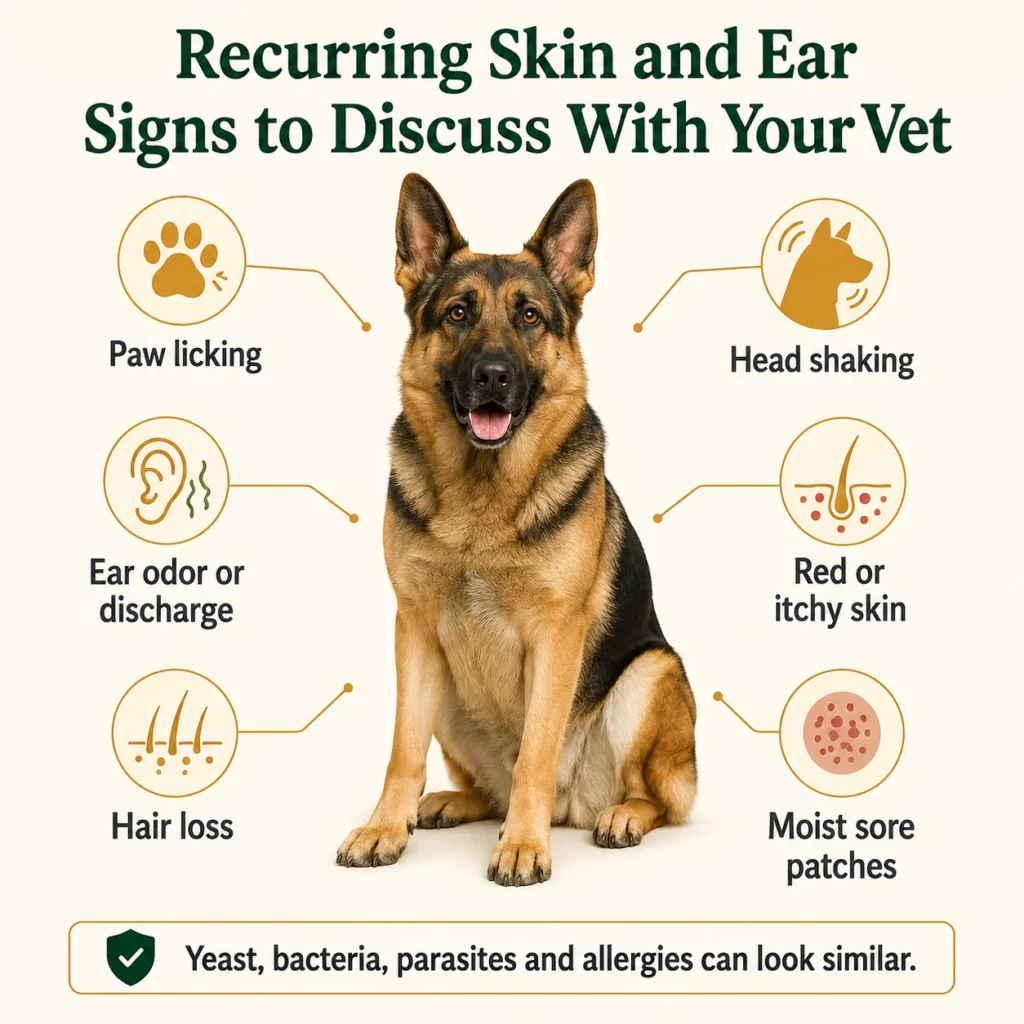
An ear infection is not diagnosed by odor or debris alone. A veterinarian may examine the ear canal and assess a sample under a microscope because yeast, bacteria, mites, and inflammatory disease require different management.
Repeated ear infections often mean an underlying trigger has not been controlled.
Do not place vinegar, peroxide, oils, powders, or leftover medication in a painful ear unless your veterinarian has examined the eardrum and advised that product.
10. Pannus and Other Eye Changes
Pannus, or chronic superficial keratitis, is an immune-mediated disease of the cornea associated with German Shepherd Dogs and some related breeds.
Owners may notice:
- Pink tissue growing across the cornea
- Brown or black pigmentation
- Cloudiness
- Redness
- Squinting
- Increased discharge
- Reduced confidence in dim light
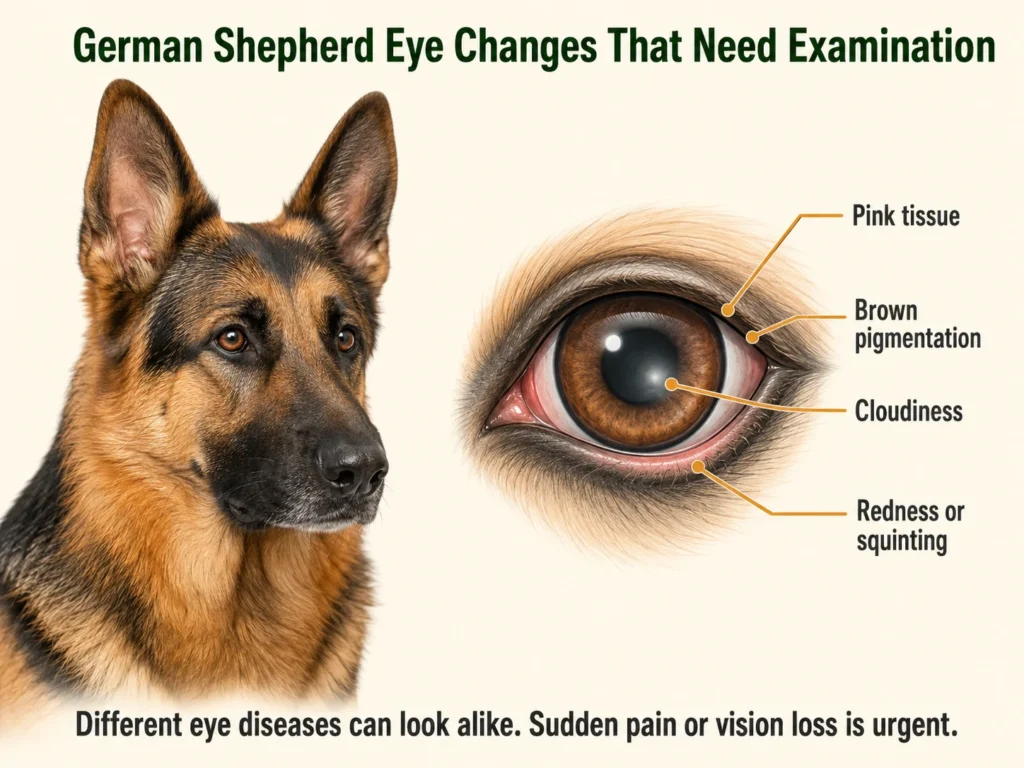
Eye disease can worsen vision and different disorders can look alike. Corneal ulcers, glaucoma, infection, trauma, and pannus require different treatment, so a veterinary eye examination should not be delayed.
Sudden severe eye pain, a blue-looking eye, a very dilated pupil, or sudden vision loss needs urgent care.
11. Dental Disease
Dental disease is common across dog breeds and still deserves a place in a German Shepherd health plan.
Possible signs include:
- Persistent bad breath
- Red or bleeding gums
- Visible tartar
- Drooling
- Dropping food
- Chewing on one side
- Pawing at the mouth
- Avoiding hard treats or toys
- Facial swelling
Dogs may continue eating despite significant oral pain. A conscious mouth check cannot show every problem below the gumline.
Use dog-safe toothpaste only. Human toothpaste may contain ingredients that should not be swallowed by dogs. Very hard chews can also fracture teeth.
12. Weight-Related Health Problems
Excess body fat is not a single breed disease, but it can worsen several common diseases in German Shepherds, especially joint pain, reduced mobility, heat intolerance, and poor stamina.
A healthy adult should generally have:
- Ribs that are easy to feel under a light covering
- A visible waist from above
- An abdominal tuck from the side
- Comfortable movement
- Stable weight over time
The scale needs context because frame, sex, muscle, and height vary. Ask your veterinarian to assign a body-condition score.
For puppies, use Furbivo’s German Shepherd puppy feeding chart to plan meal frequency and portion checks. For food-selection guidance, see the German Shepherd dog-food guide.
What Symptoms Are an Emergency?
Seek emergency veterinary care for:
- Repeated unproductive retching
- A suddenly swollen or painful abdomen
- Collapse
- Trouble breathing
- Pale, white, grey, or blue gums
- Seizures lasting several minutes or repeated seizures
- Sudden inability to stand
- Major bleeding
- Severe trauma
- Suspected poisoning
- Repeated vomiting with weakness
- Sudden severe eye pain or loss of vision
- Inability to urinate
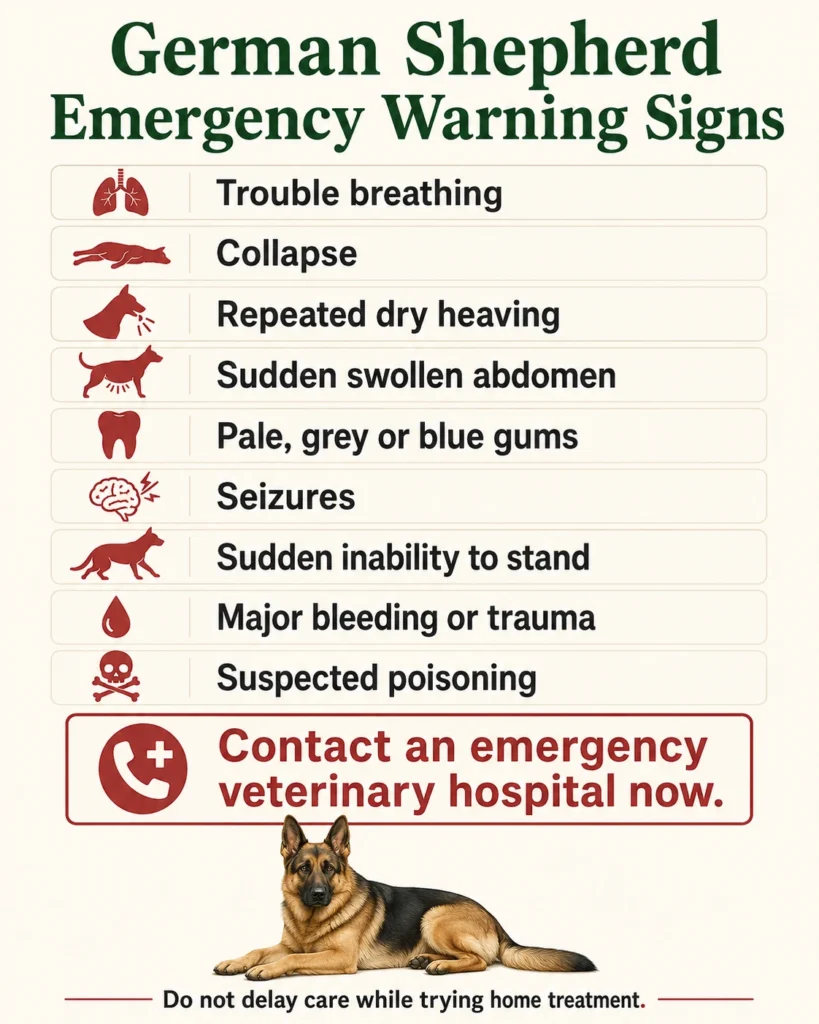
Do not spend time searching for a home treatment when your dog is deteriorating.
When Should You Book a Regular Veterinary Appointment?
Arrange an appointment for changes such as:
- Persistent or recurring limping
- Stiffness after rest
- Paw dragging or worn rear nails
- Repeated diarrhea
- Unexplained weight loss
- Ongoing itching
- Recurring ear odor or discharge
- Bad breath with red gums
- New lumps
- Appetite changes
- Increased drinking or urination
- Pain while passing stool
- A sustained change in behavior
German Shepherds can remain driven and active despite discomfort. A dog that still wants to walk can still be in pain.
What a Veterinarian May Check
The diagnostic plan depends on the symptom, age, and examination findings.
A veterinarian may assess:
- Weight and body condition
- Temperature, pulse, and breathing
- Hydration and gum color
- Heart and lung sounds
- Abdomen
- Gait and posture
- Joint movement
- Spinal pain
- Neurologic reflexes
- Skin, ears, eyes, mouth, and anal area
Tests may include:
- X-rays
- Bloodwork
- Urinalysis
- Stool testing
- Ear or skin cytology
- Pancreatic-function testing
- Ultrasound
- CT or MRI
- Eye-pressure or corneal tests
- Genetic screening used in the proper context
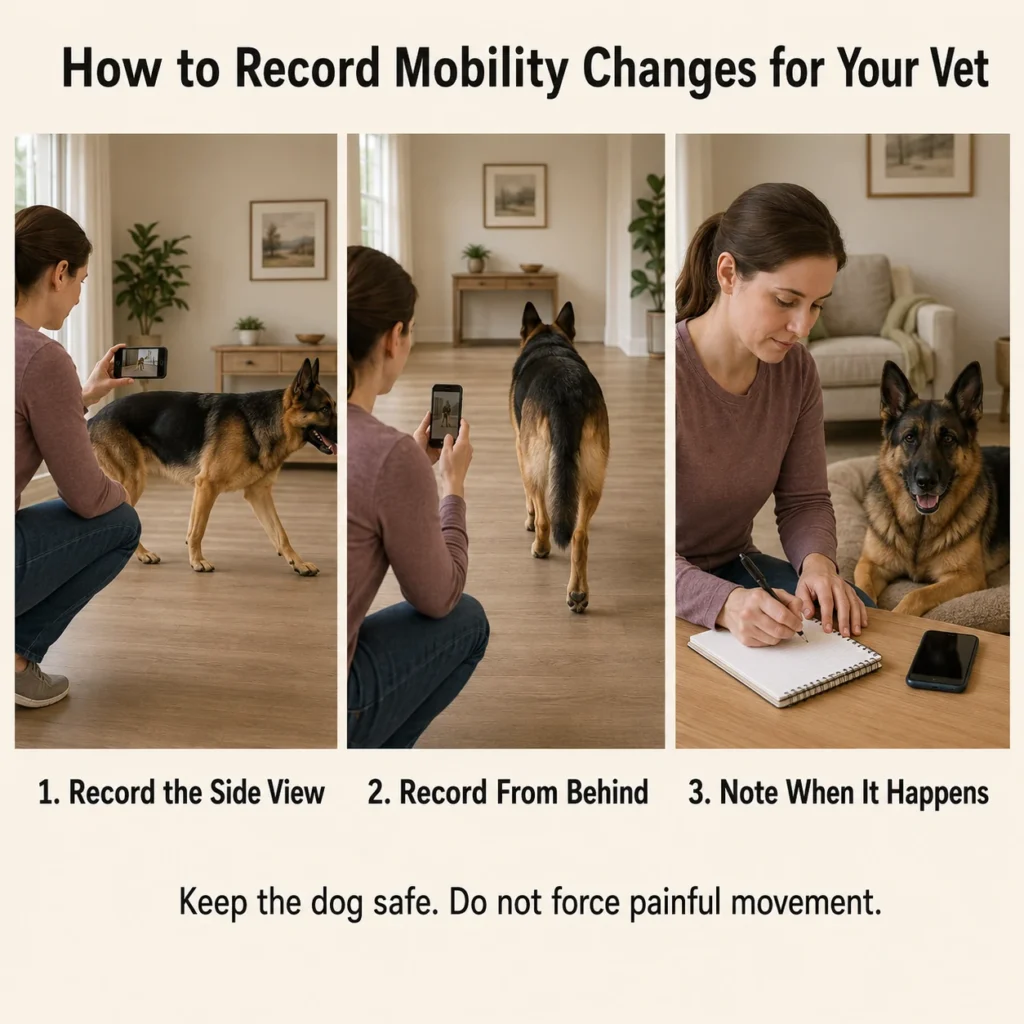
Bring videos of intermittent limping, weakness, coughing, unusual movements, or episodes that may not happen inside the clinic.
Health Testing Before Buying a German Shepherd Puppy
Responsible health testing reduces avoidable risk but cannot promise a disease-free puppy.
Ask the breeder for:
- Registered names of both parents
- Verifiable hip and elbow results
- Relevant genetic test results
- Eye or other screening recommended by the breeder’s national breed club
- Family history of GDV, neurologic disease, allergies, and longevity
- A written veterinary and vaccination record for the puppy
A photo of a healthy-looking parent is not health testing. Neither is the statement that a dog has “good hips because it runs every day.”
Genetic tests also need correct interpretation. For example, an at-risk degenerative myelopathy result is not the same as a clinical diagnosis.
How to Lower Your German Shepherd’s Health Risk
You cannot prevent every condition, but you can improve the odds of early detection and reduce avoidable strain.
Keep Your Dog Lean
Excess weight increases mechanical stress on painful joints and can make movement harder. Measure meals, count treats, and review portions as activity and age change.
Furbivo’s guide to what German Shepherds eat explains complete diets, treats, and foods that should stay out of the bowl.
Use Age-Appropriate Exercise
Puppies need movement and social development, not forced endurance work. Adult dogs benefit from consistent conditioning, while senior or painful dogs may need shorter sessions and better footing.
Short training sessions can provide mental work without repetitive jumping. See Furbivo’s German Shepherd training guide for reward-based activity ideas.
Watch Patterns, Not Isolated Moments
One slower morning or one soft stool may not identify a disease. Recurring symptoms, worsening signs, or a clear change from normal deserve attention.
Keep notes on:
- Appetite
- Weight
- Stool
- Water intake
- Exercise tolerance
- Limping
- Itching
- Ear problems
- Medication
- New behavior
Maintain Preventive Care
Routine examinations, parasite control, vaccination based on veterinary advice, oral care, and senior screening can detect changes before they become obvious at home.
Avoid Unprescribed Medication
Do not give human painkillers, leftover antibiotics, steroid creams, ear drops, or supplements without veterinary direction. The wrong product can worsen disease, mask symptoms, or cause poisoning.
What Most Breed-Health Articles Miss
A Breed Risk Is Not a Diagnosis
A German Shepherd with weak hind legs does not automatically have hip dysplasia or degenerative myelopathy. Joint, spinal, neurologic, muscular, infectious, and metabolic disorders can produce similar signs.
Genetic Testing Has Limits
A DNA test may identify a risk variant. It may not prove that the variant is causing the dog’s current symptoms, and a negative result does not rule out every neurologic disease.
Behavior Can Be a Pain Signal
Growling, hiding, pacing, clinginess, sleep disruption, reduced patience, or avoiding touch may reflect pain rather than a training failure.
Several Conditions Can Occur Together
An older dog may have hip dysplasia, arthritis, and spinal disease at the same time. Treating one label may not address every source of weakness or discomfort.
Home Modifications Matter
Rugs, ramps, supportive bedding, good nail length, easy access to water, and changes in walking routes can reduce daily struggle. They support veterinary treatment rather than replacing it.
Frequently Asked Questions
What are the most common diseases in German Shepherds?
The most recognized breed-associated concerns include hip and elbow dysplasia, osteoarthritis, degenerative myelopathy, lumbosacral disease, GDV, EPI, perianal fistulas, allergic skin and ear disease, and pannus. Individual risk varies, and symptoms require veterinary assessment.
What are the first signs of hip problems?
Early signs may include stiffness after rest, difficulty rising, hind-leg limping, reduced willingness to jump, bunny hopping, or loss of thigh muscle. Similar signs can come from the knees, spine, paws, or neurologic disease.
Is bloat an emergency in German Shepherds?
Yes. Repeated dry heaving, a suddenly enlarged abdomen, heavy drooling, restlessness, pale gums, weakness, or collapse require immediate emergency veterinary care.
Does a positive degenerative myelopathy DNA test mean my dog has DM?
No. A genetic result indicates inherited risk status. Degenerative myelopathy is diagnosed by evaluating clinical signs and ruling out other causes of spinal-cord dysfunction.
Why is my German Shepherd losing weight despite eating well?
Possible causes include EPI, parasites, intestinal disease, diabetes, cancer, an inadequate diet, or another medical problem. Increased appetite with weight loss needs a veterinary examination rather than simply increasing portions.
Why does my German Shepherd keep getting ear infections?
Repeated ear disease may be connected to allergies, moisture, bacteria, yeast, mites, foreign material, or another underlying problem. Microscopic examination of ear material helps guide appropriate treatment.
How can I reduce joint problems?
Choose puppies from health-tested parents, support controlled growth, keep the dog lean, use age-appropriate exercise, provide good traction, and seek veterinary care when limping or stiffness persists.
How often should a German Shepherd see a veterinarian?
Healthy adult dogs generally need regular preventive examinations based on their veterinarian’s schedule. Puppies, senior dogs, and dogs with chronic conditions may need more frequent visits.
Final Thoughts
Understanding the common diseases in German Shepherds should help you act earlier, not make you expect that your dog will become ill.
Pay attention to movement, weight, digestion, skin, ears, eyes, appetite, and behavior. Keep simple records and take recurring or worsening changes seriously.
The common diseases in German Shepherds can produce overlapping symptoms, so avoid diagnosing from a checklist. A veterinarian can examine the whole dog and decide which tests are actually useful.
Fast action matters most for GDV, collapse, breathing difficulty, major weakness, severe eye pain, seizures, and suspected poisoning. Slower problems such as recurring limping, itching, diarrhea, weight loss, or ear infections also deserve timely care before they become harder to manage.
Have questions about your dog’s health, nutrition, grooming, or daily care? Visit our Contact Us page to reach the Furbivo team. For any medical symptoms, diagnosis, or treatment advice, always consult a qualified veterinarian.